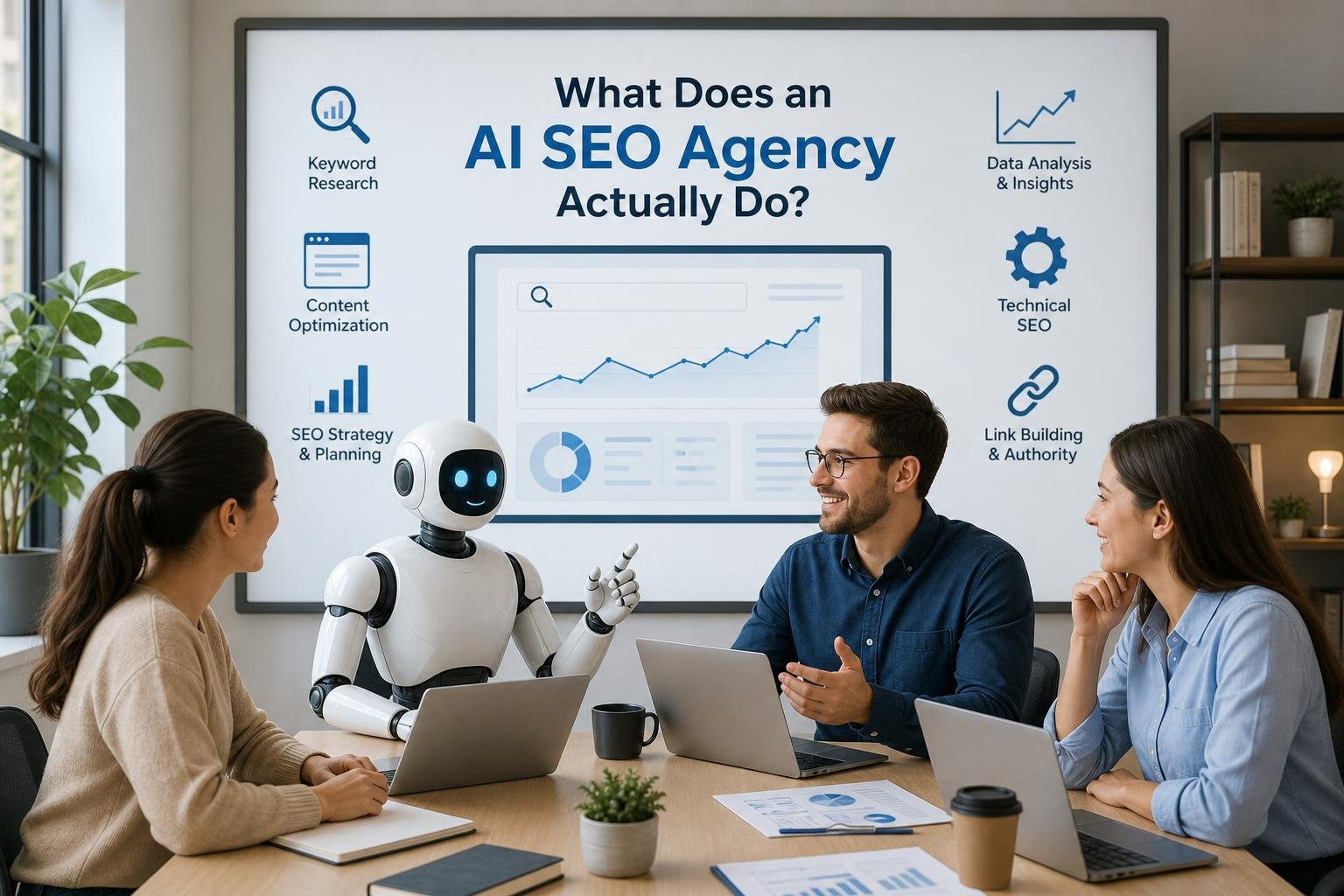


Optimising Your Content for Inclusion in AI Search Answers
If your content is still built only to rank in traditional search results, you are probably missing the places where buyers now get their answers first. AI search keyword optimisation helps your brand become the source AI tools trust, quote, and recommend when people ask high-intent questions.
Key Takeaways
- AI search visibility now depends on whether platforms like Google AI Overviews, ChatGPT, Perplexity, and Gemini can easily understand, extract, and cite your content.
- The best AI search keywords are usually commercial or transactional because those searches are closer to a buying decision.
- Clear headings, concise answer-first sections, schema, and strong entity signals make your pages easier for AI systems to use.
- Third-party authority matters because AI tools often cite trusted external sources when deciding which brands to recommend.
- AuraSearch helps brands measure Share of Model, identify citation gaps, and build content that is ready for AI-driven discovery.
AI search keyword optimisation is the practice of choosing search terms with real buyer intent, then shaping your content so AI engines can confidently include your brand in generated answers.
In practical terms, that means you are not just asking, “Can this page rank?” You are also asking, “Can an AI system lift this answer, understand why our brand is credible, and use us as a recommended source?”
Here is the simple framework:
- Prioritise buyer intent over traffic volume so you target keywords that signal comparison, evaluation, or purchase intent.
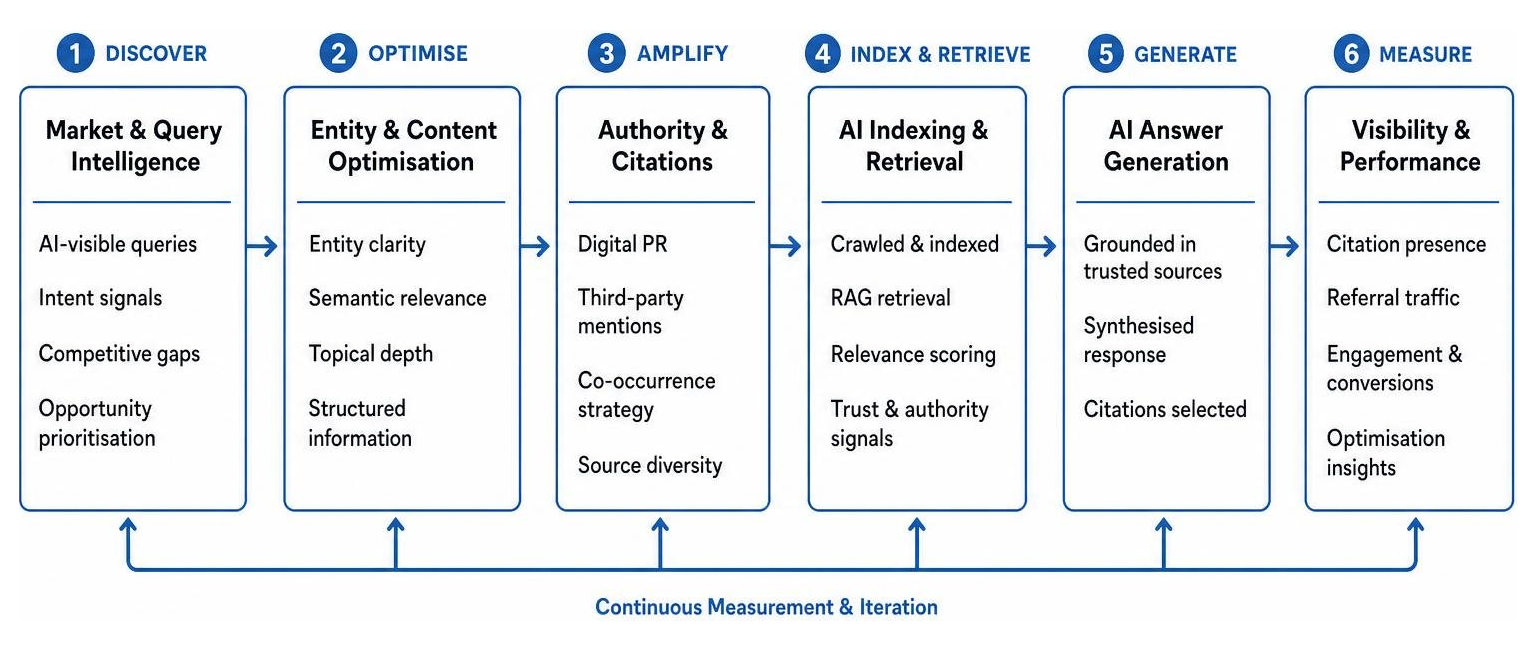
- Analyse SERPs and AI platforms together to see which searches trigger AI answers and where competitors are being cited.
- Structure content for extraction with clear sections, direct answers, and descriptive headings.
- Build entity authority by making sure your brand appears consistently beside relevant topics across trusted sources.
- Measure citation performance with Share of Model, answer inclusion rate, and AI visibility footprint.
The shift is already significant. AI referrals to websites spiked 357% year over year in June 2025, reaching 1.13 billion visits. Those visitors also convert at 4.4 times the rate of traditional organic traffic. At the same time, zero-click searches now account for 69% of queries, so content that is not included in an AI-generated answer may never earn the click.
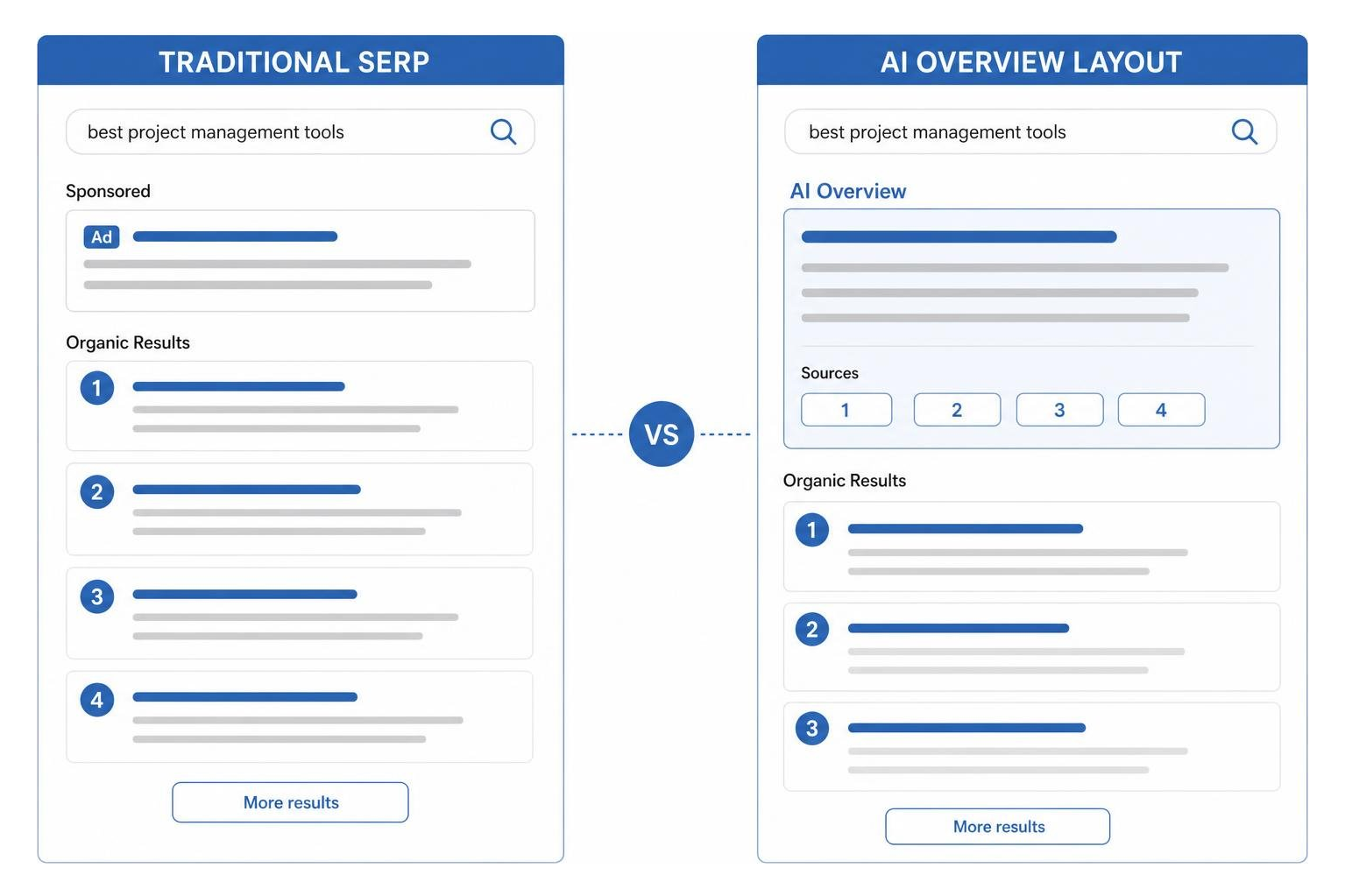
ChatGPT alone has 400 million weekly users, and Google’s AI features now answer a large share of searches directly. The old search results page has not disappeared, but it has been reorganised around AI-generated summaries.
The takeaway is clear: ranking on page one is no longer enough. Your brand needs to compete for citation inside AI-generated answers, not just position inside a list of blue links.
“AI search has redefined visibility. Businesses can no longer optimise for clicks alone. They must become the gold standard dataset that AI agents rely on when generating answers.”
Helpful related reads:
From Search Volume to Citable Authority
Large language models do not treat keywords exactly the way traditional search engines do. They use retrieval-augmented generation to ground conversational answers in trusted sources, then assemble a response that feels complete to the user.
That is why AI search keyword optimisation starts with intent and authority, not just monthly search volume. You want AI platforms to associate your brand with the topics, problems, and buying criteria your best customers care about.
At AuraSearch, we focus on building entity authority and semantic relevance. We place the brand name alongside important category terms across owned content, partner mentions, expert citations, and trusted third-party sources. Over time, those repeated associations help AI models understand when your brand belongs in a recommendation.
How AI Search Optimisation Differs From Traditional SEO
Traditional search engine optimisation focuses on helping a URL rank higher in organic search results. AI search optimisation adds another layer: making individual passages clear, trustworthy, and easy for AI systems to cite. The shift is less about writing for one exact keyword and more about covering the surrounding concept well enough to answer complex prompts.
| Feature | Traditional SEO | AI Search Optimisation |
|---|---|---|
| Primary goal | Rank URLs in organic results | Earn citations in AI-generated answers |
| Targeting | Individual keywords and search volume | Entity relationships and conversational intent |
| Success metric | Click-through rate and organic traffic | Share of Model and citation frequency |
| Content format | Comprehensive web pages | Modular, extractable answer sections |
Google AI Overviews and platforms like ChatGPT, Gemini, and Perplexity often process a single user question by exploring several related subtopics at once. They retrieve information from different sources, compare it, and then present one synthesised answer.
Your content has a better chance of being included when it gives AI systems the pieces they need: a direct answer, supporting evidence, clear author expertise, and enough context to connect your brand with the topic. For more on this shift, read Beyond Keywords: Optimising Content for the AI Search Era.
Practical Tactics for AI Search Keyword Optimisation
Start with transactional keyword research. Look for searches that suggest the person is comparing providers, choosing a solution, checking requirements, or preparing to buy. Then run those searches through AI platforms to see which sources are being mentioned and where there are citation gaps.
Next, structure each important page so it is easy to extract. Use descriptive, question-led headings. Put a direct answer immediately below the heading before expanding into detail. Keep paragraphs clear and focused so each section can stand on its own if an AI system pulls it into a generated response.
Technical signals matter too. Use JSON-LD schema where it makes sense, especially for FAQs, products, services, organisations, and local business information. Keep your robots.txt and AI crawler access rules intentional, and consider an llms.txt file if it supports your wider AI visibility strategy.
Avoid keyword stuffing. Repeating the same phrase awkwardly can make the page feel less trustworthy and less useful. Instead, use natural variations, related entities, examples, expert commentary, and verifiable claims. For a full implementation plan, the AI Search Content Optimization Checklist is a strong next read.
Why AuraSearch Gives Brands an AI Visibility Advantage
AuraSearch helps brands secure visibility across both traditional search and AI-generated answers. Our generative AI SEO services are built to improve how your brand is understood, cited, and recommended across Google AI Overviews, ChatGPT, Gemini, and Perplexity.
We analyse citation patterns, identify high-value keyword opportunities, and show where your brand is missing from the AI answer layer. Then we strengthen your entity authority with better content structure, schema, third-party signals, and topic coverage.
Most importantly, we track progress in the language AI search actually uses. Share of Model shows how often AI platforms recommend your brand compared with competitors, while answer inclusion rate shows whether your content is appearing in the right conversations.
If you want to protect organic visibility and earn more high-intent leads from AI-driven discovery, explore our Generative Engine Optimisation Services.
FAQs
What is the difference between traditional SEO and AI search optimisation?
Traditional SEO focuses on earning high positions for full web pages in organic search results. AI search optimisation adds a citation-focused layer that targets direct, conversational answers generated by artificial intelligence. AI search engines often prioritise passage extraction, entity authority, and clear source signals over simple keyword matching.
How do AI Overviews change content discovery?
AI Overviews synthesise answers directly on the search engine results page, which can reduce the need for users to click through to external websites. They use retrieval-augmented generation to pull information from multiple high-authority sources at once, then combine those sources into a concise answer.
What types of keywords perform best in the AI search era?
Transactional and commercial intent keywords usually perform best because they represent users who are closer to making a purchase decision. Informational searches are increasingly answered directly by AI engines, so brands should prioritise terms that connect to evaluation, comparison, and buying criteria.
How can brands measure visibility in AI-generated answers?
Brands can measure visibility by tracking Share of Model, answer inclusion rate, and AI visibility footprint. This means testing relevant prompts across platforms like ChatGPT, Gemini, and Perplexity to see how often your brand is recommended and how often competitors appear instead.
What content structures make pages more likely to be cited by AI?
Pages are more likely to be cited when they are organised into modular sections with descriptive, question-based headings. A concise standalone answer near the top of each section gives AI systems a clean passage to extract, while supporting details build trust and context.
How do you balance traditional SEO with generative engine optimisation?
You balance both by keeping technical SEO, internal links, crawlability, and content quality strong while adding AI-focused citation tactics. Strong rankings can still influence what AI systems retrieve, but GEO also requires entity clarity, credible mentions, schema, and answer-ready formatting.