
Beginner's Guide to AI Traffic for Chiropractic Practices

AI traffic for chiropractic practices is changing how people find and choose healthcare providers. Instead of browsing a long list of results, prospective patients can now receive direct recommendations from ChatGPT, Google AI Overviews, Perplexity, Claude, Google, and Bing.

Key Takeaways

  • Conversational AI search platforms can surface direct healthcare recommendations, changing how chiropractic clinics appear during patient research.
  • Delayed digital enquiry follow-up can create patient conversion leakage for healthcare practices.
  • Generative Engine Optimisation (GEO) helps search engines and AI platforms understand practice expertise, location relevance, and service authority.
  • Automated front-desk triage can support appointment enquiries across phone, SMS, and web chat.
  • AuraSearch™ helps chiropractic practices improve AI search visibility through Generative Engine Optimisation and human-led strategy.

I am Amber Brazda, AI Search Specialist at AuraSearch™, leading strategy at the intersection of traditional search authority and Generative Engine Optimisation (GEO) with a focus on healthcare sectors navigating AI-driven patient discovery.

AI traffic for chiropractic practices now arrives through a different channel from traditional search engine result pages. Patients no longer rely only on scanning lists of links to find a practitioner. Generative AI engines such as ChatGPT, Google AI Overviews, Perplexity, Claude, and Gemini synthesise direct answers that may cite specific practices by name.

This shift changes patient acquisition in practical ways:

Patient Behaviour Traditional Search Generative AI Search
How patients search Keyword query, browse links Conversational question, direct answer
Search display List of ranked results Synthesised recommendation
Decision point Compare multiple links Review cited sources directly
Response window Practice website only Continuous automated availability
Key visibility signal Backlinks, on-page SEO Entity authority, structured data, topical depth

Chiropractic practices need clear service information, consistent business details, and fast intake workflows to make AI-driven discovery useful. Unanswered calls, unclear location signals, and thin service pages can weaken visibility and reduce enquiry conversion.

Generating and Converting AI Traffic for Chiropractic Practices

Generative AI search platforms extract structured knowledge from authority sites across the web. These systems evaluate clinical credentials, condition content depth, service descriptions, and local directory consistency before constructing natural language recommendations.

Practices that want to capture AI traffic need more than a basic service page. AuraSearch™ applies healthcare and fintech search experience through Healthcare and Fintech AI SEO, helping practices build the semantic context search systems need to recognise clinical specialisation.

Converting inbound interest also requires a fast digital response. Prospective patients arriving from generative engine citations often want confirmation of appointment availability, treatment capabilities, location details, and accepted payment pathways.

How AI Traffic Differs from Traditional Search

Traditional search engine optimisation focuses on keyword relevance, local visibility, technical performance, and useful page content. Patients using traditional search often compare several clinic websites before choosing a provider.

Generative search relies on longer, conversational questions that reveal specific needs. A person asking an AI assistant about back pain relief expects a useful answer that explains treatment considerations and points toward relevant local care options.

Generative models are more likely to understand practices that maintain structured schema markup, consistent citation records, and deep clinical content silos. AuraSearch™ supports this work through AI Overview Optimisation, helping healthcare organisations improve how their expertise is interpreted across AI search environments.

Optimising Conversational Workflows for Inbound Enquiries

Capturing patient interest from generative search requires an automated, omnichannel front-office workflow. High-intent prospective patients may make enquiries during peak morning periods or outside standard operating hours.

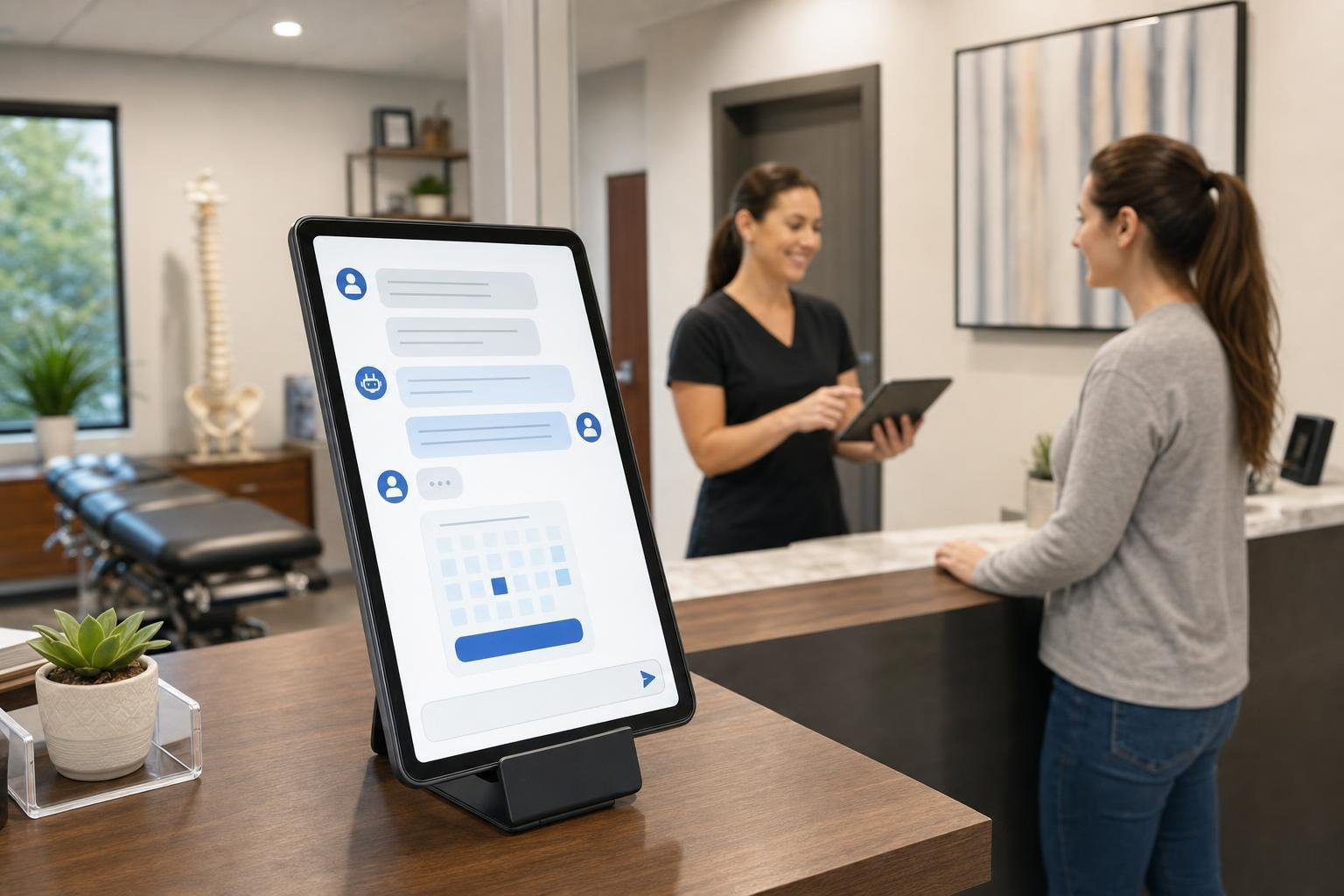
Intelligent voice and messaging assistants can provide immediate intake triage across phone lines, SMS, and web chat interfaces. These tools help answer common questions, capture appointment intent, and identify whether a case relates to an accident, workers compensation, or general wellness care.

Connecting conversational intake tools directly into practice management calendars can reduce booking friction. Clear service pages and fast intake responses work together because search visibility only creates value when the practice can respond efficiently.

Operational Infrastructure for Patient Triage and Intake Automation

Chiropractic intake workflows often need to distinguish between different payer structures at the first point of contact. Automated assistants can ask targeted qualifying questions to identify workers compensation cases, auto accidents, private health enquiries, or general wellness care.

Instant qualification protects administrative time and gives prospective patients clearer next steps. Intake systems can gather accident timelines, claim numbers, and primary complaint notes before the initial consultation.

Data privacy must remain central during every digital interaction. Healthcare practices should use secure intake systems with encrypted data transmission, access controls, and documented privacy processes that align with applicable obligations.

Advanced intake configurations can also manage incoming call volume during busy periods. Pairing AI Overview visibility with automated front-desk infrastructure helps keep patient pipelines organised when enquiry demand increases.

Multi-Platform Visibility Across Generative Search Engines

Patients use multiple conversational interfaces, including Perplexity, Gemini, Claude, and Microsoft Copilot, to find healthcare providers. Each platform draws from different indexes, citations, and knowledge graphs to form recommendations.

Microsoft Copilot often draws on Bing-connected sources, local listings, and indexed web pages. Perplexity may prioritise specific condition pages that provide clear explanations, service context, and structured supporting details.

Consistent entity details across external registries help generative search engines interpret practice information accurately. Maintaining structured clinical data blocks allows search systems to connect services, locations, practitioners, and patient needs across major AI search environments.

Building Chiropractic Visibility Across AI Search

AuraSearch™ helps chiropractic practices build visibility across AI-driven and traditional search platforms. Dedicated specialists connect technical SEO, Generative Engine Optimisation (GEO), entity optimisation, and content strategy so practice information is easier for search systems to interpret.

Technical optimisation frameworks diagnose visibility gaps across AI discovery engines and improve the likelihood of authoritative citations. Transparent reporting helps practice managers monitor brand citations across ChatGPT, Perplexity, Claude, Google AI Overviews, Google, and Bing without relying on assumptions.

A strong AI search strategy gives chiropractic practices a clearer path from visibility to enquiry. It also helps teams prioritise the pages, schema updates, entity signals, service details, internal links, and content improvements that can support sustainable discovery. Practices can contact strategy experts through Contact Us or explore broader agency capabilities through Services.

FAQs

What is AI traffic for chiropractic practices?

AI traffic refers to prospective patients who discover a chiropractic clinic through conversational AI search platforms like ChatGPT, Google AI Overviews, Perplexity, Claude, or Gemini. These platforms synthesise direct practice recommendations in response to natural language health queries rather than displaying only a standard list of website links. Practices that appear in these recommendations can reach people who are already researching care options.

How does Generative Engine Optimisation differ from traditional SEO for chiropractors?

Generative Engine Optimisation structures web content, schema markup, and entity authority so AI platforms can recognise and cite a practice within direct answers. Traditional SEO focuses primarily on ranking web pages on search engine results pages for specific keyword queries. GEO expands this focus so generative models can understand clinical specialisations, locations, and service relevance.

How does an AI receptionist handle complex chiropractic enquiries?

An AI receptionist uses natural language processing to answer common patient questions about office hours, accepted payment pathways, and treatment modalities. The system can gather preliminary injury details for auto accident or workers compensation cases and help book initial appointments through clinic scheduling software. Immediate digital intake reduces friction when prospective patients contact a practice after hours.

Can AI systems integrate safely with existing chiropractic EHR software?

Modern AI intake and front-desk tools can connect with practice management and electronic health record platforms using secure API protocols. These integrations can synchronise appointment calendars, upload completed intake notes, and update patient communication histories in real time. Practices should assess each vendor carefully to confirm security, privacy, and workflow suitability.

Is AI patient intake privacy compliant for healthcare practices?

AI intake solutions should use encryption, secure data transmission protocols, access controls, and clear privacy processes. Healthcare practices need to confirm that any vendor can meet the privacy obligations that apply to their location and operating model. A compliant setup protects personal health information while allowing patients to use convenient digital intake channels.

How quickly can a practice expect visibility improvements in AI search?

Visibility growth across generative AI search engines usually develops over a multi-month optimisation timeline. Establishing structured data, expanding topical clinical content, and reinforcing entity authority gradually increases the likelihood of platform citations. Consistent technical updates support long-term visibility as AI search models update their knowledge graphs.

Recent Posts

By Amber Brazda September 10, 2026
Discover what is the best AI SEO strategy for higher education to boost student recruitment through generative engine optimization.
By Amber Brazda September 8, 2026
Discover how ai seo audit report tools evaluate visibility, citability and LLM accessibility to boost your generative search performance.
By Amber Brazda September 7, 2026
AI SEO for Adelaide listings helps real estate agencies improve property discovery with structured data, suburb context, and clearer AI search signals.
By Amber Brazda September 3, 2026
Learn how law firm generative visibility boosts AI citations from ChatGPT, Perplexity & Google AI Overviews.
By Amber Brazda September 3, 2026
AI SEO training helps Australian teams improve traditional and AI-driven search visibility with practical GEO, content, and technical skills.
By Amber Brazda September 2, 2026
Learn about best strategies to optimize content for ai search engines
By Amber Brazda September 1, 2026
Master the answer engine optimization guide to earn AI citations and boost brand visibility in zero-click search results.
By Amber Brazda August 28, 2026
Crafting Your Australian Dental AI Search Strategy - Learn about australian dental ai search strategy
By Amber Brazda August 27, 2026
How Accounting Firms Win Visibility in the AI Search Era - Learn about AI visibility for accountants
By Amber Brazda August 26, 2026
How to Improve Your Website's Visibility in AI Search Engines - Learn about AI search engine visibility
Show More