

Stop Confusing GEO and AEO by Mastering Modern AI Search
What AI SEO Means for Search Visibility
AI SEO helps Australian businesses make their websites easier for search engines and AI search systems to understand. It combines sound Search Engine Optimisation (SEO) with clear, useful content that answers real customer questions.
Key Takeaways
- AI SEO builds on technical SEO, useful content and clear brand information.
- Generative Engine Optimisation (GEO) focuses on visibility in AI-generated answers, while Answer Engine Optimisation (AEO) focuses on direct answers.
- Clear, self-contained explanations make it easier for AI search systems to interpret a page, although no business can guarantee a citation.
- Australian businesses can use AI SEO Services to turn AI search visibility into a practical, human-led plan.
I am Amber Brazda, an AI Search Specialist at AuraSearch with extensive experience in search strategy for Australian businesses. My work helps business owners turn the question, “What is AI SEO?”, into practical decisions about content, technical SEO and GEO visibility.
What Is AI SEO and How Does It Differ from Traditional Search?
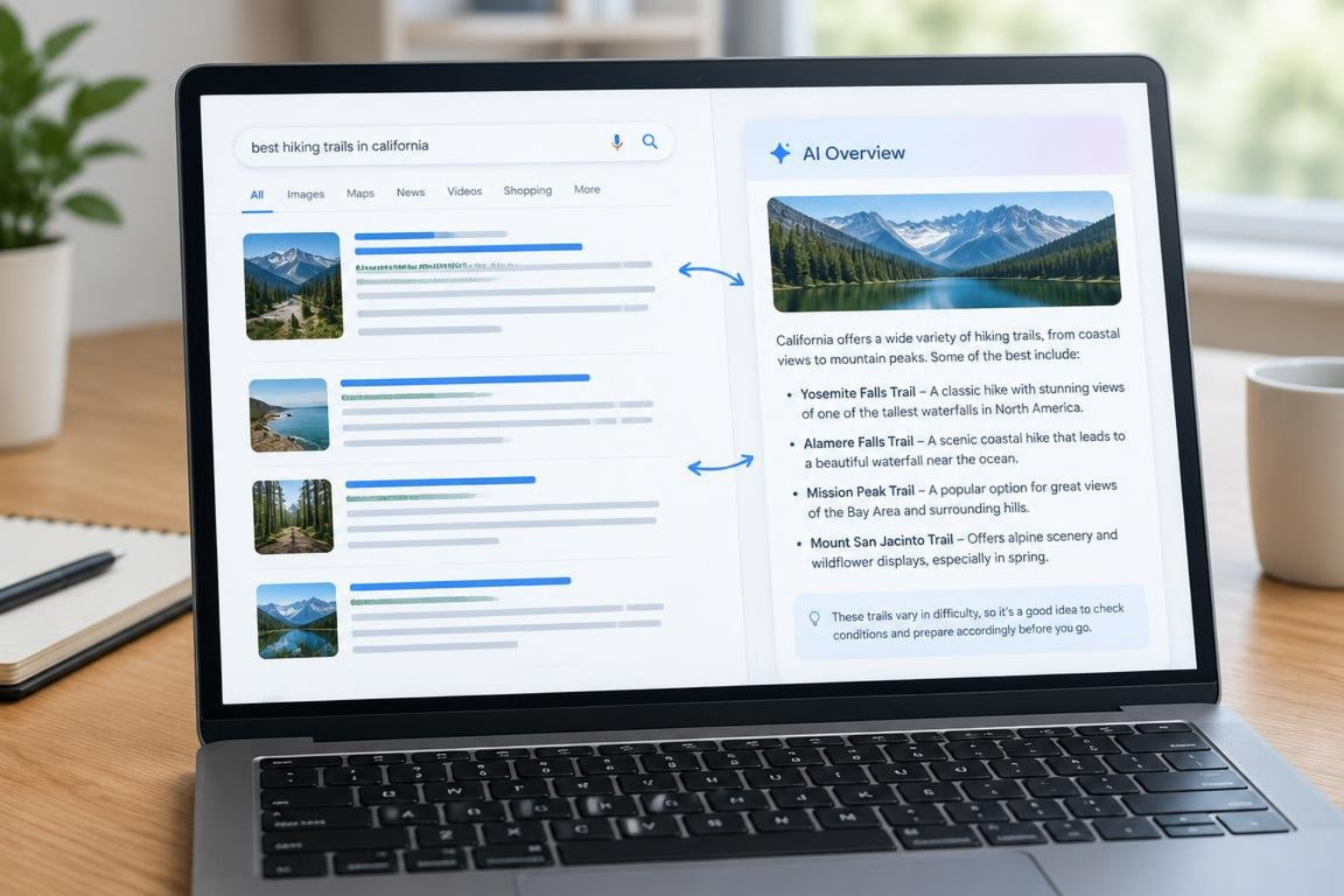
AI SEO expands traditional search optimisation by considering how AI search systems retrieve and present information. For an Australian business, the practical goal is simple: publish pages that search technology can crawl, understand and use when people look for a service or solution.
Traditional SEO still matters because it helps search systems discover, assess and rank a website. AI-driven search adds another layer by drawing on clear entities, well-structured passages and factual explanations to create useful answers.
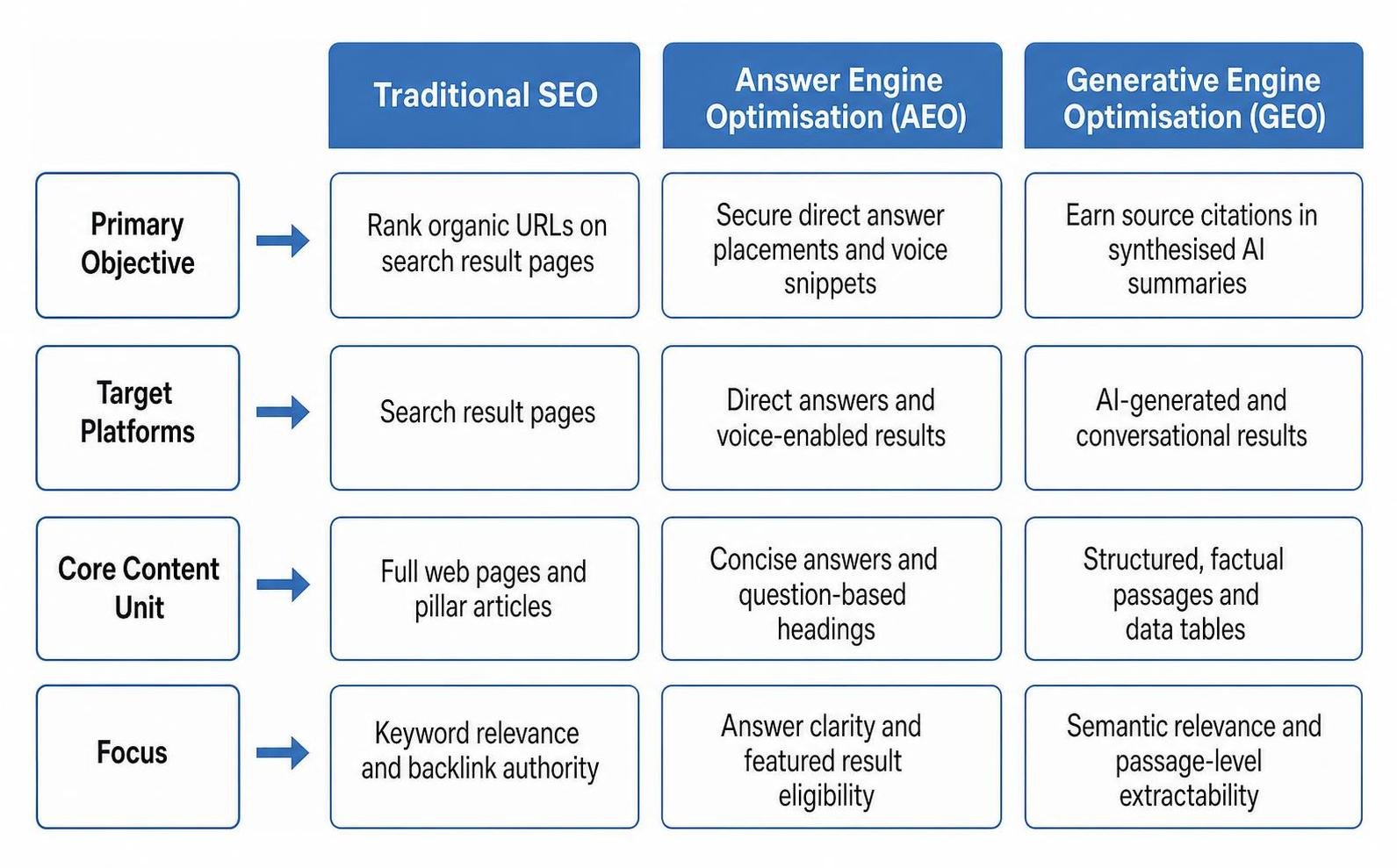
| Optimisation Dimension | Traditional SEO | Answer Engine Optimisation (AEO) | Generative Engine Optimisation (GEO) |
|---|---|---|---|
| Primary Objective | Improve organic visibility for web pages | Provide clear responses to specific questions | Support visibility in AI-generated answers |
| Search Environment | Search result pages | Direct answers and voice-enabled results | AI search and conversational results |
| Core Content Unit | Service pages, articles and resources | Concise answers and question-based headings | Structured, factual passages and useful tables |
| Key Focus | Relevance, authority and technical health | Clear formatting and factual accuracy | Entity clarity, completeness and source consistency |
| Visitor Journey | Click through to explore a website | Find a direct response or referral | Explore supporting sources after an AI-generated answer |
Traditional SEO remains the foundation for digital visibility. A considered Generative Engine Optimisation approach builds on that foundation by making important business information easier to find, interpret and reuse.
Answer Engine Optimisation (AEO) supports clear, direct responses to specific questions. Short definitions under descriptive subheadings help a business explain its expertise without making visitors work through unnecessary detail.
Large Language Model Optimisation (LLMO) considers how AI systems interpret a business’s facts across the web. Consistent names, services, locations and leadership details help reduce ambiguity wherever a business appears online.
Clear passages give AI search systems a stronger basis for understanding a page. Topic sentences, practical lists and helpful tables make complex information easier to scan and more useful for prospective customers.
Technical foundations still shape whether search technology can access current information. Fast loading pages, clean HTML, mobile-friendly design and accurate schema markup give search systems clearer context about an organisation, its services and its content.
Australian organisations benefit from joining content, technical SEO and brand information into one practical strategy. That approach supports clearer answers today and gives the website a stronger base as AI-driven search continues to evolve.
Build Stronger AI Search Visibility with AuraSearch
AI search visibility works best when traditional SEO, useful content and strong brand information support each other. AuraSearch helps Australian organisations bring Generative Engine Optimisation (GEO), Answer Engine Optimisation (AEO) and technical search architecture into one human-led strategy.
The focus stays on sustainable digital assets built with verifiable information and semantic clarity. Businesses can then assess how their content appears in search and AI-generated answers, refine the pages that matter most and adapt to changing retrieval systems.
For a practical next step, AuraSearch can help shape a search visibility plan around the business, its customers and its priority services:
- Explore AI SEO Services for a tailored search visibility strategy.
- Start a conversation with the Australian team through Contact Us.
- Review AI Overview Optimisation for focused support with AI-generated search results.
FAQs
What is AI SEO and why does it matter for business visibility?
AI SEO is the practice of making content, technical foundations and business information easier for AI search systems to understand. Traditional SEO helps pages earn visibility in search results, while AI SEO also considers how clear passages and consistent entity details may support AI-generated answers. For Australian businesses, the goal is to make it easier for prospective customers to find accurate, useful information.
What is AI SEO best practice for structuring content?
Start with a direct answer, then add the detail a prospective customer needs to make sense of it. Clear question-based headings, short paragraphs, practical examples and well-organised lists make a page easier to scan for people and easier to interpret for AI search systems. No structure can guarantee a citation, but useful and accurate content gives a business a stronger foundation.
What is the difference between GEO, AEO and LLMO?
GEO focuses on visibility in AI-generated answers, AEO focuses on concise responses to direct questions, and LLMO considers how AI systems interpret business information more broadly. Each approach supports a different part of modern search visibility. Traditional SEO remains the base that helps a website stay discoverable and technically sound.
What role does structured data play in AI search visibility?
Structured data gives search systems clearer, machine-readable context about a page and its subject. Accurate schema markup can identify an organisation, service, author, product or process, helping search technology interpret relationships that may not be obvious in ordinary copy. It works best when the structured data matches the visible content on the page.
How does zero-click search affect organic visibility and website traffic?
Zero-click search happens when a search result or AI-generated answer resolves a question before someone visits a website. That can reduce visits for simple information queries, so the focus should shift towards providing useful detail that encourages the right prospects to explore further. Search visibility still matters because it helps a business appear when customers are researching options.
What strategies help businesses measure and improve AI search performance?
Measure traditional organic visibility alongside referral traffic and the quality of the information shown when common customer questions are tested in AI search systems. Keep business details consistent across the website and trusted Australian directories, then refresh service information when it changes. A regular review of content, technical health and entity information helps the strategy stay useful as search behaviour evolves.