


Can Conversational AI Find Your Next Ideal Hotel Stay?
AI Search for Hotels: Find Better-Matched Stays
AI search for hotels can turn a broad accommodation query into a focused shortlist that reflects location, accessibility, amenities and travel plans. For Australian hotel teams, that shift also changes how property information needs to appear online.
Key Takeaways
- AI search for hotels works best when hotel details clearly explain location, amenities, accessibility and guest policies.
- Conversational search can help travellers compare accommodation options using natural-language questions instead of rigid filters.
- Australian hotel teams can improve discoverability by publishing accurate, easy-to-verify property information.
- A consistent search visibility strategy helps accommodation brands present clearer information across AI-driven and traditional search.
- Generative Engine Optimisation (GEO) gives hotel teams a practical framework for making that information easier for search systems to interpret.
I am Amber Brazda, an AI Search Specialist at AuraSearch™, and I work with businesses to turn complex services and location details into clear, credible search content. My experience in AI search visibility and Generative Engine Optimisation (GEO) helps hospitality teams understand how conversational search systems assess information when travellers research accommodation.
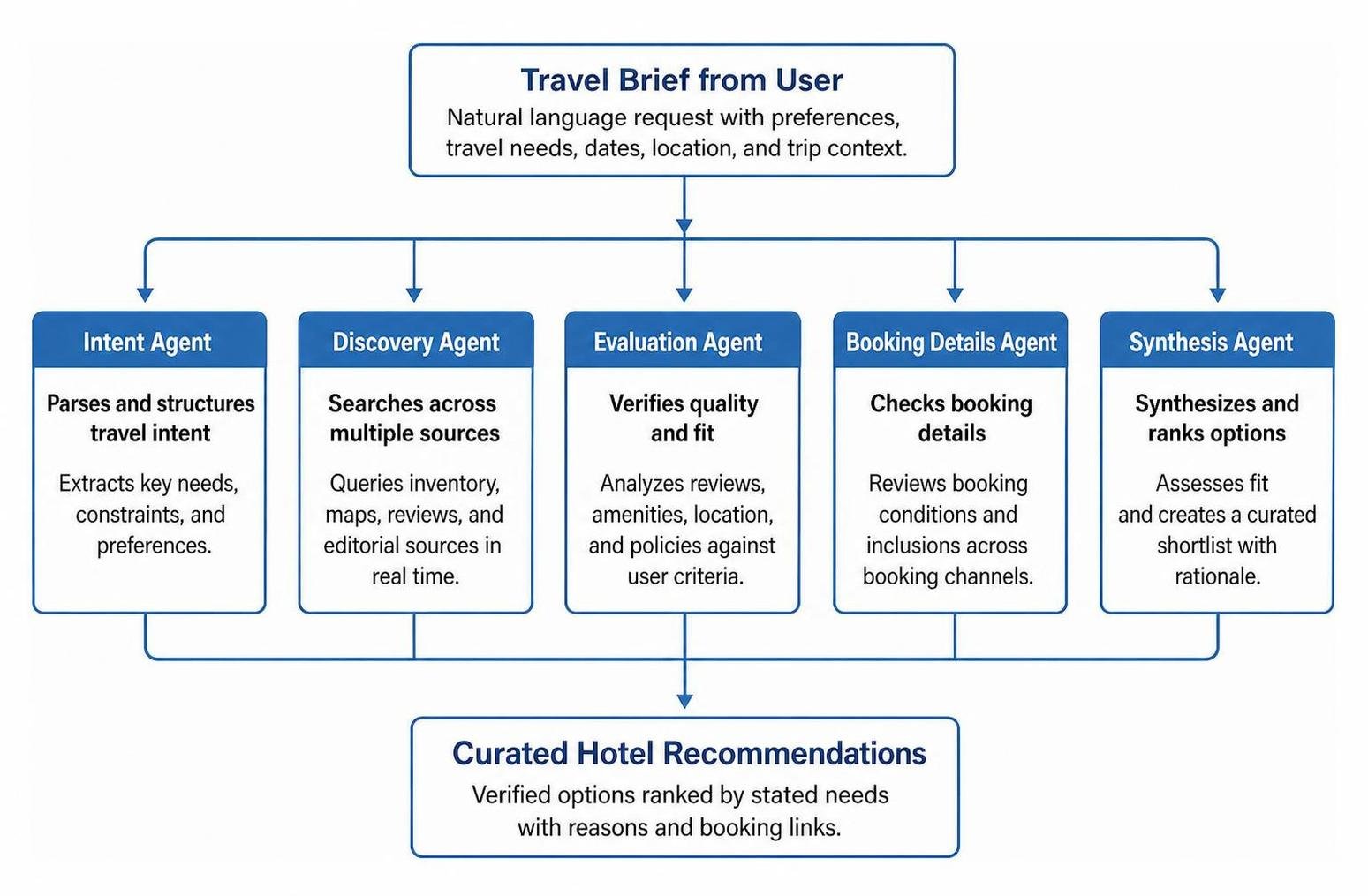
Start with a clear travel brief. Share the destination, dates, preferred area, accessibility needs, must-have amenities and any deal-breakers, then ask the AI search tool to explain why each stay may fit.
For hotel brands, visibility depends on publishing accurate information that supports a confident decision. Clear property pages, useful FAQs and consistent business details make it easier for AI-driven search systems to interpret a hotel’s offering.
How AI Search for Hotels Supports Better Accommodation Research
AI search tools interpret the meaning behind a travel query, not only the individual words in it. A request for a quiet stay near public transport, for example, can bring together location details, recent reviews, amenity information and stated hotel policies.
For travellers, this creates a more natural research experience. Instead of moving through a long set of filters, you can ask follow-up questions about accessibility, parking, breakfast, nearby transport or the type of stay that suits the trip.
For Australian accommodation providers, the opportunity lies in the quality of the information available online. AI systems need consistent details across property pages, booking channels, maps, reviews and business listings before they can present a reliable recommendation.
What Conversational Hotel Search Can Assess
Conversational hotel search can connect travel intent with property details. It can compare stated amenities, location context, guest feedback and booking conditions, helping people narrow their options before they visit an official booking page.
The strongest results come from information that is specific and easy to verify. Hotel pages should clearly describe room features, accessible facilities, parking arrangements, check-in requirements, pet policies and nearby landmarks.
| Research Area | Traditional Hotel Search | Conversational AI Search |
|---|---|---|
| Query approach | Filters and keyword matching | Natural-language questions with travel context |
| Results | Long property lists | Focused shortlists with explanations |
| Review research | Star ratings and selected comments | Themes drawn from available guest feedback |
| Trip planning | Separate accommodation searches | Accommodation details considered alongside travel plans |
| Information checks | Manual comparison across pages | Guided follow-up questions and source checking |
A Practical Way to Use AI Search for Hotels
Begin with the details that matter most for the stay. Include travel dates, the destination, who is travelling, preferred surroundings, required facilities and any conditions that would rule a property out.
Then ask for a comparison that explains how each hotel matches those needs. Check the resulting shortlist against the hotel’s own website and current booking information before making a reservation.
Hotel teams can support this research process by keeping property information complete and current. AI SEO Services can help organisations organise the content and technical signals that strengthen visibility in AI-driven and traditional search.
Optimising Hotel Visibility for Generative Travel Search
Australian hospitality brands benefit when factual property information is easy to find and consistent across digital touchpoints. Structured data, clear page headings and focused FAQs help search systems identify the details that matter to prospective guests.
Useful FAQ content can answer common questions about check-in, parking, accessibility, family facilities and local transport. This approach gives AI-driven search systems clearer evidence to use when responding to accommodation queries.
Reputation also matters. Encourage genuine guest feedback and respond to it responsibly, while keeping property descriptions accurate across the hotel website and major discovery channels.
Building Trust in Australian Hotel Search Content
A hotel can make its online information more useful by treating every property page as a practical decision resource. Keep room descriptions aligned with the facilities available on site, explain accessibility features plainly and update seasonal information when conditions change.
Local context also helps. Mention nearby transport, beaches, business districts, event venues or regional attractions only when the information is accurate and relevant to the property. Specific details give prospective guests a clearer picture of what a stay may involve.
Content teams should also review the language used across booking pages, location pages and frequently asked questions. When the same amenity or policy is described in conflicting ways, AI-driven search systems may struggle to present a dependable answer.
The goal is not to write for a machine alone. Useful, well-organised hotel content helps people confirm the essentials quickly, and that clarity can support stronger discovery across the search experiences they already use.
Australian hotel teams can also use internal review processes to confirm that new content matches the operational reality of each property. A regular check of amenities, access information and local guidance reduces confusion for guests and supports a more consistent search presence as pages evolve for businesses serving Australia’s diverse regional travel markets year-round.
Regular content reviews also help hotel teams reflect changes to facilities, local transport and seasonal operations, so travellers receive practical information that matches the experience available when they arrive.
The Future of Hotel Discovery in Australia
AI-driven search is changing how travellers research accommodation, from the first question through to the final booking check. As search tools become better at interpreting conversational requests, clear hotel information will become even more important.
Hotel websites should prepare for questions that combine location, guest needs, accessibility and stay preferences. A well-structured property page helps AI search systems recognise the details that differentiate a hotel and present them with appropriate context.
Helping Australian Hotels Be Found in AI Search
AuraSearch™ combines search engine optimisation with Generative Engine Optimisation (GEO) to help Australian hospitality brands present clearer, more credible information in AI-driven and traditional search. The work focuses on technical structure, useful content and consistent entity information, with outcomes shaped by each platform’s changing algorithms.
A practical search visibility strategy can help hotel teams make their property details easier to interpret when prospective guests research accommodation. AuraSearch supports organisations that want a human-led approach to AI search visibility.
FAQs
How does conversational hotel search differ from traditional hotel search?
Conversational hotel search lets you describe the type of stay you need in natural language. It can consider details such as location, facilities, accessibility and review themes, then explain why a property may fit.
What information should Australian hotels publish for AI search?
Australian hotels should publish clear, current details about rooms, amenities, accessibility, parking, check-in and local surroundings. Consistent information across property pages and business listings gives search systems stronger evidence to interpret.
Can AI search help travellers compare hotel options?
AI search can help travellers create a focused shortlist by comparing stated property details against the needs in a travel brief. The hotel’s official website remains the best place to confirm current availability and booking conditions.
Why do hotel FAQs matter for AI-driven search?
Hotel FAQs make answers to common guest questions easier to find and interpret. They can clarify practical details that may not fit naturally into room descriptions or location pages.
How can guest reviews support hotel visibility?
Guest reviews add independent context about a stay, especially when feedback consistently discusses service, cleanliness, location or facilities. Hotels should encourage genuine reviews and keep their own descriptions accurate.
How can AuraSearch help hospitality brands with AI search?
AuraSearch helps hospitality brands improve the clarity, structure and credibility of their search content. The approach supports visibility across AI-driven and traditional search platforms without promising specific rankings or recommendations for Australian accommodation businesses across regional markets.