


What Is GEO Search Engine Optimization and Why Does It Matter?
Why Geo Search Engine Optimization Matters Now
Geo search engine optimization helps Australian businesses make their expertise easier for search engines and AI answer platforms to understand. It builds on SEO foundations, then adds the structure, evidence and entity clarity that tools such as ChatGPT, Google AI Overviews, Perplexity and Claude need when they generate answers in practical buying and research moments.
Key Takeaways
- Generative Engine Optimisation (GEO) helps web assets become clearer, more credible and easier for AI retrieval systems to cite.
- Answer engines often favour concise, fact-dense passages that define a topic clearly and connect it to trusted entities.
- Technical foundations such as server-side rendering, crawler access, structured data and clear page architecture make content easier to parse.
- Measuring GEO means looking beyond rankings to prompt coverage, citation share, brand mentions and sentiment across AI search platforms.
- AuraSearch™ supports this work through search visibility services that combine expert strategy, AI tools and transparent reporting.
I am Amber Brazda, an AI Search Specialist with more than a decade of experience building search authority for Australian businesses and guiding the move from rankings to AI citation visibility. My work in geo search engine optimization focuses on structured authority, expert-led content, and diagnosing how generative systems represent brands in their answers.
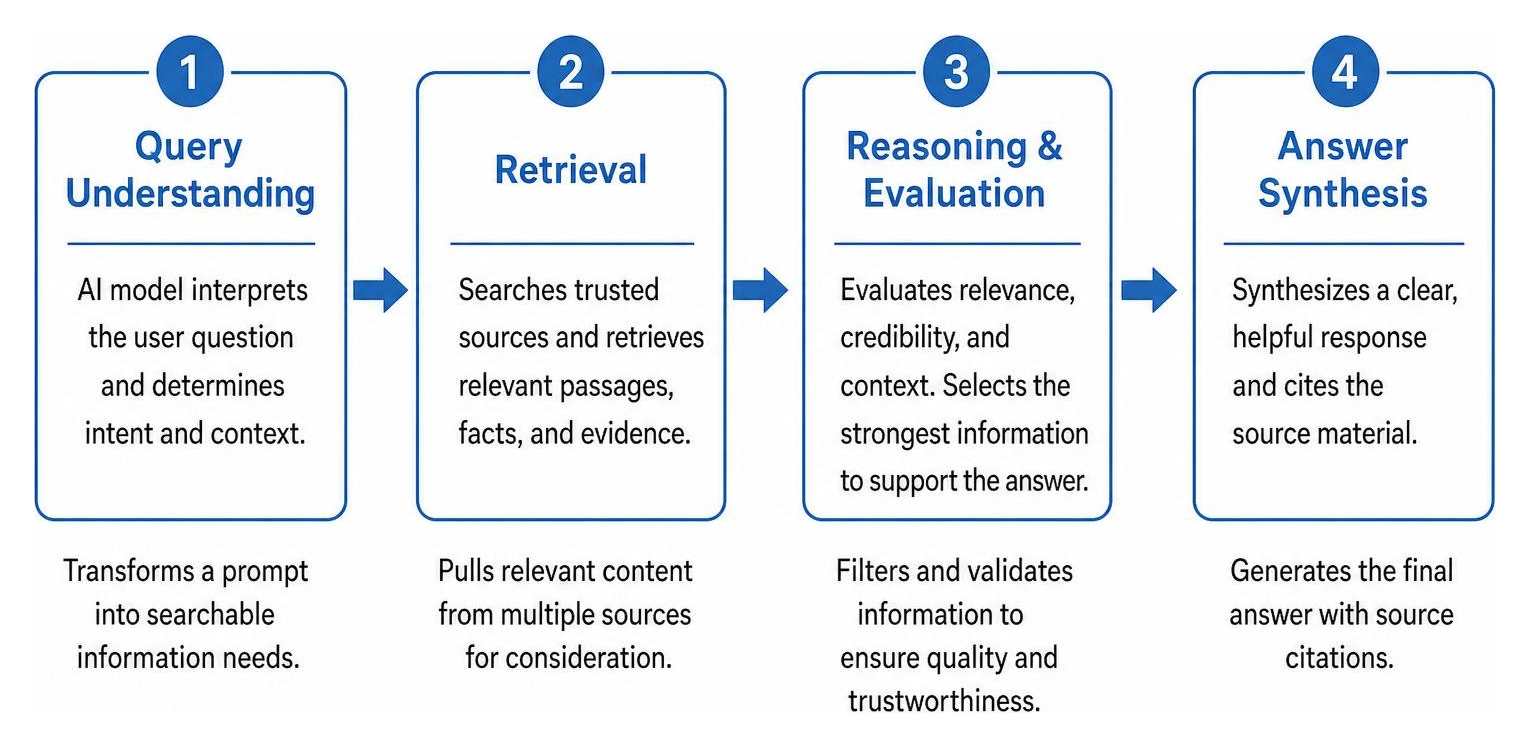
Traditional search usually returns a list of links. AI search retrieves information from several sources, assesses relevance and trust, then writes a response. Strong organic rankings still matter, but they do not automatically mean a page will appear in that response.
GEO improves the likelihood that search engines and answer engines can recognise a page's subject, entities, evidence and authority. For Australian organisations, that means writing content that reflects local terminology, clear expertise and verifiable context rather than relying on generic global search advice.
The approach covers search visibility across AI-driven and traditional platforms, including ChatGPT, Google AI Overviews, Perplexity, Claude, Google and Bing. The focus is expert search strategy supported by AI tools, technical clarity, and content that gives answer engines credible material to reference.
Core Framework for Geo Search Engine Optimization
Generative retrieval shifts discovery from ranking static URLs to recognising verifiable entities. Traditional search engines still parse keywords and links, but generative models also retrieve, reason and respond using source passages they can interpret with confidence.
A practical GEO framework starts with semantic authority. Each page should make the topic, organisation, author, service area and evidence clear enough for retrieval systems to understand without guesswork.
Large language models segment web documents into smaller passages and compare those passages with user prompts. Well-structured content gives those systems complete, self-contained explanations that can be reused accurately in generated answers. Aligning digital content with Australia's Artificial Intelligence Ethics Framework also supports transparent, verifiable data provenance across automated discovery systems.
| Evaluation Factor | Traditional Search Approach | Generative Engine Optimisation Focus |
|---|---|---|
| Discovery Channel | Crawls HTML through standard web bots | Parses content through AI web bots, RAG pipelines and API endpoints |
| Primary Output | Ranked list of blue links | Synthesised natural language answers with source citations |
| Content Priority | Keyword relevance, URL structure and backlinks | Factual density, entity modelling, schema richness and clear definitions |
| Data Architecture | Standard metadata and on-page headings | Rich JSON-LD schema, structured tables and markdown scaffolding |
| Visibility Metric | Search engine results page ranking | Citation share, prompt coverage, sentiment and entity attribution |
A structured framework helps content serve people and answer engines at the same time. Organisations can use the complete guide to generative search engine SEO to understand how retrieval shifts affect discovery, then work with specialist search optimisation services to audit technical visibility across major conversational search interfaces.
Technical Foundations of Geo Search Engine Optimization
Technical infrastructure gives AI search systems a clean path to the content they need. Crawler permissions, navigation files and server-rendered HTML all help retrieval systems parse pages without unnecessary friction.
Robots.txt files should allow appropriate access for modern AI retrieval bots while still protecting private or operational areas of a website. Clear directives help commercial documentation remain discoverable without exposing material that should stay restricted.
The emerging llms.txt
standard provides another navigation layer for language models. A curated markdown index at the site root can point AI crawlers towards core informational assets and reduce parsing overhead.
Server-side rendering gives crawlers fully compiled HTML on the first request. Sites that depend heavily on client-side JavaScript can create indexation delays or incomplete text parsing during real-time retrieval.
Rich JSON-LD schema markup establishes explicit entity relationships across digital properties. Organisation, Article, Product and FAQPage schema can clarify the relationship between a business, its people, its services and its supporting content. For a deeper explanation, review guidance on decoding generative engine optimization.
Content Citability and Geo Search Engine Optimization Strategies
Content needs to be useful at passage level, not only at page level. Generative retrieval systems divide documents into sections, then evaluate each block for context, factual accuracy and relevance to the prompt.
Opening paragraphs below headings should answer the topic directly. This structure gives readers immediate value and gives retrieval systems a concise passage that can stand on its own.
Clear information architecture also matters. Tables, lists and descriptive headings make complex ideas easier to scan, compare and quote accurately than dense narrative copy.
Factual density improves citation potential because answer engines need specific, verifiable claims. Content should prioritise clear definitions, concrete workflows, named entities and trustworthy references over broad opinion.
Topical clusters reinforce domain authority across related subjects. Descriptive internal links between pillar pages, service pages and supporting resources help websites build knowledge graphs that answer engines can recognise as credible category sources. This structure supports strategic generative engine optimisation content architecture.
Measuring Generative Engine Visibility and Performance
Measuring AI visibility requires more than a standard ranking report. Generative engines produce context-dependent answers, so performance tracking needs to assess how often a brand appears, how it is described and which sources are cited.
Prompt coverage shows how often industry-relevant conversational queries surface a brand in generated responses. Citation share compares how often verified domain assets are used as supporting sources against other sources in the same market.
Regular auditing across ChatGPT, Google AI Overviews, Perplexity and Claude reveals differences between retrieval models. This helps teams see where a brand is visible, where it is absent and where content needs clearer evidence or structure across the buyer journey.
Auditing assets for anti-citation signals also matters. Excessive calls to action, intrusive display scripts, anonymous authorship and thin copy can reduce trust and make passage extraction harder. For enterprise diagnostic reviews, contact the strategic search team to assess search visibility across conversational interfaces.
Building Sustainable AI Search Visibility
Sustainable visibility across modern search depends on technical precision, clear expertise and content that answer engines can interpret confidently. AuraSearch™ helps Australian businesses improve search visibility across ChatGPT, Google AI Overviews, Perplexity, Claude, Google and Bing.
The team combines programmatic diagnostics with human oversight to build durable entity authority. This includes auditing server configurations, shaping structured JSON-LD schema and refining editorial copy so important expertise is easier for both people and machines to understand in real search journeys.
Organisations ready to strengthen visibility across traditional indexes and generative engines can review search visibility services or contact the strategic search team to discuss a practical AI search optimisation pathway for ongoing measurement.
FAQs
What is the primary objective of generative search optimization?
The primary objective is to make web content discoverable, understandable and directly citable within answers created by generative engines. Instead of competing only for blue link positions on traditional search engine results pages, GEO helps platforms such as ChatGPT, Perplexity and Google AI Overviews recognise domain assets as useful sources for natural language queries.
How does structured schema markup influence AI answer inclusion?
Structured schema markup gives language models explicit entity data using the Schema.org vocabulary. Detailed JSON-LD markup can clarify relationships between organisations, authors, services and concepts. This structured format helps retrieval systems extract accurate facts with less semantic confusion, which may improve the likelihood of source attribution in conversational answers.
How can businesses get started with AI search visibility?
Businesses can begin with an AI readiness audit that reviews crawler permissions in robots.txt
, schema depth and content formatting. Informational pages should feature direct lead answers, verifiable factual evidence and clean semantic headings. A tailored visibility strategy can then connect both traditional and AI-driven platforms with a clear plan for content, technical improvements, transparent reporting, governance, accountability and ongoing measurement.