
How to Optimise for Generative Answers and Win the AI Search Game

Why Strong Rankings Still Miss AI Search Visibility

If your brand already ranks well in Google, it can feel like you have search visibility covered. But AI search has changed the game because tools like ChatGPT, Google AI Overviews, Perplexity, and Claude often answer the question directly instead of sending users to a list of links.

Key Takeaways

  • Traditional rankings do not guarantee that your content will be selected or cited inside generative AI answers.
  • The best way to optimise content for generative answers is to give clear, direct responses under each major heading.
  • Structured headings, bullet points, tables, schema markup, and specific named entities make your content easier for AI systems to understand.
  • AI crawler access matters because blocked bots cannot retrieve and cite your content in real-time answer experiences.
  • AuraSearch™ helps brands connect classic SEO strength with the newer visibility signals used by AI answer engines.

I am Amber Brazda, AI Search Specialist at AuraSearch™, and I help brands bridge the gap between traditional search authority and Generative Engine Optimisation (GEO). In simple terms, that means making your content easier for AI platforms to understand, trust, and cite when people ask questions.

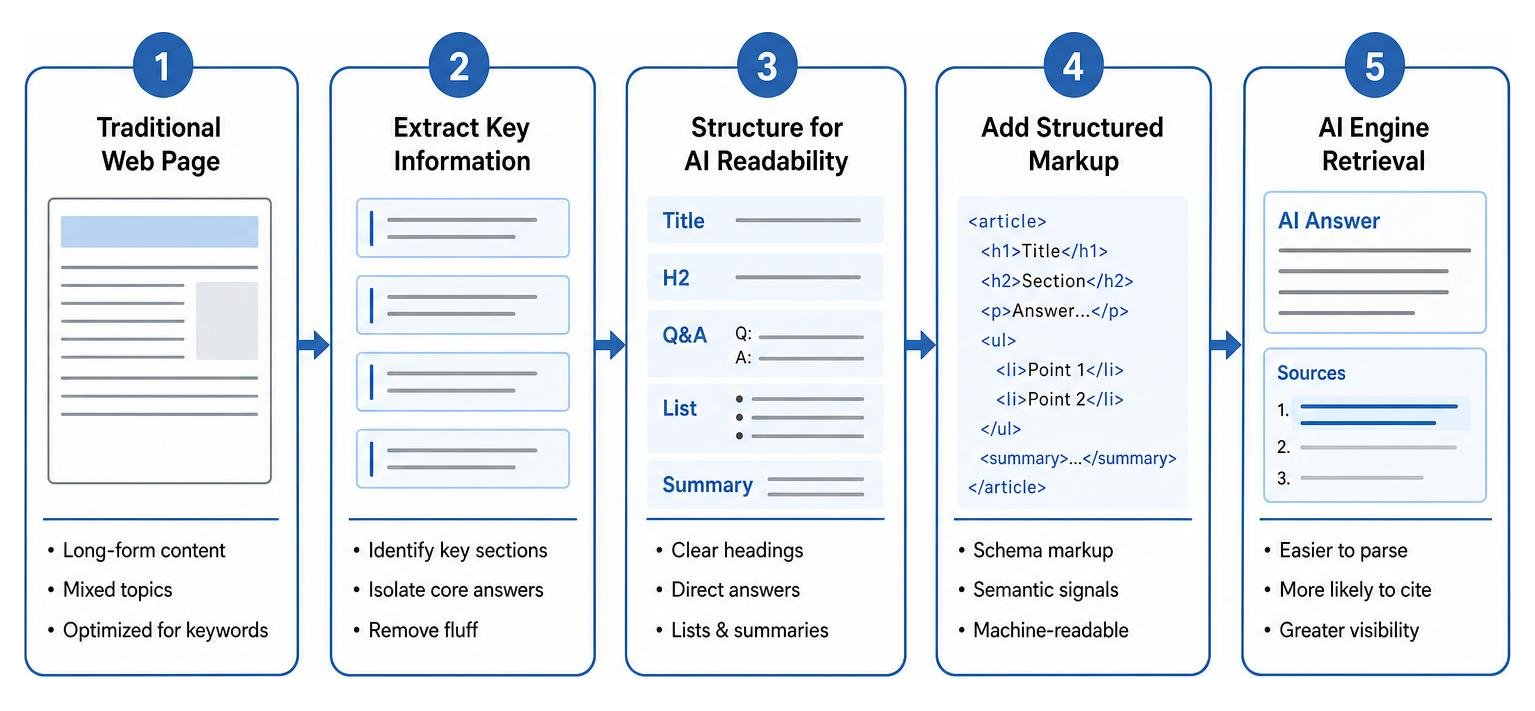
To optimise content for generative answers, you need to structure each page so AI search platforms can quickly identify the best answer, the supporting evidence, and the source behind it.

Here is what that looks like in practice:

  • Lead with the answer. Place a clear, concise response of about 40 to 60 words directly under each important heading.
  • Use easy-to-scan formatting. Headings, bullet lists, tables, and FAQ sections help AI systems extract and reuse your content.
  • Name the specifics. Brands, dates, statistics, products, services, and expert names give AI systems stronger context.
  • Add schema markup. JSON-LD structured data, such as Article, FAQPage, and HowTo schema, helps search systems classify your content.
  • Build authority beyond your website. Mentions on trusted external platforms can strengthen the signals AI systems use when choosing sources.
  • Allow AI crawler access. Blocking bots such as GPTBot or PerplexityBot can remove your content from real-time citation opportunities.

Search has quietly split in two. Many users now open an AI assistant or see an AI-generated summary before they ever reach the traditional search results.

That is a problem for brands that have spent years building SEO visibility. A page can rank well and still be ignored by an AI answer if the content is not structured clearly enough at the paragraph level.

The shift is not temporary. AI-driven search is becoming a normal part of how people compare services, research products, and make decisions. If your strategy still focuses only on blue links, it is probably incomplete.

The new challenge is simple: your brand needs to rank, but it also needs to be clear, credible, and easy for AI systems to cite.

Key Strategies to Optimise Content for Generative Answers

The shift toward AI-driven search needs a slightly different playbook. Traditional search engine optimisation focuses on ranking full pages for specific keywords. Generative Engine Optimisation focuses on helping individual paragraphs, answers, and sections get cited inside AI-generated responses.

If you want your content to show up in AI answers, you need to make every important section easy to understand on its own.

Feature Traditional SEO Generative Engine Optimisation
Primary Goal Rank pages in a list of search results Earn citations within AI-generated answers
Target Unit Full web pages and URL structures Individual paragraphs and semantic blocks
Primary Signal Keyword relevance, links, and technical quality Entity clarity, structure, and factual trust
User Experience Click through to visit a website Get the answer inside the search interface

Answer Engine Optimisation works alongside GEO by targeting the direct, conversational questions people ask AI tools. Many AI platforms use Retrieval-Augmented Generation, often called RAG, to ground responses in web sources. That means the system looks for useful passages, pulls them into context, and then builds an answer around them.

These systems may also use query fan-out, where one user question is expanded into several related searches. Your page needs to satisfy those related questions quickly, clearly, and with enough context to be trusted.

Implementing Structured Schema Markup

Schema markup helps AI and search systems understand what your page is about. When you add JSON-LD structured data, you give crawlers clearer signals about the people, services, products, questions, and relationships mentioned on the page.

For most educational content, Article schema is a strong starting point. FAQPage schema can support question-and-answer sections, while HowTo schema can help when the page explains a step-by-step process. This technical layer makes it easier for retrieval systems to verify and classify your content.

Our AI SEO services include this kind of semantic setup because it helps reduce guesswork for AI crawlers.

Optimising Content Structure and Paragraph Density

AI systems do not read pages the way people do. They break content into blocks, evaluate each block for usefulness, and then decide whether a specific passage is worth citing.

To optimise content for generative answers, start each major section with a direct standalone answer. Keep that answer short, usually around 40 to 60 words, then follow it with supporting details, examples, and proof.

Clear H2 and H3 headings act like a map. Bullet points and tables also help because they turn complex ideas into extractable pieces that AI systems can reuse in summaries, comparisons, and recommendations.

Enhancing Entity Density and Brand Mentions

Entity clarity helps AI systems understand who and what your content is about. An entity can be a brand, person, service, location, product, platform, industry, or technical concept.

The goal is not to stuff the page with names. It is to replace vague claims with useful specifics. For example, mentioning ChatGPT, Google AI Overviews, Perplexity, Claude, JSON-LD, FAQPage schema, and robots.txt gives AI systems more context than saying “modern search tools” or “technical best practices.”

Brand mentions across trusted third-party sites can also influence whether AI systems treat your business as a credible source. That is why AuraSearch™ combines on-page structure with off-site visibility work through its Generative Engine Optimisation strategies.

Managing Robots.txt and AI Bot Crawl Access

One common mistake is blocking AI crawlers in robots.txt without understanding the visibility trade-off. Some brands do this because they are worried about content use, but it can also limit citation opportunities.

If an AI system cannot access your page during retrieval, it may not be able to cite your content in real-time search experiences. Bots such as GPTBot, ChatGPT-User, and PerplexityBot need crawl access when your goal is inclusion in AI-generated answers.

The right approach is not always “allow everything.” It is to choose crawler rules intentionally, based on your risk tolerance, content strategy, and visibility goals.

How AuraSearch Helps Brands Compete in AI Search

Generative search is moving quickly, and most brands do not need more vague advice. They need a clear strategy for making their content easier to cite, compare, and recommend across AI platforms.

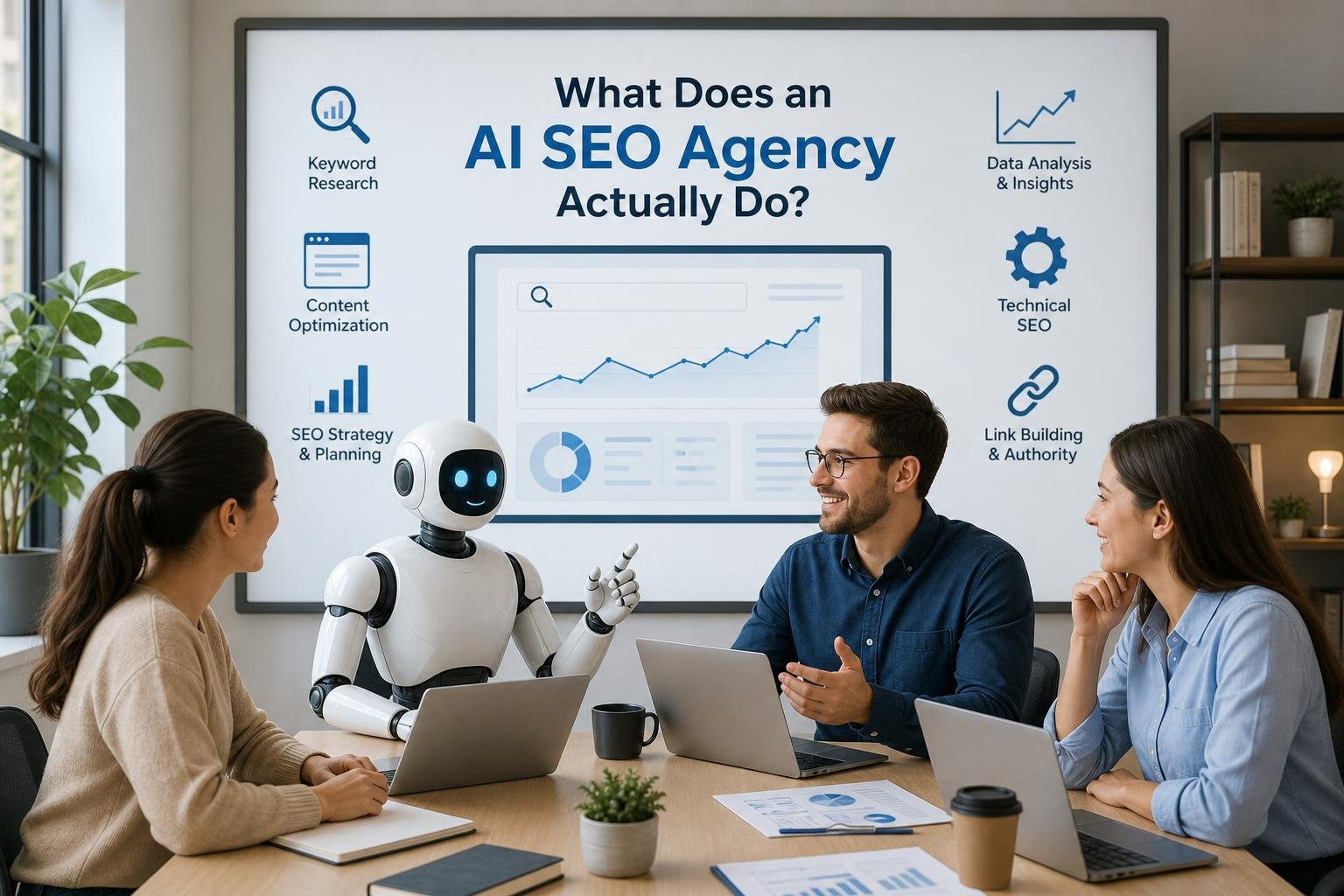
AuraSearch™ brings together technical SEO, content strategy, structured data, and AI search visibility planning. We do not rely on automated black-box reports. We build practical strategies that show where your brand is being missed and what needs to change.

Our team works across B2B, SaaS, healthcare, fintech, professional services, trades, and retail. That matters because AI search visibility is not one-size-fits-all. A healthcare brand, an eCommerce store, and a professional services firm all need different trust signals.

For competitive product categories, our eCommerce and Retail AI SEO work helps product and category pages become easier for AI systems to extract, compare, and cite in recommendation-style answers.

We also believe AI should support speed and scale while human strategists guide the nuance. Your content still needs judgment, positioning, ethics, and a clear understanding of what your customers actually care about.

If you want to see where your brand stands now, explore our Services or get in touch through our Contact Us page to schedule a strategic consultation.

FAQs

How do you optimise for generative answers on your website?

You optimise for generative answers by making each important section easy for AI systems to understand and cite. Start with a direct answer, use clear headings, add structured formatting, include specific entities, support your claims with credible context, and make sure AI crawlers can access the page when real-time visibility is the goal.

Why is it necessary to optimise for generative answers in 2026?

It matters because more people now use AI assistants and AI summaries during research and decision-making. If your content is not built for those answer experiences, your brand may rank in traditional search but still be left out of the response a prospective customer actually reads.

What is the difference between traditional SEO and GEO?

Traditional SEO focuses on helping full pages rank in search results. GEO focuses on helping specific passages get selected, cited, or summarized inside AI-generated answers. The two strategies work best together because people now move between search engines, AI assistants, comparison tools, and websites before they make a decision.

Does schema markup improve visibility in AI search results?

Schema markup can improve machine understanding by turning key page details into structured, readable data. It does not guarantee a citation, but it helps search and AI systems identify your content type, questions, services, products, and entities with more confidence.

Should you block AI crawlers like GPTBot in your robots.txt file?

You should only block AI crawlers if you understand the trade-off. Blocking bots may reduce unwanted access, but it can also limit your ability to appear in real-time AI search citations. If AI visibility is important, review crawler rules carefully instead of blocking them by default.

How long does it take to see results from GEO?

GEO results usually build over time. Some brands may see early citation changes within a few weeks after structural and technical updates, while more competitive topics can take longer. The best approach is to track conversational visibility, update content regularly, and build authority beyond your own website.

Recent Posts

By Amber Brazda August 21, 2026
Learn how to capture high-intent AI driven plumbing leads with Generative Engine Optimisation and dominate local search results.
By Amber Brazda August 20, 2026
Master the A–Z of AI search visibility for real estate to dominate agent citations and attract buyers before competitors do.
By Amber Brazda August 19, 2026
AI Content Creation Benefits: 101 - Learn about ai content creation benefits
By Amber Brazda August 18, 2026
Discover Melbourne AI SEO tips for 2026 dominance: optimize for ChatGPT, Gemini, and AI Overviews with expert strategies.
By Amber Brazda August 17, 2026
Learn how to use AI for Google Business Profile local SEO to dominate local search and boost visibility in 2026.
By Amber Brazda August 14, 2026
Master AI search keyword optimisation with a practical framework that boosts visibility, citations and conversions in AI Overviews.
By Amber Brazda August 13, 2026
The Ultimate Guide to AI SEO for Trades - Learn about AI SEO for Trades
By Amber Brazda August 12, 2026
Discover what is answer engine optimization aeo and learn how to optimize content for AI search visibility and higher conversions.
By Amber Brazda August 11, 2026
Secure your firm as the cited authority with a complete law firm AI visibility strategy for generative search success.
By Amber Brazda August 10, 2026
Master the ultimate ai seo checklist for beginners with this practical guide covering technical foundations, schema markup, entity authority and AI search visibility.
Show More