

How to Improve Your Website's Visibility in AI Search Engines
Search Has Changed. Has Your Visibility Strategy?
AI search engine visibility is about making sure your brand is easy for platforms like ChatGPT, Google AI Overviews, Perplexity, and Claude to find, understand, and cite. If your website is still built only for traditional rankings, you may be missing the places where customers now get their answers.
Key Takeaways
- AI search engines need clear, structured content they can understand and quote.
- Technical access matters because blocked crawlers can keep your site out of AI-generated answers.
- Strong brand authority comes from consistent business information and credible third-party mentions.
- Answer-first pages make it easier for AI systems to extract useful passages from your site.
- AuraSearch helps brands improve visibility across both traditional search and emerging AI platforms.
I am Amber Brazda, AI Search Specialist at AuraSearch, where I help brands improve AI search engine visibility through practical Generative Engine Optimisation strategies. Over the past decade, I have worked with businesses that want to move from simply ranking in search results to being cited in the answers their customers actually read.
To improve your visibility in AI search engines, focus on five areas:
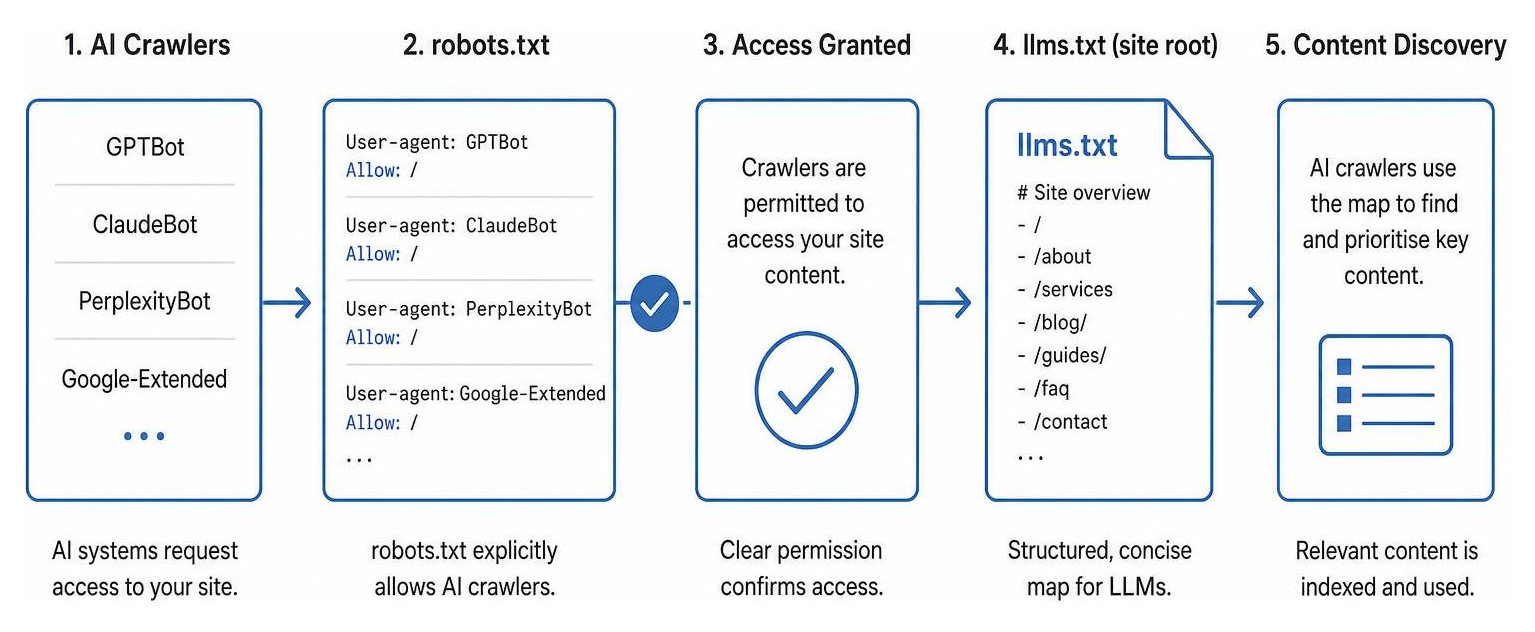
- Allow AI crawlers to access your site by checking that your robots.txt file permits GPTBot, ClaudeBot, PerplexityBot, and Google-Extended.
- Structure content for direct extraction by placing clear, useful answers near the top of each page or section.
- Add structured data with JSON-LD schema, including Article, FAQPage, HowTo, and Organisation markup.
- Build external brand authority through earned media, consistent entity signals, and third-party mentions across the web.
- Create and maintain an llms.txt file at your site root so AI crawlers have a clean map of your most important content.
Search behaviour has changed quickly. Your prospective customers may now ask ChatGPT a question, skim a Google AI Overview, or compare answers in Perplexity before they ever click through to a website. The brands included in those answers earn trust early. The brands left out can feel invisible, even when they still rank well in traditional search.
That is why AI search engine visibility is not just another SEO trend. It changes who gets discovered and how people choose who to contact. Page-one rankings still matter, but they no longer guarantee the same level of attention if AI-generated summaries answer the query before a user reaches the organic results.
The challenge is usually structural. Most websites were built for traditional search crawlers, not large language models. AI systems look for clear answers, consistent business details, crawlable pages, structured data, and external proof that your brand is credible. When those signals are weak or confusing, your content is easier for AI systems to skip.
Optimising for AI Search Engine Visibility
Technical Infrastructure Governs Machine Readability
Technical optimisation makes sure AI crawlers can access, parse, and index your website without running into unnecessary barriers. These systems rely on specific user agents to gather information, so your robots.txt file should allow bots such as GPTBot, ClaudeBot, PerplexityBot, and Google-Extended when that matches your visibility strategy.
Default content delivery network settings can sometimes block these crawlers without making the issue obvious. That can leave useful pages out of generative search results. An llms.txt file in your root directory gives large language models a cleaner, markdown-formatted map of your core pages, so they can understand your site without sorting through design code and navigation noise.
Structured Data Establishes Entity Verification
Structured data turns your website copy into a machine-readable format that AI engines can use to verify facts, services, and brand relationships. JSON-LD schema helps generative models understand who you are, what you offer, and which content supports those claims.
For many businesses, this is where traditional SEO and AI visibility start to overlap. Article, FAQPage, HowTo, and Organisation schema can help search models identify your brand as a verified entity in your industry. If you want expert help with this layer, AuraSearch offers dedicated Generative Engine Optimisation strategies built for AI-led discovery.
Modular Content Architecture Drives Citation Rates
Answer-first content gives AI systems the short, precise passages they need when building synthesised answers. Instead of hiding the main point halfway down the page, lead each important section with a direct response that a reader and a retrieval system can understand quickly.
Clear H2 and H3 headings also help. When headings reflect the questions your audience asks, AI systems can map the query to the right part of the page more easily. This makes your content more useful for readers and more suitable for citation in AI-generated responses.
Traditional Search Optimisation vs Generative Engine Optimisation
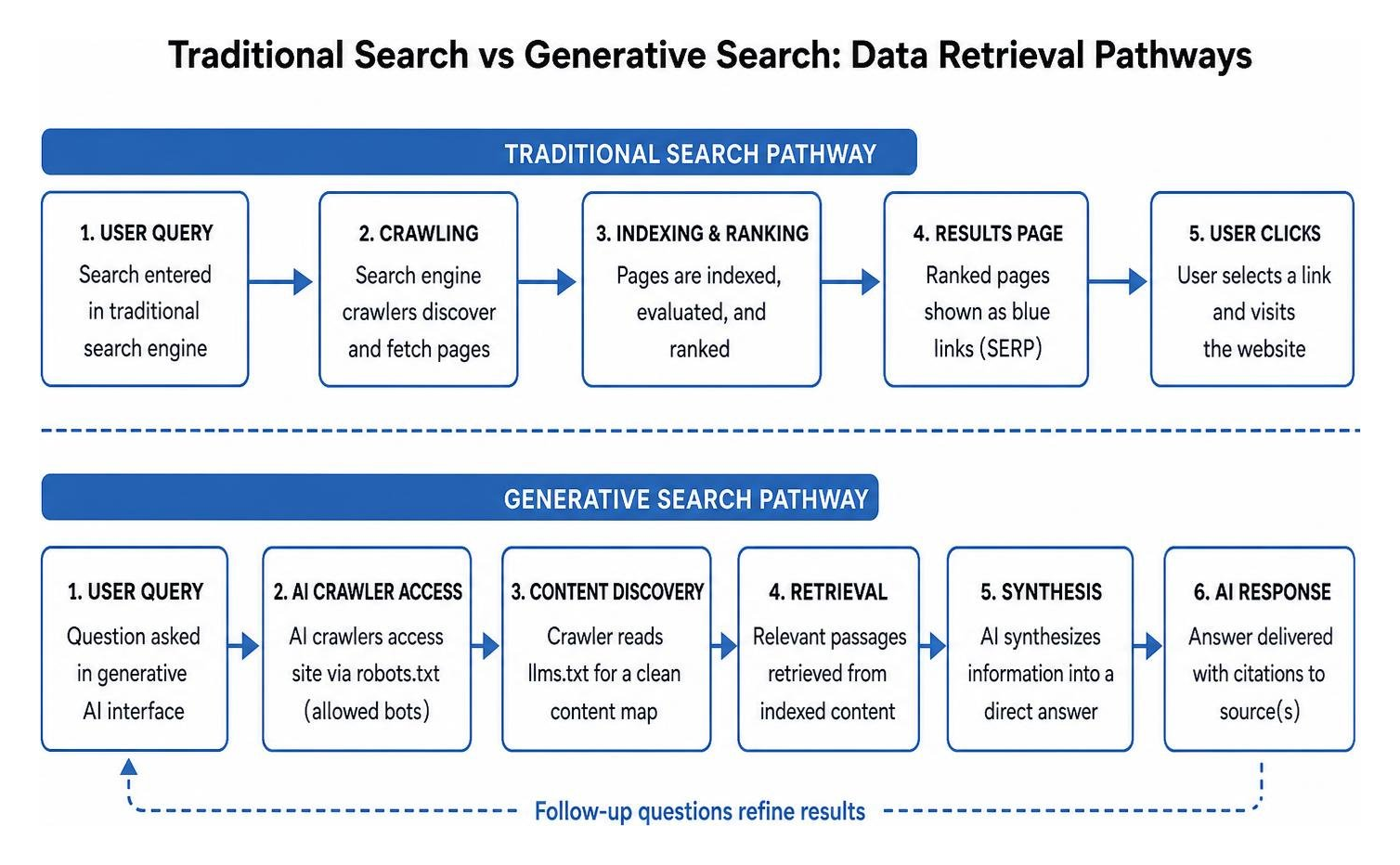
Traditional search optimisation focuses on earning rankings in organic results. Generative Engine Optimisation focuses on earning brand mentions and citations inside AI-generated answers. The best strategy usually treats both as connected, because strong organic authority can support AI visibility while structured, answer-first content improves machine readability.
| Feature | Traditional SEO | Generative Engine Optimisation |
|---|---|---|
| Primary Goal | Rank in the top organic results | Earn brand citations and mentions in AI answers |
| Content Focus | Comprehensive pages and relevant keywords | Modular, answer-first passages |
| Key Signals | Backlinks and on-page relevance | Schema markup, entity consistency, and external mentions |
| Interface | Search engine results pages | Conversational platforms like ChatGPT and Perplexity |
External Authority and Entity Consistency Validate Brand Trust
AI systems do not evaluate your website in isolation. They compare what your site says with information they find across directories, profiles, articles, reviews, and other third-party sources. When those sources consistently support the same brand story, your business becomes easier to trust and cite.
Keep your name, address, phone details, service descriptions, and brand positioning consistent across the web. Conflicting information can make AI systems less confident in your business, especially when a competitor has cleaner entity signals. For local businesses, this kind of consistency can be one of the simplest ways to strengthen AI search engine visibility.
Build a Stronger Presence in AI Search
Improving AI search visibility takes more than adding a few keywords to a page. Your website needs clean technical access, structured data, answer-first content, and external signals that show your brand is credible. When these pieces work together, AI platforms have a much clearer reason to mention your business in their answers.
AuraSearch helps businesses build that foundation across traditional search and emerging AI platforms. If you want support turning your website into a clearer, more citable source, contact AuraSearch and start building a search strategy designed for how people find answers now.
FAQs
What is AI search engine visibility and why does it matter?
AI search engine visibility is how often and how prominently your brand appears in AI-generated answers. It matters because more people now get quick responses from tools like ChatGPT, Google AI Overviews, and Perplexity before they visit a website. If your brand is not included in those answers, prospective customers may never discover you.
How do AI search engines select and cite sources?
AI search engines look for sources that are easy to access, easy to understand, and trustworthy enough to quote. They often favour pages with clear answers, structured data, crawlable content, and supporting authority signals from other places on the web.
Which platforms should a brand optimise for first to build AI search engine visibility?
Start with technical improvements that help every platform understand your site. From there, focus on Google AI Overviews, ChatGPT, and Perplexity because they influence how many customers now research services, compare providers, and form early impressions.
How does structured data affect AI citations?
Structured data helps AI systems understand your business, services, content, and relationships in a cleaner format. It does not guarantee a citation, but it gives search models more confidence when verifying facts about your brand.
How long does it take to see results from AI search optimisation?
Timelines vary by issue. Technical fixes, such as unblocking crawlers, may start helping within weeks. Content restructuring and external authority building usually take longer because AI systems need time to encounter, verify, and trust the new signals.
How can businesses measure and track their presence in AI search?
You can track AI search visibility by testing important prompts, monitoring brand mentions in AI answers, reviewing referral traffic from generative platforms, and measuring Share of Model across the questions your customers are most likely to ask.