
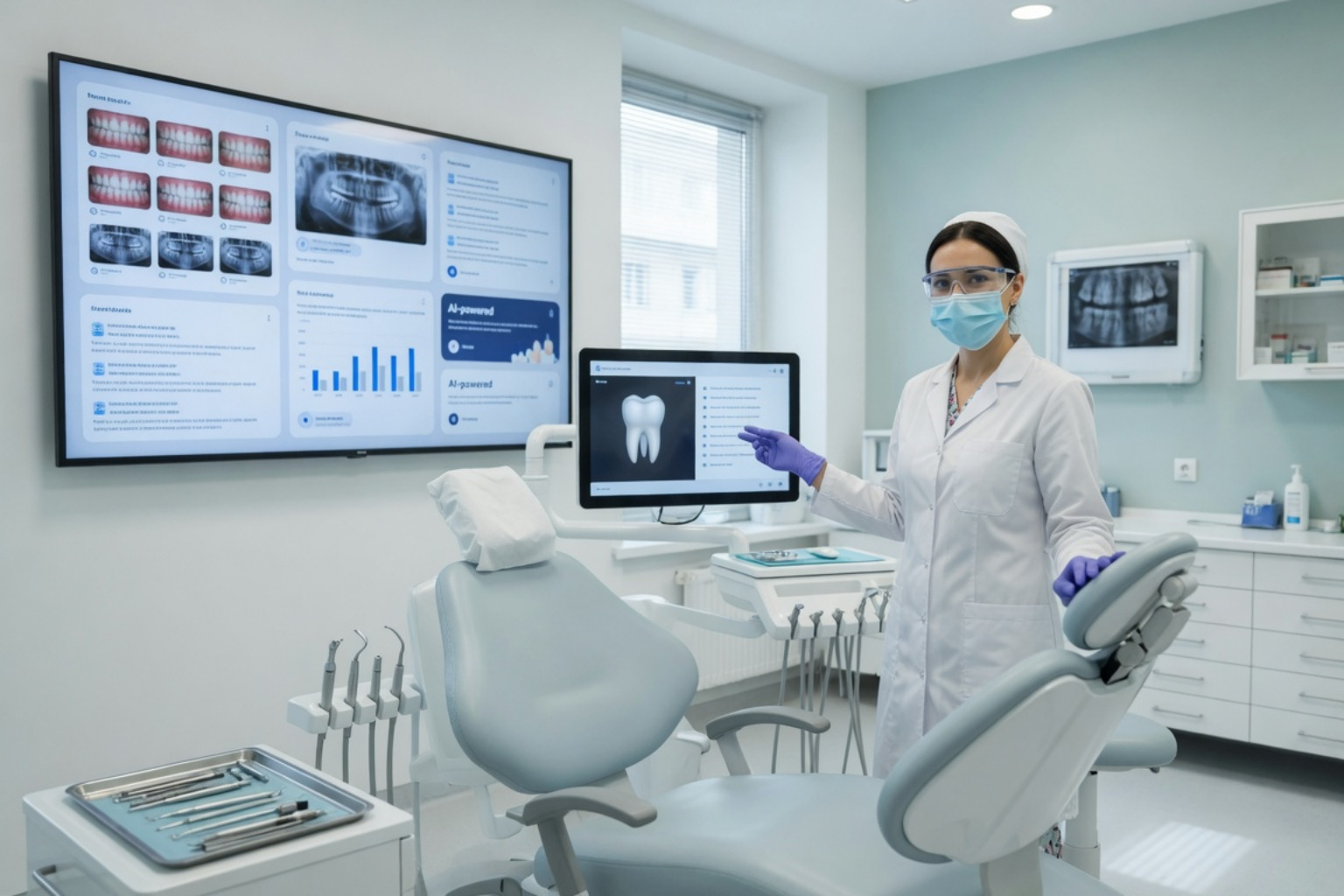

Crafting Your Australian Dental AI Search Strategy

How AI Search Is Reshaping Patient Discovery for Australian Dental Practices

Australian dental patients are no longer only comparing blue links on Google. They are asking AI tools, voice assistants, and search summaries which clinic to trust, so your practice needs content that can be understood, verified, and cited by those systems.

Key Takeaways

  • Organic click-through rates for queries with AI Overviews have dropped 61% since mid-2024, which makes visibility inside generated answers increasingly important.
  • Traffic to AI search tools like ChatGPT, Perplexity, and Google Gemini increased 527% between January 2024 and May 2025, showing that patient discovery is spreading beyond traditional search engines.
  • A strong Australian dental AI search strategy depends on compliant content, clear practitioner credentials, consistent practice details, and structured answers to patient questions.
  • AHPRA rules still apply, so your website should avoid testimonials, guarantees, and misleading claims while building trust through factual education.
  • Independent clinics can gain ground by improving local entity signals before larger competitors fully adapt to generative search.

I am Amber Brazda, AI Search Specialist at AuraSearch™, where I lead generative engine optimisation strategy for regulated industries including healthcare. After more than a decade helping Australian businesses build digital authority, I have seen how quickly search behaviour is changing. For dental practices, the opportunity is not just ranking higher. It is becoming the practice AI tools can confidently mention when patients ask for help.

Quick answer: What does an Australian dental AI search strategy involve?

  1. Optimise for AI search summaries : Structure website content to answer patient questions directly, so AI platforms can understand and cite your practice.
  2. Build E-E-A-T signals : Display dentist credentials, AHPRA registration numbers, and professional experience clearly to support trust.
  3. Keep practice details consistent : Make sure your practice name, address, and phone number match across your website, Google Business Profile, directories, and maps.
  4. Create FAQ and structured content : Write clear answers to common patient questions and use schema markup so AI crawlers can interpret your content.
  5. Stay AHPRA-compliant : Avoid testimonials, treatment guarantees, and misleading claims in all digital content, including pages built for AI search visibility.

The shift is already happening. Patients who once scrolled through a list of search results are now asking AI assistants which dentist to book. When someone in Parramatta asks ChatGPT for a local dentist or uses voice search to find emergency dental care, AI platforms pull from multiple sources and return a short, curated recommendation. If your practice is not easy for those systems to verify, it may never appear in the answer.

This is especially important in Australia, where dental marketing must follow advertising rules set by the Australian Health Practitioner Regulation Agency (AHPRA). Your AI search strategy has to be compliant, factual, and genuinely helpful from the start.

Building a Compliant AI Search Strategy for Dental Growth

Navigating AHPRA Compliance and Section 133

Compliance with national advertising rules is the starting point for any Australian dental marketing strategy. Section 133 of the Health Practitioner Regulation National Law prohibits patient testimonials in advertising that a dental practice controls, so your website cannot rely on review-style content to build authority.

That does not mean you cannot earn trust. It means your content needs to prove expertise in a different way. Instead of making promotional claims, focus on clear explanations, treatment education, dentist qualifications, and transparent practice information. AI search engines look for trustworthy signals, and compliant educational content gives them safer material to use.

Building Robust E-E-A-T Signals for Healthcare Search

Google evaluates healthcare websites using the E-E-A-T framework, which stands for experience, expertise, authoritativeness, and trustworthiness. Dental content sits in a high-trust category because patients may use it to make health decisions. AI search engines also look for these credibility signals when deciding which clinics to mention.

Start with the basics. Add practitioner credentials, degrees, areas of focus, and AHPRA registration numbers to dedicated team pages. If you publish treatment guides, have them written or reviewed by qualified dentists. This kind of professional oversight aligns with the Australian Dental Association's Policy Statement 6.34 on Artificial Intelligence in Dentistry.

You can also make complex dental topics easier to understand. Pages about root canal therapy, dental implants, emergency dentistry, or clear aligners should explain what patients can expect without promising outcomes. That balance of clarity and care helps both readers and AI systems understand your expertise.

Local SEO and Entity Resolution in the AI Era

Traditional local SEO often focuses on the Google Map Pack. AI discovery goes further because generative platforms try to confirm that a business is real, relevant, and trustworthy before recommending it. This process is often called entity resolution.

Your name, address, and phone number should match across every major digital touchpoint. That includes your website, Google Business Profile, Apple Maps, Bing Places, and healthcare directories. A profile on a relevant directory such as Smile Search can give AI crawlers another structured reference point for your practice.

Optimising for Voice Search and Conversational Queries

Patients are searching in more natural language now. Instead of typing "dentist Sydney," someone might ask, "Where is an emergency dentist near me that is open after 5 PM?"

Your content should sound like it was written for that kind of question. Use plain-language headings, answer the question quickly, and then add helpful detail underneath. A short 40-to-60-word answer at the start of a section can work well for voice assistants, AI Overviews, and conversational search tools.

Structured Data and Schema Markup

Schema markup is code that helps search engines understand what your page is about. For dental practices, it can clarify your clinic location, opening hours, treatment categories, practitioner details, and frequently asked questions.

Use Dentist and MedicalBusiness schema where appropriate, and add FAQ schema to educational pages that answer common patient questions. This technical layer will not replace strong content, but it makes your best answers easier for AI systems to extract and trust.

Competing with Large DSOs

Independent dental practices often feel outmatched by corporate Dental Support Organisations with larger marketing budgets. AI search can help narrow that gap because local relevance and specific clinical authority matter more than broad brand size alone.

A smaller clinic can still become the best answer for a suburb, treatment type, or urgent patient need. Build suburb-specific service pages, keep directory profiles accurate, and publish content that reflects the real questions your patients ask. You can also use the Free Dental AI Blueprint for Australian Practices to spot visibility gaps before competitors do.

Traditional SEO vs. Generative Engine Optimisation

Traditional SEO and generative engine optimisation work best together. You still need crawlable pages, strong local signals, and helpful content, but you also need answers that AI tools can quote or summarise confidently.

Optimisation Element Traditional SEO Generative Engine Optimisation
Primary Goal Rank highly in a list of website links Be cited as the recommended answer in AI summaries
Search Intent Keyword-focused, such as "Invisalign Melbourne" Conversational and intent-focused, such as "How does Invisalign compare to braces for a teenager?"
Content Structure Long-form pages with strong topical coverage Direct answers, clear sections, and schema markup
Trust Metrics Backlinks, technical SEO, and domain authority E-E-A-T, entity consistency, clinical compliance, and verifiable expertise
Discovery Channels Google Search and Bing ChatGPT, Google AI Overviews, Perplexity, Gemini, and voice assistants

A hybrid strategy gives your practice the best chance of being found wherever patients are searching. For a deeper look at this shift, read AuraSearch's guide to AI Overviews for dental practices.

How AuraSearch Helps Dental Practices Become AI-Visible

AuraSearch™ helps dental practices bridge traditional SEO with the new world of AI search. We combine technical optimisation, content strategy, and healthcare marketing compliance so your clinic can be found across both search results and conversational platforms.

You do not need a generic, one-size-fits-all campaign. You need a strategy that reflects how patients search, how AHPRA regulates advertising, and how AI tools decide which sources to trust. That is where careful content engineering, structured data, and local entity consistency make a real difference.

Our core capabilities for Australian dental practices include:

  • AI Search Audit : We diagnose your practice's current visibility across ChatGPT, Google AI Overviews, and Perplexity to identify citation gaps.
  • Entity Resolution and Schema Implementation : We deploy schema markup to help search engines correctly identify your clinics, practitioners, and services.
  • AHPRA-Compliant Content Engineering : We write and restructure clinical service pages so they answer patient questions without crossing advertising lines.
  • Cross-Platform Consistency Management : We align your practice data across major directories and mapping systems to build trust with AI algorithms.
  • Ongoing GEO Monitoring : We track how AI search engines mention your practice over time and adjust your strategy as platforms change.

If you want your dental practice to appear in the answers patients now rely on, contact AuraSearch for expert AI SEO services.

FAQs

How does an Australian dental AI search strategy improve patient acquisition?

An Australian dental AI search strategy improves patient acquisition by helping your clinic show up when patients ask AI tools for recommendations. Instead of competing only for clicks in traditional search results, your practice can become a cited, trusted answer for local treatment and emergency care queries.

What are the key components of an effective Australian dental AI search strategy?

The key components are AHPRA-compliant content, strong practitioner trust signals, consistent practice details, conversational answers, and schema markup. Together, these help AI systems verify who you are, what you offer, where you are located, and whether your content is reliable enough to mention.

How do AHPRA guidelines affect AI search optimisation for dentists?

AHPRA guidelines restrict testimonials, guarantees, and misleading claims in dental advertising controlled by the practice. That means your AI search content should build trust through education, clinical accuracy, qualifications, and transparent practice information rather than promotional or review-based claims.

Why is cross-platform consistency important for AI search engines?

AI search engines compare information from many sources before recommending a business. If your clinic name, address, or phone number differs across your website, Google Business Profile, maps, and directories, AI systems may be less confident that your practice is the right result.

How do Google AI Overviews affect my dental practice's search visibility?

Google AI Overviews can answer patient questions directly on the search results page, which may reduce clicks to traditional listings. To stay visible, dental practices need content that AI summaries can understand, trust, and cite as a useful source.

Can independent dental practices compete with DSOs in AI search?

Yes. Independent practices can compete by owning their local niche. If your clinic has accurate listings, suburb-specific content, helpful treatment pages, and clear practitioner credentials, AI search tools have more reasons to recommend you for relevant local queries.

Recent Posts

By Amber Brazda August 27, 2026
How Accounting Firms Win Visibility in the AI Search Era - Learn about AI visibility for accountants
By Amber Brazda August 26, 2026
How to Improve Your Website's Visibility in AI Search Engines - Learn about AI search engine visibility
By Amber Brazda August 25, 2026
Master AI SEO for Construction with a proven GEO strategy to boost your visibility in generative search and LLM citations.
By Amber Brazda August 24, 2026
Learn how to optimise for generative answers and win the AI search game with expert GEO strategies for 2026.
By Amber Brazda August 21, 2026
Learn how to capture high-intent AI driven plumbing leads with Generative Engine Optimisation and dominate local search results.
By Amber Brazda August 20, 2026
Master the A–Z of AI search visibility for real estate to dominate agent citations and attract buyers before competitors do.
By Amber Brazda August 19, 2026
AI Content Creation Benefits: 101 - Learn about ai content creation benefits
By Amber Brazda August 18, 2026
Discover Melbourne AI SEO tips for 2026 dominance: optimize for ChatGPT, Gemini, and AI Overviews with expert strategies.
By Amber Brazda August 17, 2026
Learn how to use AI for Google Business Profile local SEO to dominate local search and boost visibility in 2026.
By Amber Brazda August 14, 2026
Master AI search keyword optimisation with a practical framework that boosts visibility, citations and conversions in AI Overviews.
Show More