

Answer Engine Optimization Guide and Strategies to Boost Visibility
Why an Answer Engine Optimisation Guide Matters Now
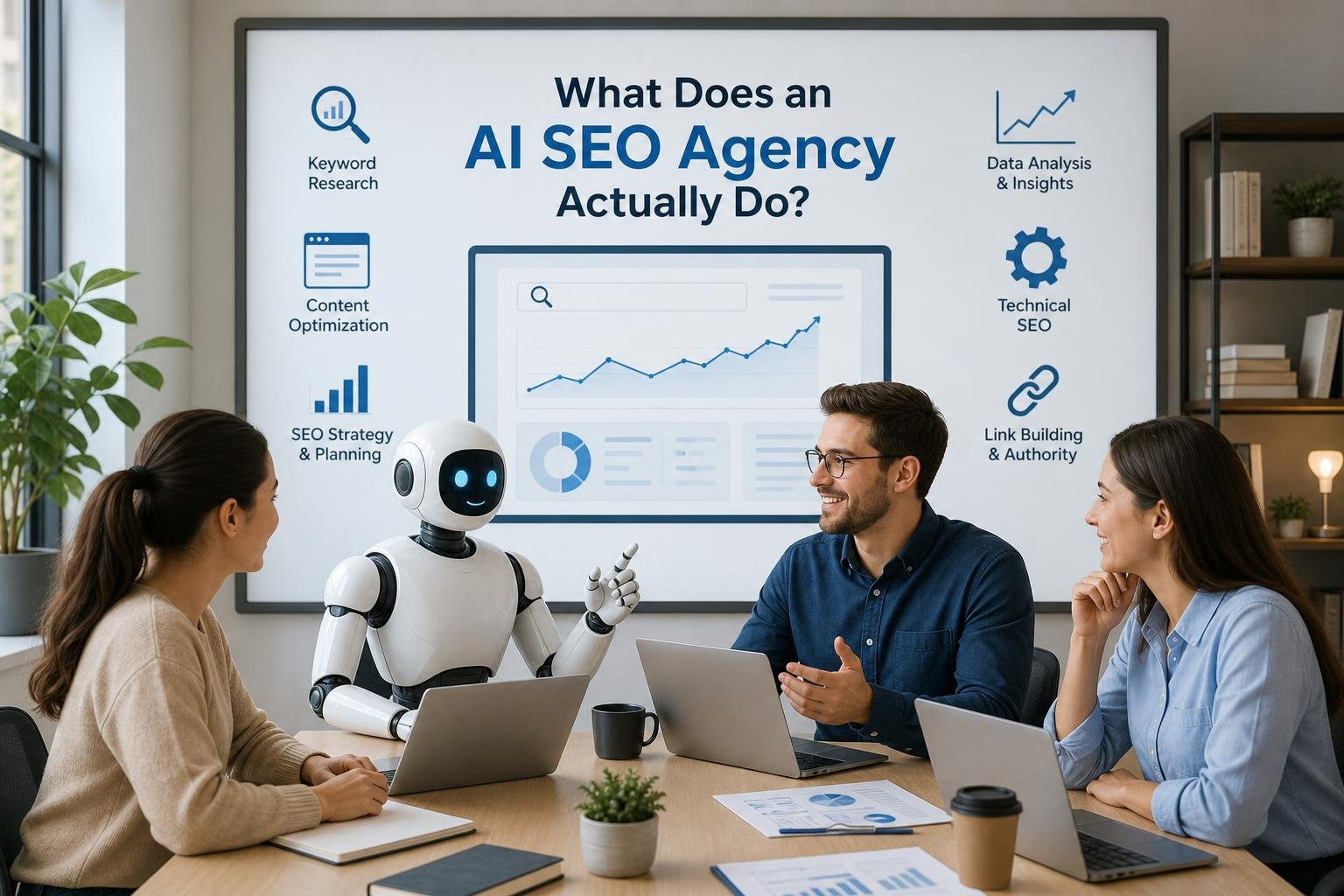
This answer engine optimisation guide explains how organisations can improve visibility across AI-driven and traditional search platforms. It focuses on practical steps that help answer engines understand, trust, and cite accurate brand information.
Key Takeaways
- Search visibility now depends on clear answers, trusted evidence, and consistent brand information across the web.
- Answer Engine Optimisation (AEO) helps AI platforms extract and describe business information more accurately.
- Generative Engine Optimisation (GEO) supports broader visibility across conversational and AI-assisted discovery experiences.
- AuraSearch™ combines expert strategy with AI tools to improve citation likelihood across ChatGPT, Google AI Overviews, Perplexity, Claude, Google, and Bing.
I am Amber Brazda, an AI Search Specialist with more than a decade of experience building digital authority through Search Engine Optimisation (SEO) and Generative Engine Optimisation (GEO).
Australian organisations are adjusting to a search environment where audiences ask detailed questions, compare providers, and form shortlists before they visit a website. Clear, verifiable, and accessible content gives answer engines better information to work with.
AuraSearch™ helps businesses strengthen the content, technical signals, and authority that support accurate representation across AI-driven and traditional search platforms.
How Enterprise Teams Win AI Citations
Enterprise organisations now face a search landscape where buyer discovery often happens inside conversational interfaces. Prospective customers may use ChatGPT, Google AI Overviews, Perplexity, and Claude to compare providers, research categories, and understand which brands appear credible.
Winning brand citations across these platforms requires more than keyword placement. Enterprise teams need clear entity information, accessible service pages, consistent messaging, and useful content that answers real customer questions.
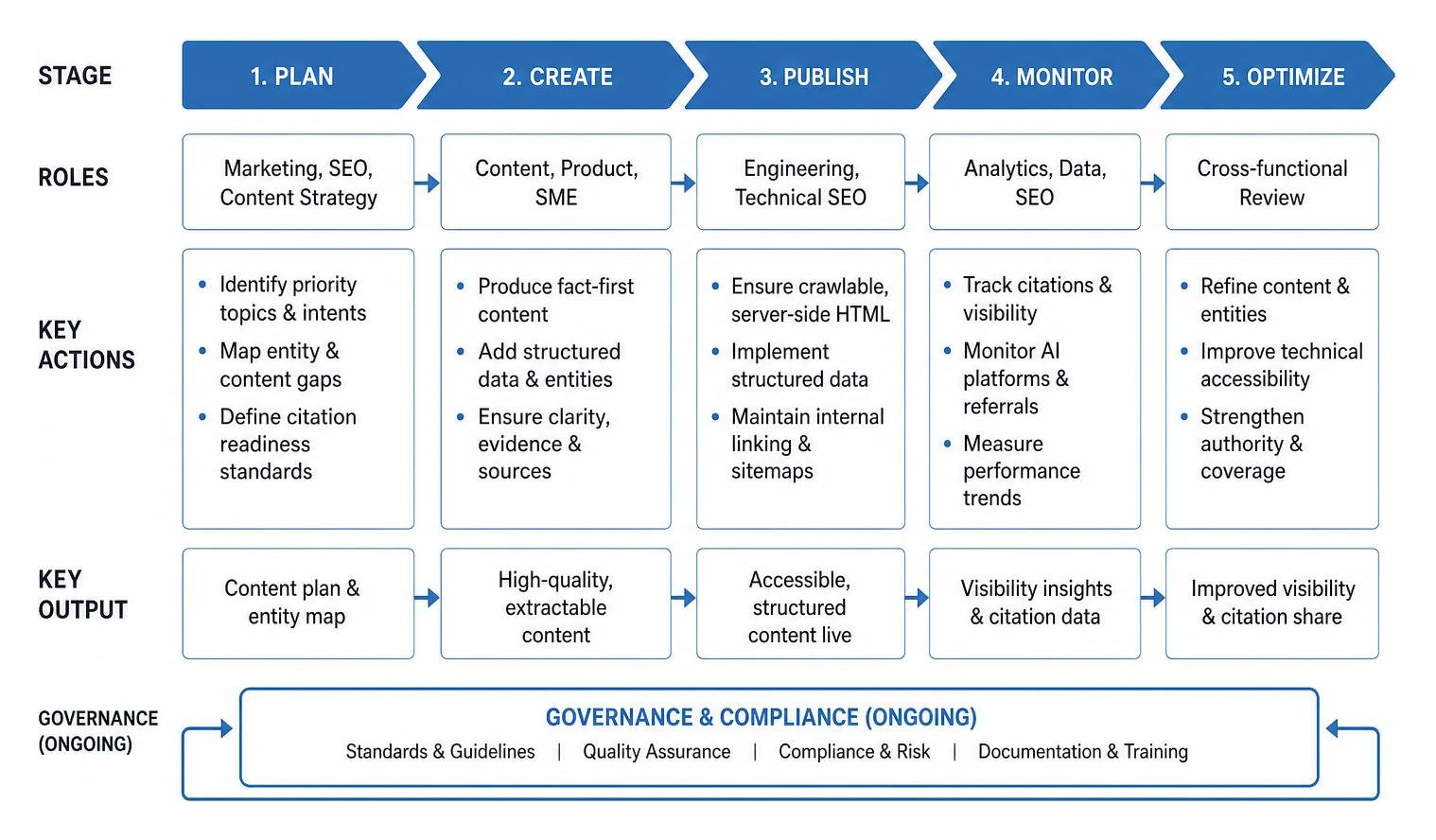
Citation readiness works best when marketing, technical, and compliance teams stay aligned. AuraSearch supports this process through dedicated AEO services, helping organisations connect content strategy, technical foundations, and brand authority.
Australian businesses also need consistent external references across reputable industry publications, public profiles, and digital channels. Answer engines look for reliable patterns across the web, so conflicting brand descriptions can weaken trust and reduce citation confidence.
Organisations that align content clarity, technical accessibility, and authority signals place themselves in a stronger position to capture qualified visibility. This approach supports discoverability as natural language queries become part of everyday search behaviour.
Core Frameworks in an Answer Engine Optimisation Guide
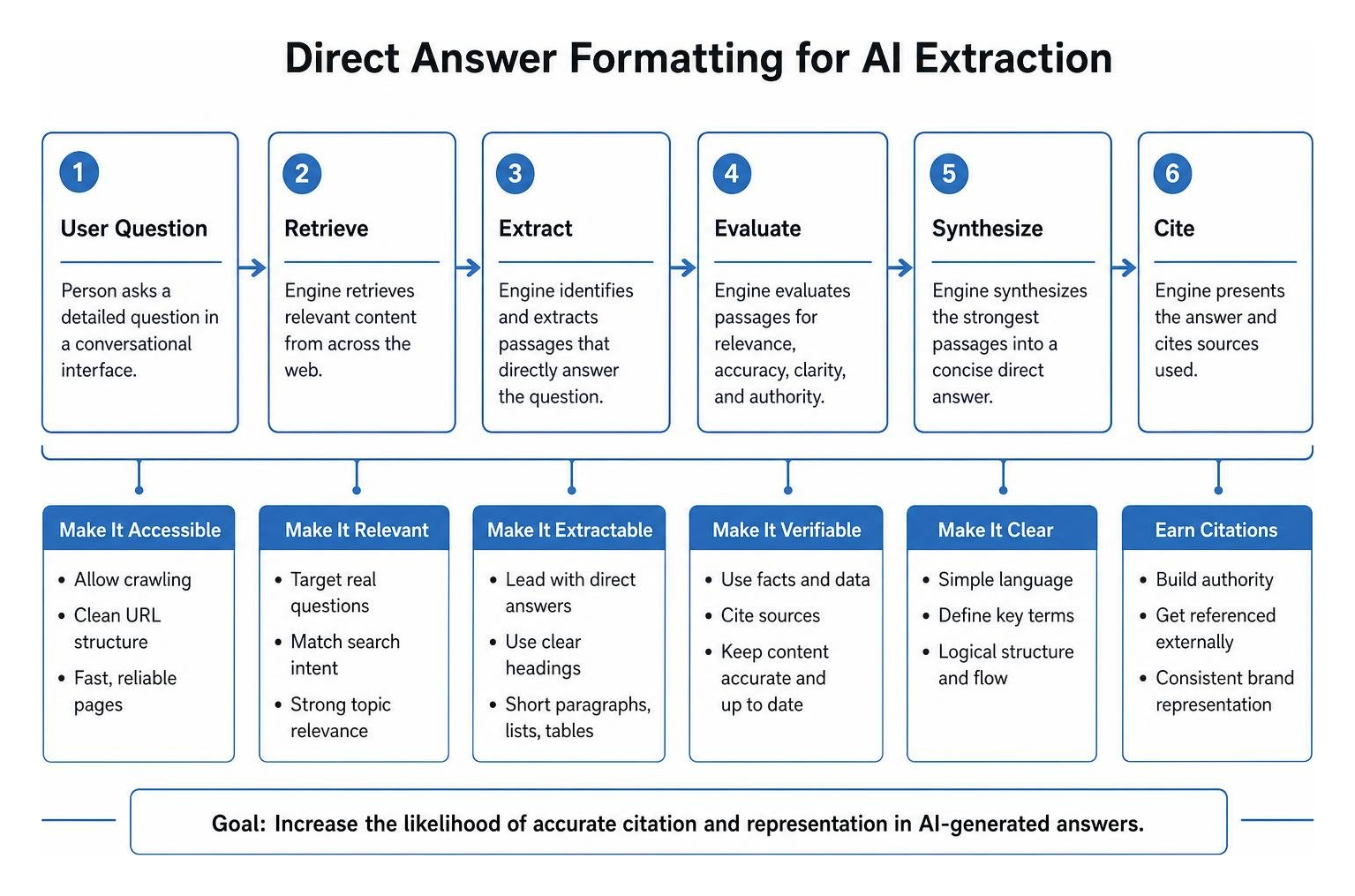
AI answer engines use Retrieval-Augmented Generation (RAG) systems to collect, evaluate, and synthesise web content into direct responses. Content becomes easier to retrieve when each page answers one clear topic, uses descriptive headings, and explains key facts in plain language.
A practical answer engine optimisation guide should focus on extractability. This means structuring content so an answer engine can isolate a complete, factual response from a paragraph, table, or list.
| Strategy Layer | Primary Focus | Core Surface | Primary Metric |
|---|---|---|---|
| Traditional SEO | Page-level keyword relevance and backlink profile | Search engine results pages | Organic keyword rankings and click-through rates |
| Answer Engine Optimisation (AEO) | Fact-level extractability and direct prompt resolution | AI summary blocks and conversational outputs | Brand citation frequency and citation share |
| Generative Engine Optimisation (GEO) | Entity clarity and web-wide brand consistency | Generative search platforms and AI assistants | AI visibility and brand sentiment |
Conversational questions make strong subheadings because they mirror how people search. Each answer should begin with a direct statement, then add supporting detail, examples, and context.
Structured entity information helps search platforms distinguish company names, services, people, and resources. Linking related content, such as Answer Engine Optimisation 101, helps build clear relationships across a topic cluster.
Clear evidence, current service information, and accurate internal links also improve trust. General claims should be supported by transparent sources or framed carefully when direct evidence is unavailable.
Technical Execution and Governance for Australian Search Visibility
Enterprise teams often find it difficult to measure visibility across conversational search interfaces. Standard analytics can understate the influence of AI platforms when referral paths are unclear or when users receive answers before clicking through to a website.
This measurement gap can make AI search investment harder to assess. Server-side monitoring, prompt tracking, and clear reporting frameworks help teams understand how often their brand appears and whether answer engines describe it accurately.
Client-side JavaScript can create crawlability issues when important content does not appear in the initial page source. Clean server-side rendered HTML gives crawlers better access to headings, paragraphs, tables, schema, and entity information.
Accessibility also supports AI extractability. The Australian Government Style Manual recommends clear language, descriptive structure, and accessible formatting, which also helps automated systems parse content more reliably.
Strong governance keeps brand messaging accurate across service pages, articles, public profiles, and third-party references. Regular content reviews help organisations correct outdated information, close content gaps, and protect brand reputation across AI platforms.
Building Durable Search Visibility with AuraSearch
Maintaining brand discoverability now requires a joined-up approach to search visibility. AuraSearch™ equips businesses with expert strategic guidance and advanced AI technologies to build authority across traditional search engines and AI platforms.
Our team focuses on content architecture, semantic readability, and entity trust across the web. This helps organisations improve the likelihood that answer engines will cite accurate information in generated responses.
For businesses that want a clearer path across AI-driven and traditional search, AuraSearch offers dedicated services and direct support through contact us.
FAQs
What is Answer Engine Optimisation and how does it differ from traditional SEO?
Answer Engine Optimisation (AEO) structures web content and brand signals so AI-powered answer engines can accurately extract, cite, and present information in synthesised responses. Traditional Search Engine Optimisation (SEO) focuses on helping webpages rank in search results and attract website visits. AEO focuses more closely on fact-level clarity, conversational context, and brand citations across generated answers.
How do AI answer engines decide which sources to cite in generated answers?
AI answer engines select source content based on query relevance, source authority, freshness, and structural clarity. Pages with concise answers, machine-readable HTML, and consistent entity information are easier for these systems to understand. Strong topical authority and accurate supporting information can improve citation likelihood.
What is the monitoring gap and why does it matter?
The monitoring gap describes the difference between traditional analytics reporting and the real brand interactions happening inside AI search environments. Some users receive answers, compare providers, and make decisions before visiting a website. Closing this gap helps teams track citation frequency, identify inaccurate brand descriptions, and connect search activity to business priorities.
How do structured data and schema markup improve AI extractability?
Structured schema markup, such as JSON-LD, gives search systems machine-readable context about entities, services, articles, and relationships. This reduces ambiguity when AI systems interpret a page. Schema works best when it matches visible page content and supports clear on-page explanations.
How can enterprise brands measure visibility across AI search engines?
Enterprise brands can measure AI visibility by tracking citation frequency, mention share, sentiment accuracy, and qualified referral traffic across major platforms. Prompt monitoring and server-side analytics help isolate activity from conversational platforms. Teams can also compare AI visibility trends with traditional search performance to understand where content needs improvement.
What role does content authority play in Generative Engine Optimisation?
Content authority acts as a trust signal when generative engines assess whether a source is reliable. Recognised author profiles, accurate service information, strong internal links, and reputable external references all support credibility. AuraSearch helps organisations strengthen these signals while avoiding claims that overstate control over third-party AI platforms.