
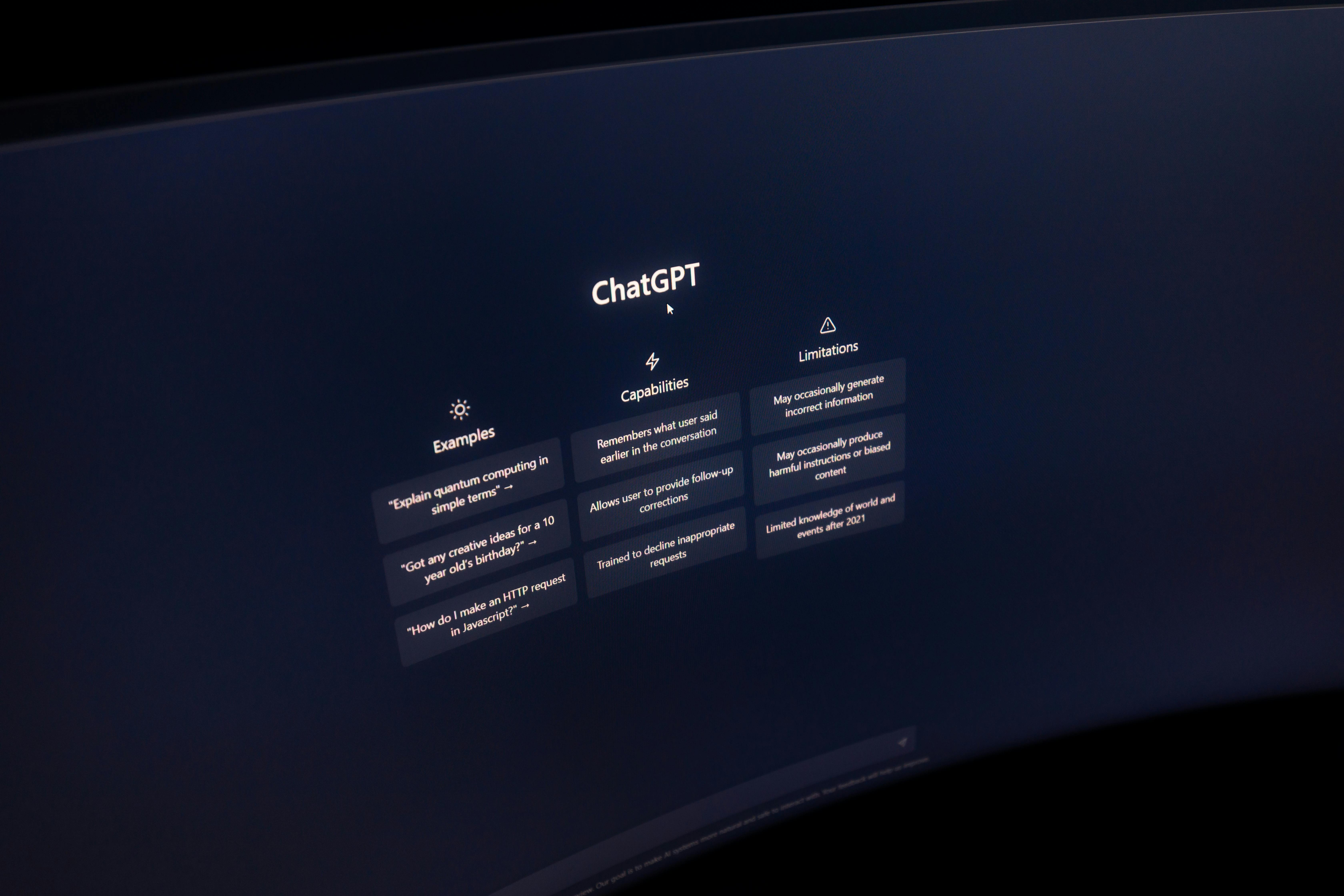

Beyond Traditional SEO: Embracing Generative AI for Search Visibility
Search Has Changed — Here's What Generative AI SEO Services Actually Do
Generative AI SEO services are specialised strategies that help brands get cited, recommended, and referenced inside AI-generated answers from platforms like ChatGPT, Google AI Overviews, Perplexity, and Gemini, not just ranked in traditional blue-link results.
Here is a quick snapshot of what these services typically cover:
| What It Does | Why It Matters |
|---|---|
| Optimises content for LLM retrieval | AI models cite structured, authoritative sources |
| Builds entity clarity and semantic signals | Helps AI engines understand who you are and what you do |
| Implements schema and structured data | Makes content machine-readable for AI crawlers |
| Tracks AI citations and share of voice | Measures visibility beyond traditional click metrics |
| Strengthens E-E-A-T signals | Builds the trust AI systems reward with attribution |
The rules of search have fundamentally shifted. AI Overviews now appear in over 65% of Google searches. Gartner predicts a 25% drop in traditional search volume by 2026. Meanwhile, 80% of consumers already rely on AI summaries for at least 40% of their searches.
Ranking on page one is no longer enough. If an AI model does not cite your brand in its generated answer, a competitor who is cited will claim that trust and that sale. This is the gap that AuraSearch's generative AI SEO services are designed to close.
Amber Brazda is an AI Search Specialist with over a decade of experience in digital authority strategy, and now leads the generative AI SEO services practice at AuraSearch, helping national brands move from invisible to indispensable inside AI-generated answers. The following guide draws on that expertise to walk through exactly how to make that shift.
The Rise of Generative AI SEO Services and GEO
The digital landscape is undergoing a fundamental shift as Large Language Models (LLMs) redefine how information is retrieved and consumed. Traditional search methods are being augmented by generative responses, necessitating a new approach to maintain online prominence. AuraSearch provides the specialised expertise required to navigate this transition, ensuring brands remain visible in an era dominated by AI-driven answers.
Generative Engine Optimisation (GEO) and Answer Engine Optimisation (AEO) have emerged as the primary frameworks for this new era. While traditional SEO focuses on moving a website up a list of links, GEO focuses on making content the "source of truth" that an AI model uses to build its response.
Distinguishing GEO from Traditional SEO
The transition from traditional SEO to GEO is a move from keyword matching to entity understanding. In the past, search engines looked for specific strings of text. Today, AI engines look for authoritative entities—people, places, and brands—that carry verifiable trust. AuraSearch assists businesses in making this transition by focusing on citation building rather than just backlink acquisition.
| Feature | Traditional SEO | Generative Engine Optimisation (GEO) |
|---|---|---|
| Primary Target | Google Search Algorithm (Rankings) | LLMs (ChatGPT, Gemini, Perplexity, Claude) |
| Success Metric | Click-Through Rate (CTR) and Rank | Citation Rate and Share of Voice (SoV) |
| Content Focus | Keyword density and metadata | Semantic clarity, facts, and Q&A |
| User Experience | Navigating to a landing page | Receiving a synthesised answer |
| Technical Base | HTML tags and site speed | JSON-LD Schema and machine-readability |
Understanding the AI search revolution is the first step in adapting. While traditional SEO remains a foundational element, it is no longer the ceiling of digital marketing. AuraSearch bridges the gap between being "ranked" and being "remembered" by the models that users now trust for complex decision-making.
Core Components of Generative AI SEO Services
To succeed in the generative era, content must be more than just readable; it must be "extractable." AI models crawl the web looking for high-density information blocks they can easily synthesise. AuraSearch focuses on three core pillars: semantic clarity, structured data, and E-E-A-T (Experience, Expertise, Authoritativeness, and Trustworthiness).
Implementing Generative Engine Optimisation involves restructuring content into a machine-readable format. This includes using precise definitions, evidence-based claims, and clear author credentials. When an AI engine like Perplexity or ChatGPT looks for a source to cite, it prioritises content that is semantically clear and logically structured. AuraSearch ensures that every piece of digital collateral serves as a clear data point for these LLM crawlers.
Why Businesses Require Generative AI SEO Services Now
The urgency for generative ai seo services is driven by rapid changes in consumer behaviour. A 2023 GEO-bench study showed that implementing specific GEO methods can boost content visibility in generative engine responses by up to 40%. Conversely, businesses that ignore this shift risk a significant decline in organic traffic. Search Engine Land predicts an 18% to 64% decline in organic clicks as AI Overviews become the default search experience.
Staying ahead of the curve is no longer optional. With Gartner predicting a 25% drop in traditional search volume by 2026, the "zero-click" reality is setting in. AuraSearch helps brands secure a competitive advantage by ensuring they are the ones being cited in those zero-click summaries. AI search optimization allows businesses to maintain brand influence even when a user never visits their website, as the brand name is ingrained in the AI's authoritative answer.
Implementing Strategies for AI Search Visibility
Success in the generative era requires a move away from "content for humans only" toward "content for humans, validated by AI." This involves deep content restructuring to align with how LLMs process information. AuraSearch utilises advanced grounding techniques to ensure that brand facts are correctly interpreted and retrieved by generative engines.
Research on GEO strategies suggests that covering topics comprehensively—answering not just the primary question but all related sub-questions—is the most effective way to gain AI citations. This "complete content" approach provides the AI with all the context it needs to generate a full response without having to look elsewhere. AuraSearch implements these authoritative content layers to maximize the likelihood of being the primary referenced source.
Technical Optimisation for LLM Retrieval
Technical SEO has evolved. While site speed and mobile-friendliness remain important, the focus has shifted toward JSON-LD schema and structured data. This markup acts as a "translator" for AI models, telling them exactly what a page is about in a language they speak fluently. AuraSearch specializes in AI Overview Optimisation , implementing FAQPage, HowTo, and Product schema to make content instantly extractable.
Passage-level indexing is another critical technical component. AI engines often pull a single paragraph or a specific list from a long-form article. By structuring content with clear headings, concise summaries, and bulleted lists, AuraSearch makes it easier for AI crawlers to identify and use these high-value snippets. Ensuring site crawlability is paramount; if an LLM cannot easily parse the hierarchy of a site, it will simply move on to a competitor's more organized data.
Measuring Success in the Generative Era
The metrics of the past—keyword rankings and total clicks—provide an incomplete picture in the age of AI. Success now must be measured through citation tracking and share of voice (SoV) within specific prompt clusters. AuraSearch provides advanced attribution models that track how often a brand is mentioned in ChatGPT or Gemini compared to its competitors.
Monitoring AI’s New Frontier requires a shift in mindset. Even if a user does not click through to the site, being the cited source in an AI answer builds massive brand equity. AuraSearch analyzes referral traffic from AI platforms—which, while currently a small percentage of total traffic, is growing at an exponential rate. Perplexity AI, for instance, saw an 858% growth in search volume in just one year, proving that the audience is moving toward these conversational interfaces.
Future-Proofing for Multimodal and Evolving Models
The future of search is not just text-based; it is multimodal. Users are increasingly using voice search and visual search (like Google Lens) to find information. AI models like Gemini and GPT-4o are designed to process images, audio, and video simultaneously. AuraSearch prepares businesses for this evolution by optimizing all forms of media for AI understanding.
Preparing for Google’s Generative Leap means constant adaptation. As LLMs become more sophisticated, they will require fresher, more nuanced data. AuraSearch provides continuous monitoring and micro-updates to ensure that brand information remains current and "cite-worthy." By maintaining a "single source of truth" on the brand's website, AuraSearch ensures that AI engines always have access to the most accurate and authoritative information.
Ready to dominate the new era of search? Partner with AuraSearch for expert generative AI SEO services and secure your brand's future in AI-driven results.