
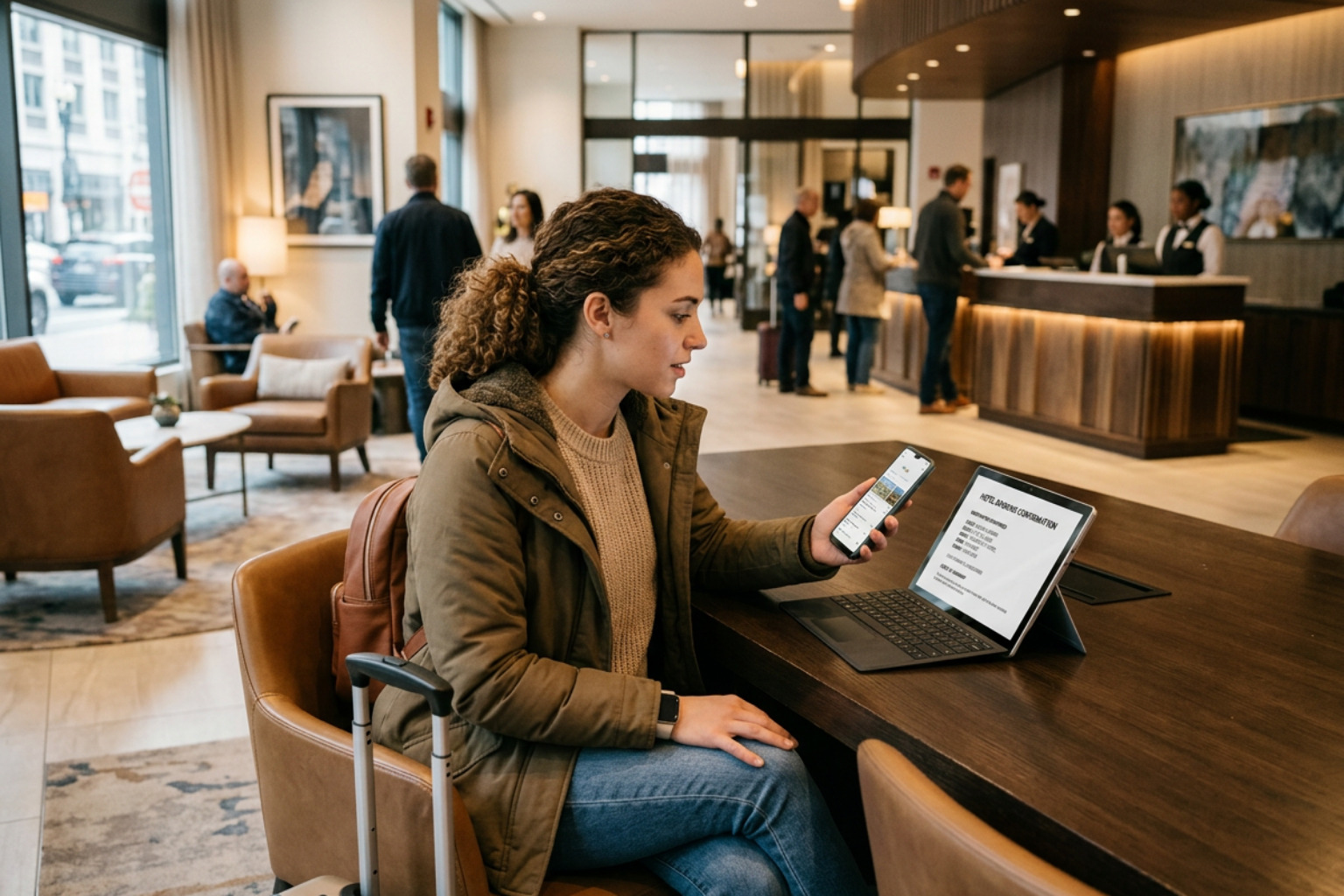
From SEO to AEO: Adapting Hotel Content for AI Search

If you run a hotel, your next guest may not be scrolling through search results at all. They may be asking ChatGPT, Google AI Mode, Perplexity, or Gemini which property to book, and AI SEO for hospitality helps make sure your hotel is part of that answer.

Key Takeaways

  • AI SEO for hospitality helps hotels get recommended directly inside AI-generated travel answers, not just listed in traditional search results.
  • Reviews, Google Business Profiles, OTAs, schema, and directory data all shape how confidently AI systems understand and recommend a property.
  • Many hotels still have weak or missing structured data, so improving schema and entity clarity can create a real competitive edge.
  • Google Business Profile optimisation is one of the highest-impact priorities because AI-led hotel discovery often sends travellers there first.
  • AuraSearch helps hotels strengthen their entity signals, improve mention share, and turn AI visibility into more direct booking opportunities.

I am Amber Brazda, AI Search Specialist at AuraSearch, where I help hospitality brands bridge the gap between traditional search authority and Generative Engine Optimisation. In this guide, we will walk through the practical layers of AI SEO for hospitality, from schema and reviews to Google Business Profile signals and AI citation mechanics.

AI SEO for hospitality means optimising your hotel's digital presence so AI search engines can understand, trust, and recommend it in generated responses.

How to optimise your hotel for AI search:

  1. Complete your Google Business Profile with accurate name, address, phone, photos, and amenities.
  2. Implement LodgingBusiness schema markup in JSON-LD format on your website.
  3. Encourage consistent, attribute-rich guest reviews on Google, TripAdvisor, and Booking.com.
  4. Create FAQ pages in natural, conversational language that match real guest questions.
  5. Keep your name, address, and phone number consistent across every directory, OTA, and listing platform.
  6. Place your most important facts early on each page so AI systems can extract them quickly.
  7. Submit your sitemap to Bing Webmaster Tools so ChatGPT-connected search experiences can discover your property.

The way travellers find hotels has changed. A guest no longer just types "boutique hotel Sydney" into Google and scrolls through ten blue links. They might ask, "What is a good small hotel in Sydney for a couple who want to walk to the harbour?" The model then responds with a few specific property names. If your hotel is not included, you may never enter that traveller's consideration set.

The scale of this shift is significant. Google AI Overviews now appear on more than 25% of Google searches. More than 56% of US travellers report using AI tools to plan trips. ChatGPT serves more than 800 million weekly users. Just as importantly, only 25% of AI answers about hotels are pulled from the hotel's own website. The rest comes from reviews, OTA listings, travel blogs, and third-party directories.

Traditional SEO helped hotels reach page one. AI SEO for hotels determines whether a property gets named at all.

AI SEO for Hospitality: Optimising for Generative Engines

Generative engines build hotel recommendations by combining data from many independent platforms, not just one website. That means AI search models rarely trust a single marketing claim on its own. They compare your website, TripAdvisor profile, Booking.com listing, Google Business Profile, reviews, and other public signals before deciding whether your hotel is a reliable recommendation.

The strength of your hotel's digital entity determines how stable your placement is in AI-generated answers. Research shows that luxury hotels can reach up to 96.1% position stability in AI responses because their entity signals are clearer, while volatile budget listings may sit closer to 17.0%. This is why the practical steps in AI search optimization for hotels matter so much.

Why AI SEO for Hospitality Is Replacing Traditional Search

Conversational search has made traditional keyword targeting only one part of the job. Travellers now ask longer, more specific questions about walking distances, pet policies, noise levels, parking, family amenities, and nearby attractions.

ChatGPT processes roughly 2.5 billion prompts per day for its 800 million weekly users. Perplexity partners directly with TripAdvisor to display real-time reviews. These experiences can bypass the traditional search results page entirely.

For hotels, the opportunity is to answer the kinds of questions real guests ask before they book. AuraSearch helps reposition hotel content around those high-intent prompts, using principles similar to our beginner's guide to AI SEO strategies.

Google AI Mode routes 79% of its clicks to Google Business Profiles, while online travel agencies receive only 3.6%. That creates a rare opening for hotels to win more direct bookings instead of relying only on high-commission OTA traffic.

Key Elements of AI SEO for Hospitality

Successful AI optimisation starts with structured data and verified trust signals. Think of it as a consistency check. If your hotel website says you have a quiet courtyard, but recent reviews repeatedly mention street noise, AI systems may become less confident recommending you for quiet-stay searches.

Structured data is another major gap. Only 10.6% of hotel websites implement schema strongly enough to qualify for rich results, while 36.3% have no structured data at all. Correctly formatted JSON-LD schema gives AI crawlers machine-readable facts about your property, amenities, location, and policies. For a deeper explanation of how AI systems connect those facts, see semantic search and entities.

Place key differentiators in the first 30% of your page text because LLMs often extract citations from the opening section. Instead of relying on broad phrases like "unforgettable experience," give the model countable facts, such as distance to landmarks, number of rooms, parking details, check-in times, accessibility features, and guest review themes.

How AuraSearch Helps Hotels Win in AI Search

AuraSearch gives hotels the specialised framework needed to earn consistent citations across major generative engines. We help your property build clear entity authority so AI agents can understand when, why, and for whom your hotel should be recommended.

We optimise the full digital footprint around your hotel, including your Google Business Profile, TripAdvisor presence, website schema, review themes, and on-site content. Our generative engine optimisation services are designed to build the multi-source consensus that AI systems look for.

We also remove the guesswork from AI performance tracking. Instead of relying only on standard analytics, AuraSearch measures visibility signals like Mention Share and Position Stability, so you can see whether your hotel is showing up in the answers that influence bookings.

FAQs

How does AI search change hotel bookings?

AI search shifts the booking journey from list-based browsing to direct, conversational recommendations. Travellers ask specific questions and receive a curated shortlist of properties. That gives hotels a chance to be recommended earlier and win more direct bookings through their own websites.

Why are guest reviews important for AI search?

Guest reviews help large language models verify what a hotel is actually known for. AI search engines compare your website claims with third-party review language, so consistent reviews about amenities, location, service, and guest experience can strengthen your visibility for relevant travel queries.

What is the Hotel USP Verification Cycle?

The Hotel USP Verification Cycle is the process where AI models compare a hotel's marketing claims with actual guest feedback. If your site promotes a peaceful location but reviews mention nearby construction, the model may become less confident recommending your property for quiet-stay searches.

How do hotels optimise for ChatGPT and Google AI Mode?

Hotels need consistent name, address, and phone details across every major platform, plus active indexation. ChatGPT-connected search experiences rely heavily on Bing's index, so submitting your sitemap to Bing Webmaster Tools can help discovery. Google AI Mode draws heavily from Google Business Profile signals, so a complete and current profile is essential.

What role does schema markup play in AI SEO?

Schema markup gives generative engines machine-readable facts about your property. LodgingBusiness and FAQPage schema can help AI crawlers understand your amenities, check-in times, location details, and guest policies more clearly than unstructured text alone.

How can hotels track their AI search performance?

Hotels can track AI search performance by monitoring metrics like Mention Share and Position Stability across major AI platforms. Standard analytics tools often miss this visibility layer, so AuraSearch provides dashboards that show whether your hotel appears in the AI-generated answers that influence booking decisions.

Recent Posts

By Amber Brazda August 5, 2026
Discover how the impact of ai search on content marketing strategies 2026 is reshaping SEO, traffic, and content optimisation for brands.
By Amber Brazda August 4, 2026
The Complete Guide to AI Discoverability Strategies for Pros - Learn about ai discoverability strategies for professional services
By Amber Brazda August 3, 2026
Master accountant ChatGPT search optimisation with proven GEO strategies that boost your firm's visibility in AI answers and conversational search.
By Amber Brazda July 30, 2026
Discover proven AI SEO for niche markets tactics that boost visibility in generative AI summaries and secure brand citations across ChatGPT and Google AI Overviews.
By Amber Brazda July 29, 2026
Stop dentist AI enquiry loss with AI chatbots that capture after-hours leads and boost bookings for your dental practice.
By Amber Brazda July 28, 2026
Discover how ai-powered seo for law firms boosts visibility in AI search results with proven strategies and expert implementation tips.
By Amber Brazda July 27, 2026
Master AI search disruption Australia with proven AEO and GEO tactics to protect your organic traffic and boost brand visibility in AI answers.
By Amber Brazda July 24, 2026
Master using ChatGPT for SEO with proven workflows that boost AI visibility and drive more brand citations.
By Amber Brazda July 23, 2026
Discover how ai search tools like Perplexity and Consensus work, compare leading platforms, and learn generative engine optimisation tactics with AuraSearch.
By Amber Brazda July 22, 2026
Master the ultimate checklist for SEO ranking factors in 2026 with actionable insights on technical, on-page, off-page, and AI search signals.
Show More