
The Rise of Conversational AI

AI chatbot SEO is changing how businesses optimize for search engines and connect with users online. Here's what you need to know:
Key Components of AI Chatbot SEO:
- User Experience Optimization - Chatbots reduce bounce rates and increase time on site
- Content Strategy Improvement - Analyzing user queries to identify content gaps and keywords
- Generative Engine Optimization (GEO) - Optimizing for AI-powered search results and citations
- Voice Search Alignment - Matching natural, conversational language patterns
- Technical Integration - Connecting chatbots with SEO tools for comprehensive insights
The search landscape is shifting dramatically. ChatGPT reports 37.5 million search-like prompts per day , while Google shows 151 million results for "AI chatbot" searches. This isn't just about customer service anymore - it's about visibility in an AI-driven world.
Traditional search focused on keywords. Today's AI chatbots use Natural Language Processing (NLP) and Machine Learning (ML) to understand context and intent. ChatGPT-3 alone processes 175 billion parameters to determine responses, fundamentally changing how users interact with information.
Users no longer type fragmented keywords. They ask complete questions, expect immediate answers, and follow up with related queries. This behavioral shift means your content strategy must evolve from ranking for keywords to being cited by AI systems.
As one digital marketing expert noted: "SEO isn't dead. It's just evolving. It's not about keywords anymore - it's about context and relationships."
The stakes are high. 46% of entrepreneurs believe AI could make or break their business in the next five years. Yet 80% of users don't update their SEO in the first 90 days after launching. The opportunity gap is massive for those who adapt early.
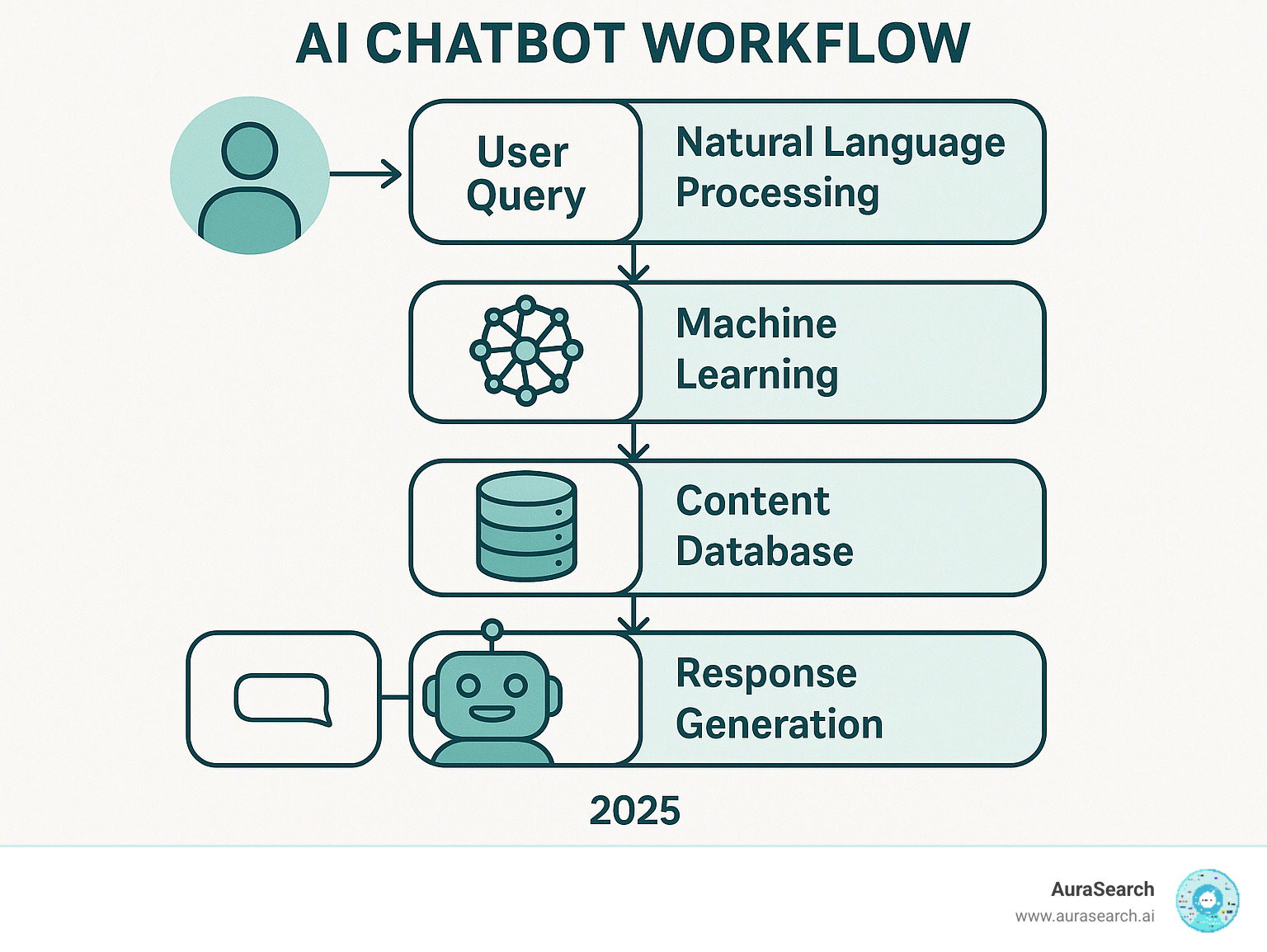
How AI Chatbots Are Reshaping the SEO Landscape
The world of SEO is always buzzing with change, and the arrival of AI chatbots on our websites and search interfaces marks a truly exciting shift. These clever conversational agents aren't just here to answer questions; they're becoming powerful allies in our mission to rank higher and connect better with our audience online.
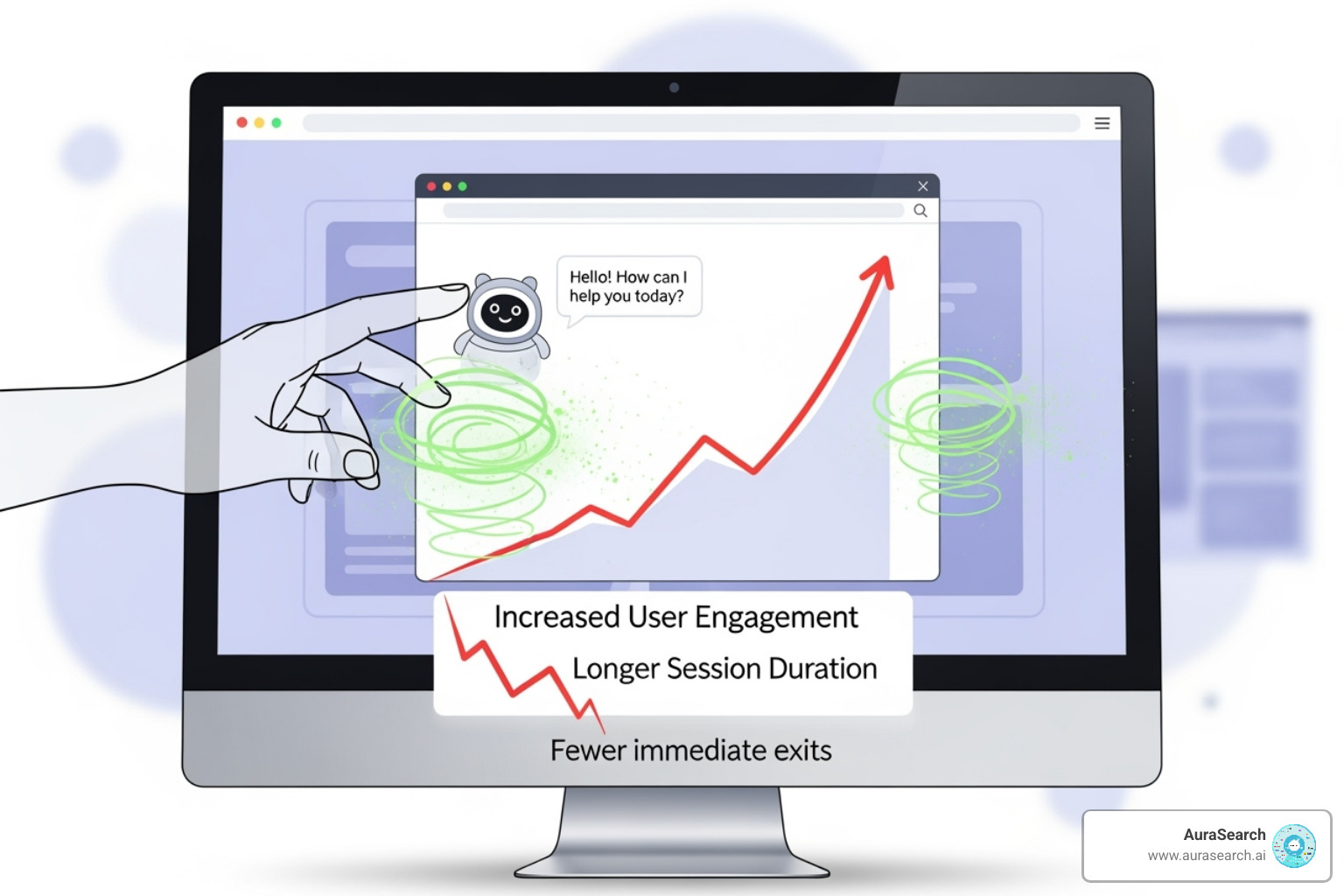
How do they do it? Well, it all starts with making your visitors happy! When someone lands on your site and finds an AI chatbot ready to offer instant answers , guide them through tricky bits, or even help them make a purchase, it's like a warm welcome. This helpful hand means users are far less likely to hit that frustrating "back" button, leading to a much-loved reduced bounce rate and a healthy increased dwell time (that's the amount of time folks spend enjoying your content!). Search engines absolutely adore these positive engagement signals, as they whisper, "Hey, this content is super valuable!"
Imagine a software company's website. Without a chatbot, a visitor might get lost clicking around, eventually giving up. But with a friendly chatbot, they can quickly find the exact feature they're looking for, get clear recommendations, and solve their problems fast. This smooth, helpful experience directly boosts your SEO performance.
Beyond just keeping users happy, AI chatbots also play a huge role in building brand authority . By consistently dishing out accurate, helpful, and custom information, your brand starts to shine as a reliable, trustworthy source. This credibility can then bring in more organic traffic, higher conversion rates, and ultimately, a stronger presence in those all-important search results. In fact, a strong, well-known brand is far more likely to be cited in AI Overviews and chatbot responses. That's where the real magic of AI chatbot SEO comes alive!
To learn more about how we can help you leverage these cutting-edge strategies, explore our More info about our AI SEO services.
Understanding User Intent and Search Behavior
One of the coolest things about AI chatbots for SEO is their incredible ability to help us truly get inside our users' heads. Think of your chatbot as your tireless, always-on market researcher. Every question asked, every follow-up query, every little sigh of frustration (which hopefully your chatbot turns into a "eureka!") is a valuable piece of data.
By carefully analyzing user queries and interactions, we can uncover exactly what our audience is searching for, the natural language they use, and even the pain points they're hitting on our site. This treasure trove of information helps us to identify content gaps – those topics users are asking about but aren't finding clear answers for on your pages. It also guides us in making our existing content even better and more precise.
This data is gold for conversational keyword research . Instead of just guessing at single keywords, we can optimize for the full, natural questions users are actually typing or speaking. For example, if your chatbot frequently gets questions like "What are the best investment strategies for beginners?", you know it's time to create a super helpful article addressing exactly that, using similar phrasing. This also directly feeds into voice search optimization , since people tend to use more conversational language when talking to AI assistants.
Personalization and Content Strategy
AI chatbot SEO isn't just about getting finded; it's about making every interaction count once users arrive. Chatbots are superstars at tailoring user journeys , moving far beyond a one-size-fits-all approach. By combining what they know about a user with their real-time behavior, AI chatbots can offer personalized recommendations and tweak their responses on the fly, which is becoming super important for SEO success. Search engines absolutely love to see this kind of high engagement and improved user experience.
Imagine an online store using a chatbot to help with product choices. Based on a user's first question, the chatbot can suggest just the right products, answer specific questions about features, and even smoothly guide them through the buying process. This custom experience keeps users engaged and feeling truly valued.
What's more, AI chatbots can seriously streamline your content creation . Using smart tools, businesses can even automate the first drafts of written content, from product descriptions to those common FAQ responses. While we at AuraSearch always champion human oversight to keep your brand voice perfect, ensure accuracy, and uphold E-E-A-T (Experience, Expertise, Authoritativeness, Trustworthiness), these tools can give you a fantastic head start. And the insights from all those chatbot interactions? They can directly inform your content calendar, making sure you're always creating content that truly answers your users' needs and boosts your relevance.
From SEO to GEO: Optimizing for the New AI-Powered Search
The digital world is always on the move, isn't it? And with powerful AI now stepping into the spotlight, we're seeing a really exciting shift. We're moving from what we've known as traditional SEO to something fresh and dynamic: Generative Engine Optimization (GEO) , also sometimes called Answer Engine Optimization (AEO) .
Think about it this way: traditional SEO was all about getting your website links to show up high on a search results page. But with GEO, the game changes. Now, it's about making sure your awesome content is directly cited and summarized by AI search engines and the helpful chatbots they power.
Why the change? Well, platforms like ChatGPT, Google's AI Overviews, and Perplexity are becoming the "new front door" to finding information online. They don't just hand you a list of links anymore. Instead, they actually read through websites, truly understand the content, and then generate a brand-new, synthesized answer for the user. Our goal with GEO is to make sure our content is the one they pick!
So, the big aim of GEO is to "teach" these clever AIs to recognize, trust, and even recommend your brand. This means your content needs to be super factual, highly authoritative, and rich in meaning. It should be easy for AI engines to sum up or quote when they're answering user questions. This also really highlights the importance of Google's E-E-A-T guidelines: Experience, Expertise, Authoritativeness, and Trustworthiness . AI search engines are designed to give priority to content from sources that clearly show these qualities.
Key Differences: Traditional SEO vs. Generative Engine Optimization
To truly get a handle on this exciting shift, let's take a quick look at how the SEO we've known stacks up against the GEO that's emerging:
| Factor | Traditional SEO | Generative Engine Optimization (GEO) |
|---|---|---|
| Goal | Achieve high rankings for website links in SERPs. | Gain explicit citation and inclusion in AI search results/summaries. |
| Focus | Keywords, backlinks, technical site health. | Context, semantic understanding, topical authority, E-E-A-T. |
| Content Format | Often long-form articles, blog posts, landing pages. | Comprehensive, well-structured content for direct answers and summaries. Adaptable across formats. |
| User Interaction | Clicking through to a website to find information. | Getting direct answers from the AI, sometimes with a clickable source. |
| Performance Metrics | Organic traffic, keyword rankings, bounce rate. | Citation frequency, AI referral traffic, brand mentions in AI responses. |
| Goal | Drive traffic to the website. | Be the trusted source for AI-generated answers. |

Optimizing Your Content for AI Engines
Adapting to GEO means we need to rethink how we build and present our content. It's about writing not just for human eyes, but also for those intelligent AI systems. Here’s how you can optimize your content for these new AI engines:
First off, consider creating knowledge bases . AI models are like hungry learners, and they need reliable sources. Building comprehensive, well-organized knowledge bases or detailed FAQ sections on your site gives AI structured information it can easily digest and cite. This is super important because AI needs solid sources to pull from.
Next, get friendly with structured data (Schema) . Implementing Schema markup gives AI extra context about your content's purpose and meaning. Think of it as giving the AI a helpful guide to understand the relationships within your content. For example, if you have product pages, including structured data is vital for AI chatbot SEO because it helps chatbots pull accurate product information directly.
When it comes to writing, aim for natural language . Generative models are trained to understand everyday conversation. So, your content should flow like human speech, answer questions in a conversational tone, and use clear, unambiguous language. It's about making your content feel like a helpful chat, not a stuffy textbook.
And speaking of helpful, ensuring factual accuracy is non-negotiable. To boost trust and visibility, every claim you make should be supported with concrete proof. AI engines will always prioritize accurate, verifiable information. They're smart, and they won't cite questionable sources.
Don't forget about maintaining content freshness . Outdated information can really reduce your chances of being featured in AI responses, especially for topics where recency truly matters. Regularly updating your content ensures it stays relevant and valuable to AI models.
Finally, focus on building topical authority . Instead of just chasing a single keyword, strive to become the go-to expert on a whole cluster of related topics. This means creating comprehensive content that covers a subject from every possible angle, showcasing your deep expertise. When you're seen as the ultimate authority, AI is much more likely to trust and reference your insights.
A Practical Guide to Implementing AI Chatbot SEO
Ready to put AI chatbot SEO into action? Let's roll up our sleeves and get practical. The key to success isn't just adding a chatbot to your website and hoping for the best. It's about weaving it thoughtfully into your broader SEO strategy.

Think of your chatbot as a bridge between user intent and content optimization . Every conversation reveals what your audience truly wants to know. When someone asks your chatbot "What's the difference between your premium and basic plans?", that's not just a customer service moment – it's pure SEO gold.
The magic happens when you analyze these user queries to understand the exact language people use. This isn't the fragmented keyword research of the past. It's real, natural language from real users with real problems. Use these insights to create content that matches how people actually search and speak.
Voice search optimization becomes natural when your chatbot conversations mirror how people talk to AI assistants. The person asking "What are the best investment strategies for beginners?" is using the same conversational tone whether they're talking to your chatbot or Siri.
Personalized recommendations keep users engaged longer, sending positive signals to search engines. When your chatbot suggests relevant blog posts or products based on someone's specific questions, you're not just helping them – you're improving your dwell time and reducing bounce rates.
Real-world success stories paint a clear picture. Finance companies use chatbots to guide users through complex mortgage options while identifying common confusion points for future content. E-commerce sites let chatbots handle product selection, gathering data on customer language and preferences. B2B software companies use them to explain complex features in simple terms, revealing gaps in their existing documentation.
But let's be honest about the challenges . AI can sometimes hallucinate or give inconsistent answers to similar questions. This is why human oversight isn't optional – it's critical. Your chatbot should improve your SEO strategy, not replace good judgment and quality control.
Integration with SEO tools like Google Analytics and Search Console gives you the complete picture. When you can see how chatbot interactions affect your overall search performance, you can make smarter decisions about content and optimization.
Step 1: Developing Your Content Strategy for AI Chatbot SEO
Your content strategy needs a makeover for the AI era. It's time to think like a helpful human having a conversation, not like a keyword-stuffing robot.
Start by auditing your existing content with fresh eyes. Ask yourself: Would an AI chatbot find this easy to understand and cite? Is it clearly structured with headers and bullet points? Does it directly answer common questions? Content that's comprehensive and well-organized will shine in AI-powered search results.
Creating conversational content means writing like you talk. Instead of "Our enterprise solution facilitates optimal productivity improvement," try "Our software helps your team get more done." AI chatbots thrive on natural language, so your content should sound like something a real person would say.
Building robust FAQ sections is like creating a buffet for AI. These sections provide direct, quotable answers that AI can easily pull and cite. But don't just list basic questions – dig deep into the nuanced questions your chatbot reveals.
Anticipating follow-up questions shows real expertise. When you answer "What is SEO?", also address "How long does SEO take?" and "What's the difference between SEO and paid ads?" This comprehensive approach demonstrates the topical authority that AI engines love.
Semantic search optimization means creating content clusters around topics, not just individual keywords. Show the connections between related concepts. When you become the go-to resource for an entire subject area, AI engines take notice.
Step 2: Measuring the Success of Your AI Chatbot SEO Efforts
Measuring AI chatbot SEO success requires looking beyond traditional metrics. Yes, organic traffic and keyword rankings still matter, but the game has expanded.
Your chatbot analytics tell an incredible story. Which questions come up most often? Where do conversations stall? What topics generate the most engagement? This data reveals content opportunities you never would have finded through traditional keyword research.
User engagement metrics remain crucial indicators. When your chatbot keeps people on your site longer and reduces bounce rates, search engines interpret this as a signal that your content is valuable. Monitor these metrics closely to see how chatbot interactions affect overall site performance.
The holy grail is measuring citations in AI Overviews . Start asking AI chatbots questions related to your business across different platforms. When your brand or content appears in these responses, you're winning at generative engine optimization. It's like being featured in a traditional news article, but for the AI age.
Tracking referral traffic from AI reveals another exciting opportunity. While AI often provides direct answers, users frequently click through for deeper information. What's remarkable is that visitors from AI sources convert at higher conversion rates from AI traffic than traditional search visitors. These users come with high intent and clear purpose.
The key is connecting all these metrics to paint a complete picture. When you can show how chatbot interactions improve user experience, increase citations, and drive high-converting traffic, you've cracked the code on AI chatbot SEO success.
Frequently Asked Questions about AI and SEO
As businesses steer this new landscape of AI chatbot SEO , we hear the same questions repeatedly. Let's tackle the most common ones with straightforward, practical answers.
How do I start optimizing my website for AI search?
The good news? You don't need to reinvent the wheel. Starting to optimize for AI search means building on solid SEO foundations while adding an AI-first mindset.
Strengthen your SEO basics first. Ensure your site has strong technical SEO, clean sitemap files, and clear content tags and headings. AI engines need to crawl and understand your site just like traditional search engines do.
Next, implement structured data (Schema markup) throughout your site. This gives AI algorithms the extra context they need to understand what your content is actually about. Think of it as providing helpful labels for everything on your site.
Build topical authority through content clusters rather than chasing individual keywords. Create comprehensive content that covers your niche from every angle. AI engines love sites that demonstrate deep expertise across related topics.
Focus on demonstrating E-E-A-T - Experience, Expertise, Authoritativeness, and Trustworthiness - in all your content. AI systems are trained to prioritize sources that clearly show these qualities. Include author credentials, cite reliable sources, and keep information current.
Finally, ensure your site is easily crawlable . Remove barriers that might prevent AI search engines from accessing and understanding your content. Clean navigation, fast loading times, and mobile optimization all matter more than ever.
Can a chatbot write my SEO content?
This is where things get interesting. AI tools can absolutely help with content creation, but they're more like talented assistants than replacement writers.
AI excels at streamlining content creation by generating keyword suggestions, creating outlines and drafts, and optimizing headlines for readability. These tools can produce initial content quickly and help overcome writer's block.
However, there's a critical need for human oversight . AI often misses the nuanced understanding of your brand voice, competitive landscape, and specific user intent. What sounds technically correct might not capture your unique perspective or industry expertise.
Always focus on editing for brand voice and accuracy . Review every piece of AI-generated content to ensure it sounds like your brand and serves your audience's actual needs. Most importantly, fact-check all claims . AI can sometimes present confident-sounding information that's completely wrong.
Think of AI as your research assistant and first-draft writer, but you're still the editor-in-chief who ensures quality and authenticity.
What is the relationship between AI chatbots and voice search?
Here's something fascinating: optimizing for AI chatbot SEO naturally prepares you for voice search success. They're two sides of the same coin.
When people talk to AI assistants or use voice search, they use natural language queries instead of typing fragmented keywords. They ask complete questions like "What are the best investment strategies for beginners?" rather than searching "investment strategies beginners."
This shift means your content should provide direct, concise answers to these conversational questions. Write like you're explaining something to a friend - clear, helpful, and straightforward.
Structure your content in a conversational Q&A format whenever possible. Build comprehensive FAQ sections that address not just the obvious questions, but the follow-up questions people naturally ask. This approach satisfies both AI chatbots looking for clear answers and voice search users expecting immediate responses.
The beauty of this alignment is that when you optimize for one, you're automatically improving for the other. Both AI chatbots and voice search reward content that understands and answers real human questions in natural, accessible language.
Conclusion: Your Next Move in the AI-Driven Search Era

Here's the truth: SEO is evolving, not dead . The digital marketing world loves dramatic headlines about the "death" of SEO, but what we're actually witnessing is something far more exciting - a change that rewards those who adapt quickly.
The strategic shift from keywords to context is already happening around us. Users aren't typing "best pizza NYC" anymore. They're asking, "Where can I find authentic Italian pizza near me that's open late?" This conversational approach isn't just changing how people search; it's revolutionizing how successful businesses create and structure their content.
AI chatbot SEO represents this evolution perfectly. It's about understanding that your website visitors want immediate, helpful answers. They want to feel understood, not just indexed. When your chatbot can guide someone through a complex decision or answer their specific question instantly, you're not just improving user experience - you're building the kind of engagement signals that search engines notice and reward.
The growing importance of brand authority and trust signals has never been clearer. When AI systems decide which sources to cite and recommend, your expertise and trustworthiness become your competitive advantage. Google's E-E-A-T guidelines aren't just SEO buzzwords anymore - they're the foundation of how AI engines evaluate and trust your content.
Think about it this way: when someone asks an AI chatbot for advice in your industry, do you want to be the source that gets cited? The answer should be a resounding yes. This means creating content that demonstrates real expertise, maintains factual accuracy, and genuinely helps people solve their problems.
As we've seen throughout this guide, the businesses thriving in this new landscape are those embracing change rather than fighting it. They're using chatbot interactions to understand their audience better, creating comprehensive content that answers real questions, and building the kind of authority that both humans and AI systems respect.
Your next move doesn't have to be overwhelming. Start with strengthening your content's helpfulness and accuracy. Listen to what your audience is actually asking. Build genuine expertise in your field. These fundamentals will serve you well whether someone finds you through traditional search, voice search, or an AI recommendation.
At AuraSearch, we've made it our mission to help businesses steer exactly these challenges. We understand that adapting to AI-driven search can feel complex, but you don't have to figure it out alone. We're your expert partner in this new landscape, specializing in helping companies like yours not just survive but thrive in the age of AI search.
Ready to take the next step? Adapt your strategy and win in the new era of search with our generative AI SEO services. The future of search is here, and we're excited to help you make it work for your business.