

AI SEO for Niche Markets in Australia: How Specialist Brands Win AI Search
How to Dominate Niche Markets with AI SEO
AI search is changing how Australian niche brands get discovered. The brands that win will not just rank for keywords. They will become the trusted sources AI engines choose to cite.
Key Takeaways
- AI Overviews and generative answers are shifting search visibility from simple rankings to source citation, which matters most for specialist Australian brands with deep expertise.
- Zero-click behaviour means niche businesses need content that earns visibility inside the answer itself, not just traffic from traditional blue links.
- AI SEO for niche markets works best when content explains entities, services, locations, proof points, and customer intent in a clear structure.
- Australian niche brands can compete with larger companies by publishing specific, accurate, locally relevant content that AI systems can verify.
- AuraSearch helps specialist businesses build the generative engine optimisation framework needed to turn AI visibility into qualified enquiries.
I am Amber Brazda, AI Search Specialist at AuraSearch, where I lead strategic programmes helping brands transition from traditional search authority into the new era of generative engine optimisation, with a specific focus on protecting niche businesses from attribution erasure in AI-generated results. Over the past decade building and refining AI SEO for niche markets across industries including legal, finance, and professional services, I have seen where specialist brands lose ground in the generative shift and how to recover it.
| What Changed | What Australian Niche Brands Need to Do |
|---|---|
| AI answers now sit above many traditional search results | Become a cited source, not just a ranked page |
| More searches end without a website click | Optimise for AI summaries and brand mentions |
| Generative engines prioritise depth and entity clarity | Build structured, authoritative topical content |
| Small and specialist businesses are adopting AI marketing tools | Use AI-driven keyword, content, and visibility workflows |
| AI visibility can influence high-intent enquiries | Shift from rankings-only SEO to GEO-led strategy |
The core issue is simple. Traditional SEO rewarded backlinks, keyword coverage, and technical hygiene. Generative engines reward structured authority, verified expertise, local relevance, and content that directly answers complex questions.
That creates risk for niche brands. A business can still appear in organic search results but be missing from the AI-generated answer at the top of the page. When that happens, the brand loses visibility at the exact moment a prospective customer is comparing options.
Niche markets also have a strong advantage. Specificity, evidence, service clarity, and real expertise are exactly the signals AI systems need when choosing sources. Australian brands that organise their knowledge around those signals can win attention from larger competitors.
Related AuraSearch guides:
AI SEO for Niche Markets: Tools and Tactics
AI SEO for niche markets starts with better intent mapping. Traditional keyword tools often miss low-volume, high-intent searches because specialist buyers use detailed, problem-specific language.
| Traditional SEO Methodology | AI SEO Data Modelling |
|---|---|
| Focuses on exact-match keywords and search volume | Focuses on intent, entities, context, and commercial relevance |
| Relies heavily on backlink quantity | Relies on factual accuracy, E-E-A-T, and structured information |
| Measures success through rankings | Measures success through AI citations, mentions, and share of voice |
| Builds content from static briefs | Uses live SERP, competitor, and gap analysis |
AI-driven platforms can identify the questions, comparisons, and long-tail needs that matter in narrow Australian markets. This is especially useful for sectors where one qualified enquiry can be worth far more than broad website traffic.
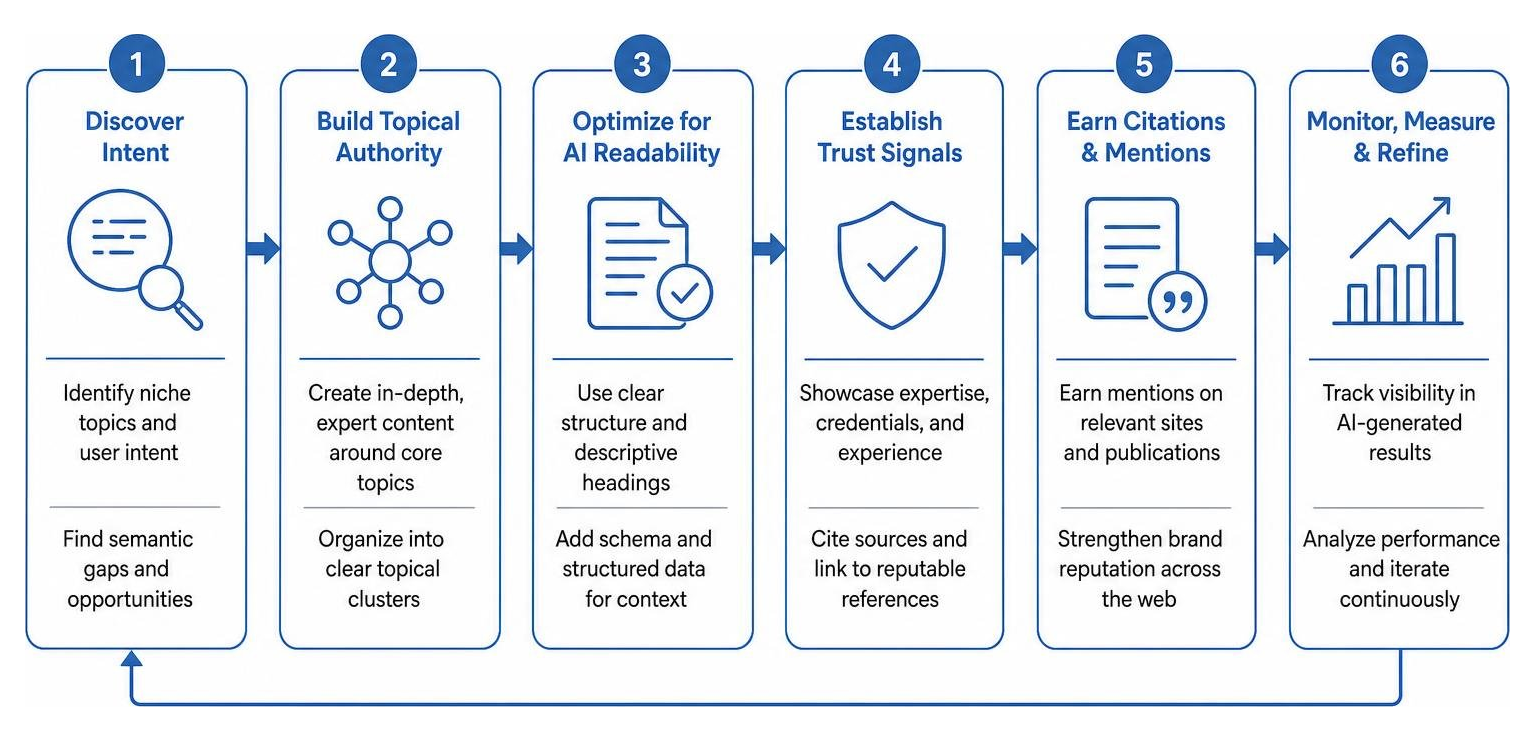
A practical workflow includes four steps. First, map the niche buyer’s exact problem. Second, identify the entities AI systems need to understand, such as service category, location, use case, price factors, compliance requirements, and proof points. Third, publish content that answers those needs clearly. Fourth, monitor whether the brand appears in AI-generated answers and relevant search results.
How AI SEO for Niche Markets Levels the Field
Generative search can help specialist brands compete because it values direct, accurate answers. Large competitors still have authority, but they do not always have the depth or local specificity needed for a niche query.
Google AI Overviews and other AI search experiences summarise information from multiple sources. They need clean page structure, clear entity relationships, consistent business information, and plain-language explanations. Niche brands that provide those signals improve their chances of being included in the answer layer.
E-E-A-T remains critical. Australian businesses in legal, finance, healthcare, professional services, trades, and regulated markets need visible expertise, accurate service descriptions, author credibility, and trustworthy supporting information.
AuraSearch helps brands build these signals into their content strategy. Specialist service providers can explore related resources on B2B SaaS AI SEO, Professional Services AI SEO, and Trades and Services AI SEO.
Implementing AI SEO for Niche Markets with Precision
Precision implementation relies on structured data, natural language optimisation, and systematic content gap analysis. Niche brands need websites that make essential information easy for crawlers and AI systems to extract.
Schema markup can support this process. FAQ, LocalBusiness, Product, Service, and Organisation schema help search engines understand what a business does, who it serves, and where it operates.
Programmatic optimisation can also help when a business serves many locations or use cases. The goal is not to create thin pages. The goal is to build useful, specific content for each service, region, audience, or problem where the business has real expertise.
Local signals matter in Australia. Consistent business names, addresses, phone numbers, reviews, service areas, and directory listings help AI systems verify a company’s presence and relevance. This is especially important for local service providers competing for high-intent enquiries.
The Strategic Advantage of AuraSearch
AuraSearch gives Australian niche brands a practical path from traditional SEO to AI search visibility. The platform focuses on the signals generative engines need before they recommend, summarise, or cite a business.
Its approach combines entity optimisation, sentiment analysis, content structuring, and citation acquisition. This helps specialist businesses understand how AI systems interpret their brand across the web and where visibility gaps are costing enquiries.
For niche markets, the advantage is focus. AuraSearch can help define the right search intent, build content around verifiable expertise, and strengthen the digital footprint needed for AI-generated recommendations. Businesses ready to lead their category can explore AuraSearch’s Generative Engine Optimisation services.
FAQs
What is AI SEO for niche markets?
AI SEO for niche markets is the process of optimising specialist content so search engines and AI platforms can understand, trust, and cite it. It focuses on clear intent, entity relationships, structured information, and expert answers. This approach is especially valuable for Australian businesses that serve narrow industries, locations, or customer needs.
Why does AI search matter for Australian niche businesses?
AI search matters because prospective customers increasingly receive answers before they click a website result. A niche business that is not cited in those answers can lose visibility even when its website still ranks organically. Strong AI SEO helps the brand appear where buying decisions now begin.
How is generative engine optimisation different from traditional SEO?
Generative engine optimisation focuses on being selected, summarised, and cited by AI systems. Traditional SEO focuses mainly on ranking pages in search results. Both matter, but GEO adds a stronger emphasis on entity clarity, structured content, source credibility, and brand mentions across the web.
What content works best for niche AI SEO?
The strongest content answers specific, high-intent questions with evidence and local relevance. It should define the service, explain who it helps, show proof, address risks, and make the next step clear. Australian context improves relevance when the audience, regulations, locations, or buying behaviour are local.
How can niche brands measure AI SEO performance?
Niche brands can measure AI SEO performance by tracking AI citations, brand mentions, generative search share of voice, organic visibility, and qualified enquiries. Rankings still provide useful context, but they no longer show the full search picture. AuraSearch helps connect visibility across AI platforms with commercial outcomes.
How does AuraSearch help with AI SEO for niche markets?
AuraSearch helps by building the content, entity, and citation signals that AI search systems need to trust a brand. Its framework supports topic mapping, structured content, sentiment analysis, and generative visibility tracking. This gives specialist Australian businesses a clearer path to being recommended in AI-driven search results.