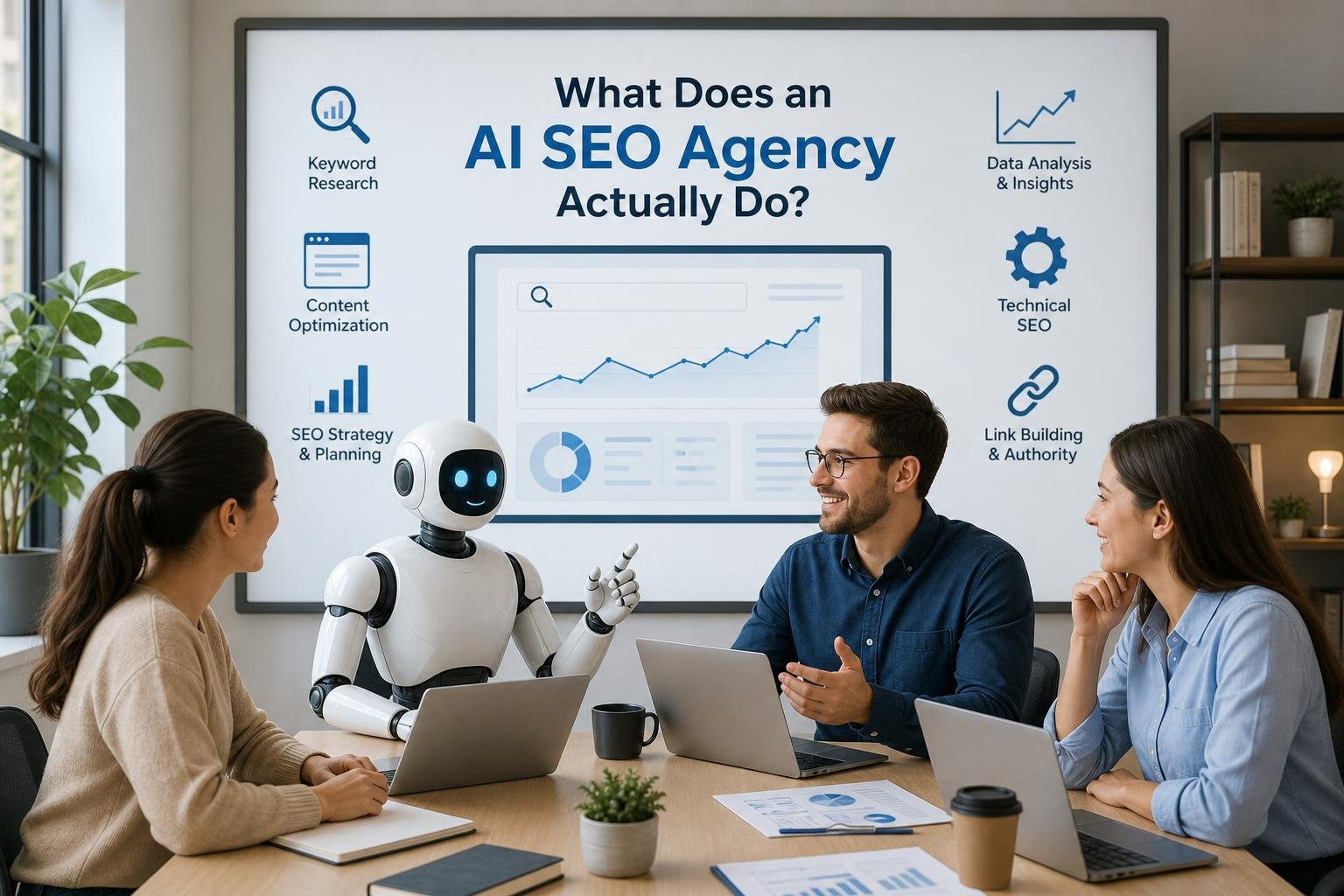

Shift Happens When SEO Leads AI Search Strategy

SEO teams are now leading the move from traditional rankings to AI search visibility. This article explains why that shift matters and how brands can become the source AI engines cite.

Key Takeaways

  • 68% of organisations are actively shifting search strategies in response to AI search, with SEO and digital marketing teams leading those initiatives in 54% of cases.
  • Google AI Overviews, AI Mode, and conversational search are making AI-generated answers a central part of search discovery.
  • Zero-click searches are compressing traditional click-through rates on informational queries and forcing brands to optimise for citations, not only clicks.
  • B2B buyers increasingly use AI during purchasing journeys, which makes decision-support content, original data, and product comparisons more important.
  • AuraSearch helps brands improve visibility across Google AI Overviews, ChatGPT, Perplexity, and Gemini through AI visibility diagnostics and citation-focused optimisation.

I am Amber Brazda, AI Search Specialist at AuraSearch, where I focus on protecting national brands from attribution erasure in the new era of Generative Engine Optimisation. Over more than a decade leading digital strategy, including as CEO of a performance-focused digital agency, I have worked directly on the challenge of how SEO leads AI search strategy shifts and what it takes to move a brand from invisible to definitively cited inside AI-generated answers. The sections that follow break down exactly where the landscape stands in 2026 and what actions produce measurable results.

The core challenge is straightforward. Rankings that once delivered steady traffic are now being absorbed by AI-generated summaries. Being on page one is no longer enough. Brands must become the source that AI models cite inside those summaries.

This shift is not gradual. Google's intelligent Search box, launched in May 2026, merged AI Overviews and AI Mode into a single adaptive interface. AI Mode query volume has doubled every quarter since launch. The average AI Mode query is now triple the length of a traditional search, signalling a fundamental change in how people seek information.

Visibility has moved from the blue link to the answer layer.

The organisations winning in this environment are not simply optimising for keywords. They are structuring content for citation, building entity authority across the web, and tracking brand presence across multiple AI platforms simultaneously.

Why SEO Leads AI Search Strategy Shifts in 2026

SEO teams have become the natural leaders of AI search integration. A recent industry survey shows that 54% of organisations rely on their SEO and digital marketing teams to steer AI search strategy, which is more than all other departments combined. Content teams lead in 14% of organisations, while PR, IT, and executive leadership account for the remainder.

This concentration of responsibility makes practical sense because search professionals already manage the technical and structural foundations that large language models rely on for data extraction. The transition from indexing keywords to feeding generative engines represents an evolution of existing technical skills.

A major portion of the industry remains hesitant. Approximately 57% of marketers report taking a cautious approach to AI Overviews. Despite this hesitation, 68% of organisations are actively making strategic adjustments to protect their organic pipelines. This active subset is moving away from traditional keyword-matching models and embracing Generative Engine Optimisation.

The industry analysis published on SEO Leads as 68% of Organizations Shift Strategies for AI Search confirms that the division between passive observation and active optimisation is widening. Organisations that delay their transition risk losing their historical search equity to faster competitors.

To understand how these methodologies diverge, we must look at the structural differences between traditional search engine optimisation and generative engine optimisation.

Optimisation Layer Traditional SEO Generative Engine Optimisation (GEO)
Primary Target Traditional search crawlers and keyword indexes Large language models and vector retrieval engines
Primary Metric Blue link keyword rankings and organic clicks Share of Model, citation rate, and brand mentions
Content Structure Keyword-dense articles and long-form guides Answer-first formatting and structured data
Discovery Mechanism PageRank and classic backlink profiles Retrieval-Augmented Generation and entity networks

Transitioning from the left column to the right column requires a complete re-evaluation of content architecture. We have detailed this transition framework in our guide on Adapting Your SEO Strategy for the AI Era. The shift requires brands to treat their websites as structured databases rather than purely aesthetic marketing brochures.

How SEO Leads AI Search Strategy Shifts in B2B SaaS

The B2B purchasing journey has transformed rapidly. Forrester data reveals that 94% of B2B buyers now use AI tools during their evaluation process. Buyers are using conversational engines to compare software features, request pricing summaries, and compile vendor shortlists before they ever visit a vendor website.

This shift has created a significant content gap. Traditional B2B content strategies focus heavily on short-tail keywords and broad informational guides. Recent analysis from Google shows that user queries in AI Mode are highly conversational, context-rich, and complex.

To capture these high-intent leads, B2B brands must publish decision-support content. This content includes original research, proprietary data sets, and direct product comparisons. Generative models prefer unique, non-commodity data over rewritten industry definitions.

Content must also feature citation-ready blocks. Placing a direct, factual summary of 40 to 60 words at the beginning of each major section makes it easy for retrieval engines to extract and cite your brand. We have compiled the exact technical specifications for this in The Definitive Guide to AI Search Visibility.

How SEO Leads AI Search Strategy Shifts Across Multi-Platform Engines

Organisations can no longer focus solely on a single search engine. The modern digital footprint must span Google AI Overviews, ChatGPT, Perplexity, Claude, and Gemini. Each of these platforms uses different retrieval methods, which requires a diversified optimization strategy.

The volatility of these platforms is exceptionally high. Recent testing shows that 80% of ChatGPT product recommendations change when web search is enabled. This volatility demonstrates that real-time web indexes dictate brand visibility inside conversational answers.

In specific sectors like travel, hospitality, and local services, AI-referred traffic is growing rapidly. Adobe reports that AI referrals to travel sites have surged 194% as consumer engagement with conversational planning tools rises. In highly regulated sectors like health, finance, and Your Money or Your Life industries, search engines place a premium on strict entity verification and structured data.

Securing visibility across these platforms requires three foundational actions:

  1. Ensure your robots.txt file explicitly permits access to AI crawlers like GPTBot, ClaudeBot, and PerplexityBot.
  2. Implement comprehensive schema markup, including Product, FAQ, and Organization schema, to provide machine-readable brand data.
  3. Maintain highly consistent brand entity signals across your website, Google Business Profile, and authoritative third-party directories.

A complete breakdown of these multi-platform tactics is available in our resource on 12 Proven AI Search Engine Tactics for LLM Visibility.

How AuraSearch Helps Brands Win AI Search Visibility

AuraSearch provides the technical infrastructure and strategic expertise required to navigate these search changes. We help organisations transition from traditional keyword tracking to advanced generative engine optimisation. Our proprietary methodologies protect your brand from attribution erasure and secure your place in AI-generated answers.

Our services focus on measuring your Share of Model. We track how often your brand is cited across target industry queries on ChatGPT, Perplexity, and Google AI Overviews. This data-driven approach allows us to identify and close visibility gaps before they impact your pipeline.

We also facilitate the cross-functional collaboration needed for AI search success. We align your SEO, content, and PR teams to build a cohesive digital footprint that generative engines trust. This integrated approach ensures your brand remains highly visible, highly cited, and highly trusted.

Protect your organic pipeline from the zero-click shift. Explore our specialised AuraSearch Generative Engine Optimisation Services to secure your brand's future in the AI search landscape.

FAQs

How do organisations adapt to AI search strategy shifts?

Organisations adapt by shifting their focus from keyword density to answer-first content structures and structured data. This process involves auditing existing content to ensure it answers conversational queries clearly and concisely. Brands are also diversifying their visibility efforts across multiple AI platforms rather than relying solely on traditional search engine results.

Which department typically leads AI search initiatives?

SEO and digital marketing teams lead AI search initiatives in 54% of organisations. This leadership concentration occurs because search professionals possess the technical and structural expertise required to manage how search engines crawl and index data. Successful initiatives still require active collaboration with content, PR, and executive leadership teams.

What is Generative Engine Optimisation?

Generative Engine Optimisation is the practice of preparing website content so that generative AI engines cite your brand as an authoritative source. It relies on structuring content for easy extraction, using schema markup, and maintaining consistent entity signals across the web. The goal of GEO is to secure brand citations within AI-generated summaries rather than just ranking in traditional blue links.

How does AI search affect B2B lead generation?

AI search changes where B2B leads come from by allowing buyers to self-educate and compare vendors within conversational interfaces. This shift reduces traditional organic click-through rates but delivers highly qualified, pre-educated visitors to your website. B2B brands must focus on publishing unique, proprietary data and direct comparison content to ensure they are included in these AI-generated vendor shortlists.

What metrics track success in AI-driven search?

Success in AI-driven search is tracked using Share of Model, citation rate, and brand mention frequency inside AI summaries. These metrics replace traditional KPIs like keyword rankings and raw impression volumes. Tracking these indicators requires monitoring how often your brand appears as a cited source across target prompts on platforms like ChatGPT, Perplexity, and Google AI Overviews.

Why is cross-functional collaboration necessary for AI SEO?

Cross-functional collaboration is necessary because generative engines evaluate a brand's entire digital footprint to determine authority. SEO teams provide the technical structure, content teams produce the necessary depth and original research, and PR teams secure authoritative external mentions. Lacking alignment across these departments leads to fragmented brand signals that AI models struggle to trust or cite.

Recent Posts

By Amber Brazda July 16, 2026
Discover plumbing business AI visibility tips to rank in ChatGPT, Gemini and Google AI Overviews with proven GEO strategies.
By Amber Brazda July 15, 2026
Master Generative Engine Visibility with proven GEO strategies that boost AI citations and brand authority across every major generative search platform.
By Amber Brazda July 14, 2026
Learn how AI overviews dental practices can boost visibility with Generative Engine Optimisation, schema, and E-E-A-T strategies.
By Amber Brazda July 13, 2026
Discover how an AI search monitoring platform can improve SEO strategy with real-time citation tracking and generative visibility insights.
By Amber Brazda July 13, 2026
Master Generative engine optimization with this practical guide covering AI search strategies, RAG techniques, and entity clarity for better visibility.
By Amber Brazda July 13, 2026
Learn how AI Overviews traffic is reshaping search behaviour and discover proven tactics to protect your organic CTR and visibility.
By Amber Brazda July 9, 2026
Master AI search visibility by attending an ai seo webinar that teaches generative engine optimisation strategies for 2026.
By Amber Brazda June 30, 2026
Master Answer Engine Optimization with AuraSearch to boost AI visibility, citations, and brand authority in ChatGPT and Perplexity.
By Amber Brazda June 29, 2026
Learn the 5-step framework for optimizing your content for inclusion in AI search answers with schema, extractable passages and entity alignment.
By Amber Brazda June 26, 2026
Learn how to accountant AI overviews optimise your firm’s visibility with five proven steps for higher rankings and traffic.
Show More