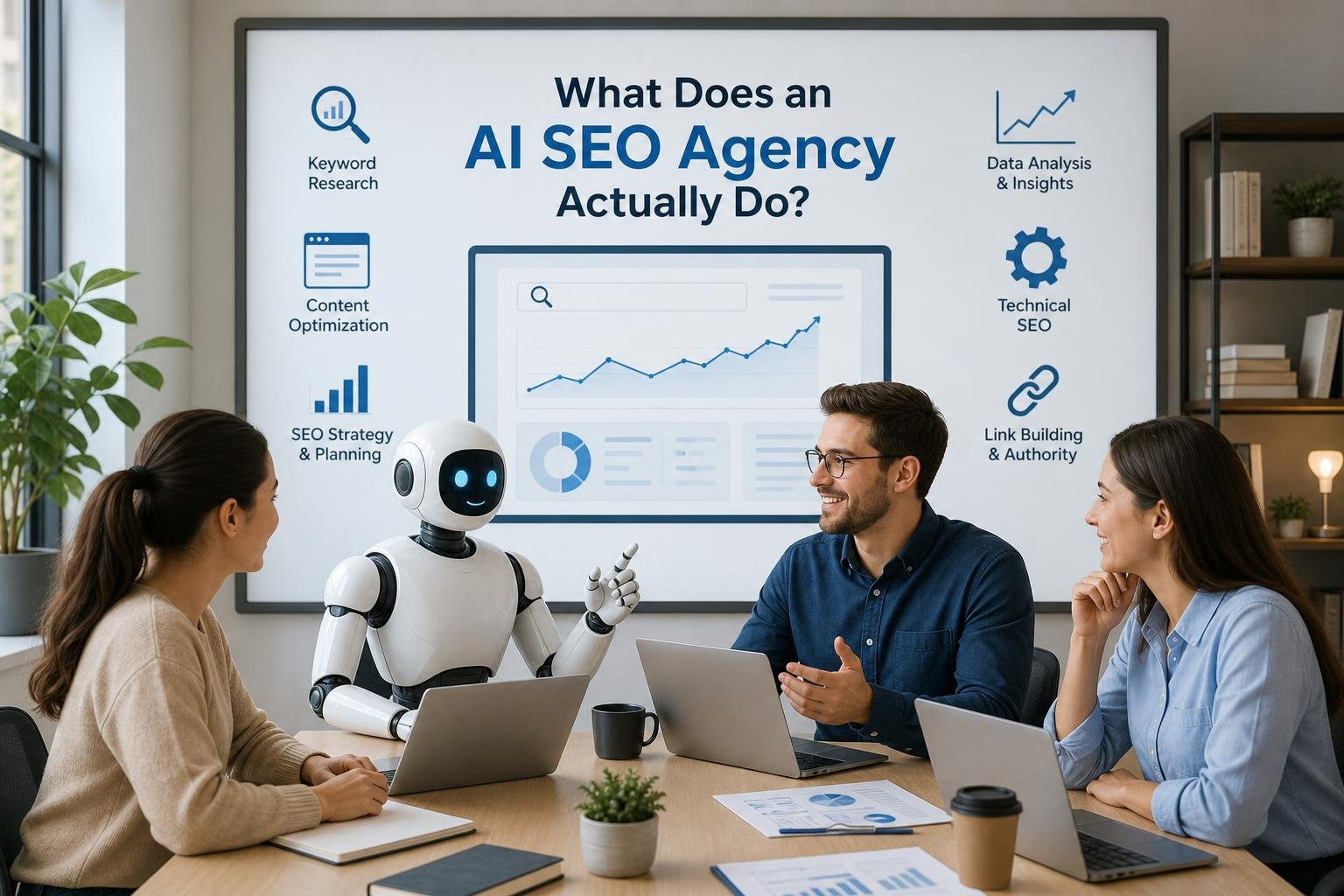


Generative Engine Optimization: The Future of Search is Here
Why Generative Engine Optimization Is Redefining Search Visibility
Generative engine optimization is reshaping how brands earn visibility in AI-powered search results. For businesses competing in ChatGPT, Google AI Overviews, Perplexity, and similar platforms, the goal is no longer just ranking. It is becoming the source an AI engine trusts enough to cite.
Key Takeaways
- AI Overviews now appear in roughly 16% of all Google searches, and retailers could see up to a 520% increase in traffic from AI search channels compared to 2024.
- Pages containing quotes and statistics show 30-40% higher visibility in AI-generated responses compared to content without them.
- GEO methods such as citing sources, adding quotations, and including statistics can boost visibility in generative engine responses by up to 40%.
- Traditional SEO techniques like keyword stuffing show little to no benefit in generative engines because credibility signals and content extractability drive citation instead.
- AuraSearch's AI Visibility Diagnostics identify exactly how generative systems currently perceive and cite your brand, creating a clear path to closing the attribution gap.
I am Amber Brazda, AI Search Specialist at AuraSearch, where I lead the strategic bridge between traditional search authority and generative engine optimization, having delivered measurable attribution shifts for national brands facing erasure from AI-generated answers. The framework and strategies outlined in this guide draw directly from that work.
Generative engine optimization is the practice of structuring content, metadata, and entity signals so that AI-powered search platforms, such as ChatGPT, Google AI Overviews, and Perplexity, can find, trust, and cite your brand when composing a response to a user query.
Search has shifted faster in the past 18 months than in the previous decade. When someone types a question into ChatGPT or Google AI Mode today, they receive a synthesised answer, not a list of blue links. The brands cited inside that answer capture trust, authority, and commercial intent at the decision stage. The brands that are absent lose ground quietly, even when their organic rankings remain strong.
This is the core challenge that generative engine optimization addresses. It is not a replacement for SEO. It is an extension of it, one that requires a different set of signals, structures, and measurements to succeed.
Strategic Framework for Generative Engine Optimization
Generative engines rely on Retrieval-Augmented Generation to construct their answers. This process combines traditional search retrieval with the synthesis capabilities of large language models. When a user submits a query, the engine retrieves relevant web pages, extracts key passages, and generates a unified response with inline citations.
Google also uses a technique called query fan-out. This system generates multiple concurrent queries to fetch a broader set of background results. This mechanism increases the pool of potentially cited sources. Brands must optimize their content for this multi-vector retrieval process to remain visible.
| Optimization Vector | Traditional SEO Focus | Generative Engine Optimization Focus |
|---|---|---|
| Primary Goal | Rank full web pages in organic blue links | Earn citations and brand mentions in synthesized AI answers |
| Key Mechanism | Keyword matching and backlink authority | Semantic relevance, citation-ready text blocks, and entity clarity |
| Main Metrics | Click-through rate, keyword rankings, organic traffic | Share of Model, citation frequency, position-adjusted word count |
| Content Format | Comprehensive, long-form articles | Modular, self-contained paragraphs with statistics and quotes |
| Technical Driver | XML sitemaps, core web vitals, indexability | Server-side rendering, schema markup, robot accessibility |
Establishing clear entity relationships across the web is a fundamental requirement for generative engines. These systems prioritize entity understanding over simple keyword matches. Consistent brand descriptions across your website, LinkedIn, and review platforms help AI systems identify your brand with confidence.
The structure of your content determines how easily an AI crawler can extract information. Writing self-contained paragraphs that express one complete idea improves retrieval quality. Leading sections with direct, standalone answers of 40 to 60 words makes content citation-ready.
Data from recent studies indicates that pages containing quotes and statistics achieve 30% to 40% higher visibility in AI responses. Incorporating named statistics and direct quotations from authoritative figures provides the credibility signals that generative models seek. These elements perform exceptionally well on platforms like Perplexity, where quotation addition delivers a 22% improvement over baseline visibility.
Technical accessibility remains the foundation of all AI search visibility. AI crawlers require clean server-side rendering to parse content efficiently. JavaScript-heavy frameworks often prevent crawlers from extracting text passages. Allowing specific AI bots like GPTBot, OAI-SearchBot, and Claude-SearchBot in your robots.txt file ensures your site remains in the retrieval pool.
Implementing schema markup in JSON-LD format is another critical technical step. Schema provides the explicit metadata that helps AI systems understand relationships, claims, and product details. Standard formats like Product, LocalBusiness, FAQPage, and Organization schema translate your page content into a machine-readable format.
AuraSearch provides expert generative AI SEO services that align your digital footprint with these retrieval requirements. Our proprietary tools audit your website for semantic readability, entity clarity, and crawlability. We help businesses integrate these advanced tactics into their existing workflows to capture high-value citations.
Implementing these methods requires a shift in how marketing teams measure and produce content. The objective is no longer just ranking first on a traditional results page. The new goal is becoming the definitive source that the AI model relies upon to answer the user's question.
Our team at AuraSearch structures your digital presence to meet these evolving requirements. We combine technical search expertise with advanced data modeling to secure your brand's placement in AI-generated summaries. Partnering with us ensures your business remains visible across all emerging discovery channels.
For a detailed look at how these systems operate, you can review our dedicated resource on Generative engine optimisation.
Why AuraSearch Is Built for AI Search Visibility
The transition from traditional search to AI-driven discovery requires sophisticated technical and strategic adjustments. AuraSearch provides the only platform offering expert generative AI SEO services designed to adapt and win in this changing landscape. Our services ensure that your brand is not just indexed, but actively cited as a trusted authority by major language models.
We address the core challenges of generative engine visibility through precise entity optimisation, technical crawlability audits, and semantic content structuring. Our data-driven methodology helps your business secure high-value placements in ChatGPT, Google AI Overviews, and Perplexity. Contact us today to audit your current AI search footprint and secure your brand's future visibility.
FAQs
What is generative engine optimization?
Generative engine optimization is the practice of preparing your website content and digital footprint so that generative AI engines cite your brand as an authority. It involves structuring your data, using clear semantic language, and maintaining consistent entity signals across the web so that models like ChatGPT and Perplexity can easily retrieve your information.
How does generative engine optimization differ from traditional SEO?
Traditional SEO focuses on ranking a full web page at the top of organic search results through keywords and backlink building. Generative engine optimization shifts the focus to getting specific passages of your content extracted and cited within AI-generated answers.
What metrics measure AI search visibility?
AI search visibility is measured using Share of Model, citation frequency, and position-adjusted word count. Share of Model tracks the percentage of brand citations your business receives across target industry queries compared to your competitors. These metrics help marketing teams understand how often and how prominently their brand is featured in synthesized answers.
Is structured data required for AI search?
Structured data is not strictly mandatory for AI search, but it significantly improves entity clarity and retrieval accuracy. Schema markup in JSON-LD format helps AI systems identify relationships, product details, and business locations with high confidence. Implementing this data makes your content much easier for models to parse and cite.
How do AI crawlers access website content?
AI crawlers access website content by scanning your pages, provided your robots.txt file permits access to bots like GPTBot and Claude-SearchBot. Clean server-side rendering is essential because many AI crawlers struggle to execute complex JavaScript frameworks.
What are the risks of over-optimising for AI?
The main risk of over-optimising for AI is degrading the reading experience for your human audience. Content overloaded with repetitive statistics, forced quotes, or rigid prompt-friendly formatting can become difficult to read and lose credibility.